
Judge voids 75-country visa freeze, forcing State Department to resume individualized reviews
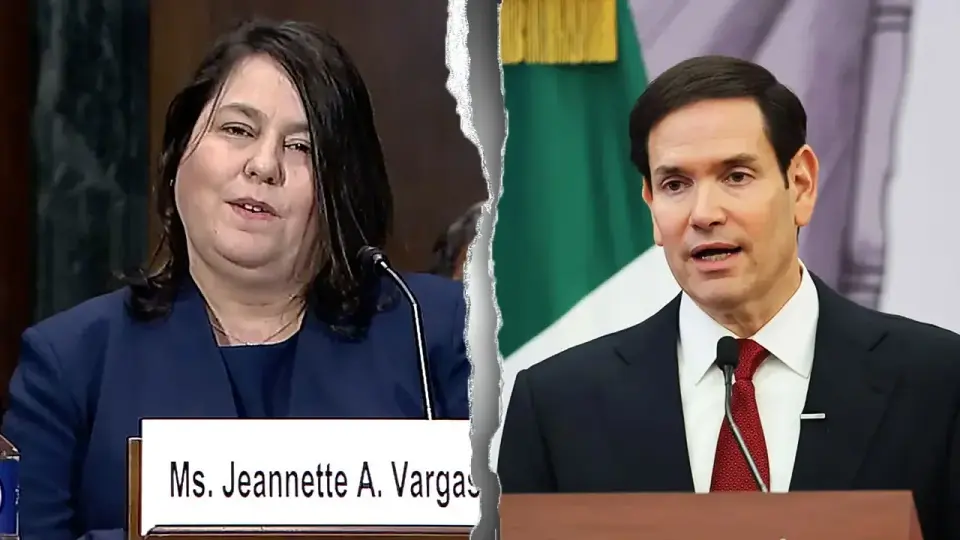
A federal judge has struck down the Trump administration's policy suspending immigrant visas for nationals of 75 countries, ruling that the blanket ban exceeded the State Department's authority and violated federal law. The decision requires consular officers to resume individualized assessments of applicants, reversing denials based solely on nationality. While the administration has called the ruling the work of a 'rogue judge,' legal experts and advocacy groups argue the policy was unlawful discrimination. The move affects family and employment-based immigration but does not impact nonimmigrant visas, with the administration retaining the right to appeal.
Key points
- U.S. District Judge Jeannette Vargas ruled that the State Department's directive to deny visas to nationals of 75 countries was 'contrary to law' and exceeded Secretary Marco Rubio's statutory authority.
- The policy, announced in January 2026, suspended immigrant visa processing for countries including Somalia, Afghanistan, Brazil, Nigeria, Russia, and Iran, citing concerns about applicants becoming 'public charges.'
- Vargas found that the directive violated the Immigration and Nationality Act of 1965, which prohibits nationality-based discrimination and requires individualized determinations of eligibility.
- The ruling vacates visa denials issued solely under the policy and orders affected cases to be reconsidered, but it does not mandate the issuance of any specific visa.
- The State Department spokesperson Tommy Pigott condemned the decision as the work of a 'rogue judge' and vowed to continue fighting for 'commonsense visa policies,' while the administration has not yet indicated whether it will appeal.
Background
The 75-country visa freeze was introduced by the Trump administration in January 2026 as part of a broader effort to restrict legal immigration pathways. The policy targeted nations across Africa, Latin America, the Middle East, and Eastern Europe, which the administration argued had higher rates of public charge dependency. Prior to this ruling, the State Department had directed consular officers to refuse immigrant visas regardless of an applicant's individual financial or medical qualifications, effectively creating a blanket ban. This decision follows earlier legal challenges to other immigration restrictions, including temporary protected status revocations and deportation flights, reflecting ongoing tensions between the executive branch and the judiciary over immigration enforcement.
How outlets are covering it
Fox News framed the ruling as an overreach by a 'rogue judge,' emphasizing the State Department's argument that the policy protected American taxpayer-funded benefits and that consular officers should have discretion to deny visas based on public charge concerns. In contrast, ABC News and The Washington Post highlighted the legal basis for the decision, noting that the policy violated the Immigration and Nationality Act's prohibition on nationality-based discrimination and that the administration exceeded its statutory authority. Mother Jones took a more critical stance, linking the 'public charge' rationale to historical eugenicist and ableist thinking, and quoting legal advocates who described the policy as 'retrograde and unlawful.' All sources agreed that the ruling does not force the issuance of visas but requires individualized reviews, though they differed on the legitimacy of the administration's original intent.
Why it matters
The ruling represents a significant check on executive power in immigration policy, reinforcing the principle that visa decisions must be based on individual circumstances rather than blanket nationality-based restrictions. It affects thousands of family and employment-based visa applicants and sets a precedent for future challenges to immigration restrictions. The outcome may influence how the administration approaches other immigration policies and could lead to further legal battles if the government appeals. Additionally, the decision highlights the ongoing conflict between the executive branch's immigration enforcement priorities and the judiciary's interpretation of federal law, with potential implications for international relations and the treatment of immigrants from the affected countries.
What to watch
The State Department has not yet indicated whether it will appeal the ruling, but the administration retains the right to do so. If an appeal is filed, the case could proceed to the Second Circuit Court of Appeals or potentially the Supreme Court. In the interim, consular officers are required to resume individualized reviews of immigrant visa applications from the 75 affected countries, using factors such as age, health, finances, and English proficiency. The administration may also seek to modify its public charge screening procedures to comply with the court's ruling while maintaining its broader immigration restrictions. Advocacy groups are expected to monitor the implementation of the ruling to ensure that affected applicants receive fair and timely reconsideration of their cases.
- State Department blasts back at 'rogue judge' who overturned aggressive visa crackdown Fox News
- Trump administration's 75-country visa ban was illegal, judge rules NPR
- Judge strikes down Trump administration policy that suspended immigrant visas for 75 countries, reinstating evaluations ABC News - Breaking News, Latest News and Videos
- Trump’s visa ban on 75 countries struck down by federal judge The Washington Post
- Federal Judge Strikes Down Trump’s 75-Country Visa Ban Mother Jones
Want the full story? Read the original reporting
Read on Fox News