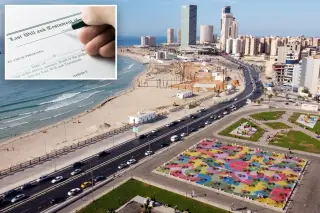
A planned meeting between New York City's Office of International Affairs and Iran’s UN ambassador was canceled after the State Department objected, marking a second recent federal intervention in Mamdani’s international outreach.
Rubio convened a July 16 State Department meeting inviting senior ministers from 60+ countries to discuss what the Trump administration calls the resurgence of transnational far-left terrorism, but many allies reacted with confusion or indifference, citing short notice and vague aims. The push to frame antifa as a serious terrorist threat has repeatedly backfired diplomatically, and internal U.S. officials warn the effort risks politicizing counterterrorism and setting a dangerous precedent, all amid broader tensions over Venezuela policy involving Rubio’s deputy.
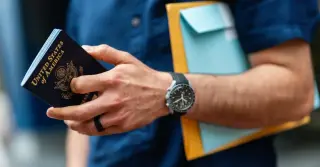
The White House unveiled a commemorative 'Patriot Passport' featuring a monochrome portrait of Donald Trump against the Declaration of Independence for the United States' semiquincentennial; 40,000 limited-edition passports will be available to U.S. citizens at the Washington Passport Agency starting July 6, marking another instance of Trump’s likeness appearing on federal property.
U.S. travelers in the Middle East are urged to stay vigilant as the State Department maintains Do Not Travel warnings (Level 4) for Iran, Iraq, Lebanon, Syria, Gaza and Yemen and Level 3 advisories for Bahrain, Israel/West Bank, Jordan, Kuwait, Oman, Qatar, and the United Arab Emirates, warning that airspace closures, protests, and U.S.-linked targets could disrupt trips with little notice. The advisories come as diplomacy regarding a draft Iran deal could affect the Strait of Hormuz and energy flows, though language is not public and the situation remains volatile. Americans abroad should monitor embassy alerts, enroll in STEP, confirm flights with airlines, and follow local authorities.
The State Department plans to drastically reduce Africa's visa-processing footprint from about 50 embassies/consulates to 20 designated hubs. Non-hub posts will offer limited services, and travelers from non-hub countries may need to travel to a listed hub for visa processing. The move is part of a broader immigration crackdown and is expected in June 2026, with the memo naming the 20 hubs across multiple African nations.
The White House sent to the Senate a broad slate of nominations for ambassadorial posts (to El Salvador, Azerbaijan, Cambodia, Equatorial Guinea, Moldova, Indonesia, Bulgaria, Trinidad and Tobago, Paraguay, Kenya, Serbia, Montenegro, Colombia, Brazil, Ecuador, The Gambia, Sierra Leone, Lithuania, and others) as well as senior State Department and Health and Human Services positions (including an Inspector General and several Assistant Secretaries). A withdrawal was also submitted for Paul Ferguson as U.S. Marshal for the Northern District of West Virginia.
NBC News, citing the American Foreign Service Association, reports that the Trump administration has laid off or forced retirement for about 2,000 career diplomats since the president’s second inauguration, draining decades of expertise in international negotiation and crisis response; roughly 100 embassies lack a Senate-confirmed envoy, with sharp losses in the Middle East and Africa. White House and State Department officials say the moves are intended to streamline diplomacy, while critics warn of long-term damage to the U.S. diplomatic corps.
Amid multiple global crises and a push to end the Iran war, the State Department carried out sweeping reductions in force that cut about 250 foreign-service officers and affected over 1,000 civil servants, while more than 100 ambassador posts remain vacant. Former officials warn this hollowing-out — driven by a focus on loyalty and the absence of upward assignments — threatens decades of institutional knowledge just as the U.S. faces delicate negotiations in Iran, Ukraine, and other hotspots. Supporters say the reorganization eliminates redundancies and speeds decision-making, but critics fear the loss of expertise could hinder diplomacy for years to come.
The State Department sanctioned three Chinese companies for providing satellite imagery that enables Iran’s military strikes against U.S. forces, signaling intensified pressure on Beijing as President Trump prepares to meet Xi Jinping in Beijing. The move follows reporting that China has continued to support Tehran’s drone program and complements broader sanctions on Iranian entities; Washington says the actions aim to curb Iran’s capabilities and could bolster leverage with Xi during next week’s talks about Gulf security and Hormuz shipping.
Harold Jezler and fellow advocates are pressuring the U.S. government to secure the release of Olga Jezler, a Russian citizen and U.S. green-card holder sentenced to 10 years in a Russian penal colony on drug charges. The case intersects with broader hostage-diplomacy efforts and past prisoner exchanges; the State Department says it is tracking her detention as family and advocates push for a diplomatic resolution or potential prisoner swap, in a context of tense U.S.–Russia relations.
The State Department will begin revoking passports for Americans with more than $2,500 in delinquent child support, targeting significant debt and barring future travel until debts are paid. The measure relies on a rarely used 1996 federal law and expands penalties beyond renewal, with officials saying it reinforces legal and moral obligations to children and prompts debtors to arrange payment with state agencies.
State Department has finalized separation notices for roughly 250 Foreign Service employees and about 30 civil-service staff who were on paid administrative leave, completing layoffs that were announced last summer as part of a broad reorganization to streamline functions; the agency also launched a Foreign Service recruitment drive, drawing criticism from AFSA and some lawmakers who say experienced staff are being cut while vacancies remain.
The U.S. State Department updated its travel advisory for Azerbaijan to Level 3, urging Americans to reconsider trips due to ongoing safety and security risks—including Iranian drone and missile threats, terrorism, and unmarked landmines—especially near the Armenian-Azerbaijan border and along border regions with higher conflict risk.
The State Department raised Azerbaijan to a Level 3 travel advisory, urging Americans to reconsider trips due to safety risks including potential armed conflict near the Iran border, terrorism threats, and widespread unmarked landmines and unexploded ordnance, with the southern border region deemed especially dangerous.
The U.S. State Department will issue a limited run of commemorative passports for the country’s 250th anniversary that includes Donald Trump’s face on the inside cover. The design will launch around July 4 and will be available to citizens who apply, with the same security features as standard passports.