
Mamdani Disbands NYPD Strategic Response Group, Replaces It With Civilian-Led De-escalation Units
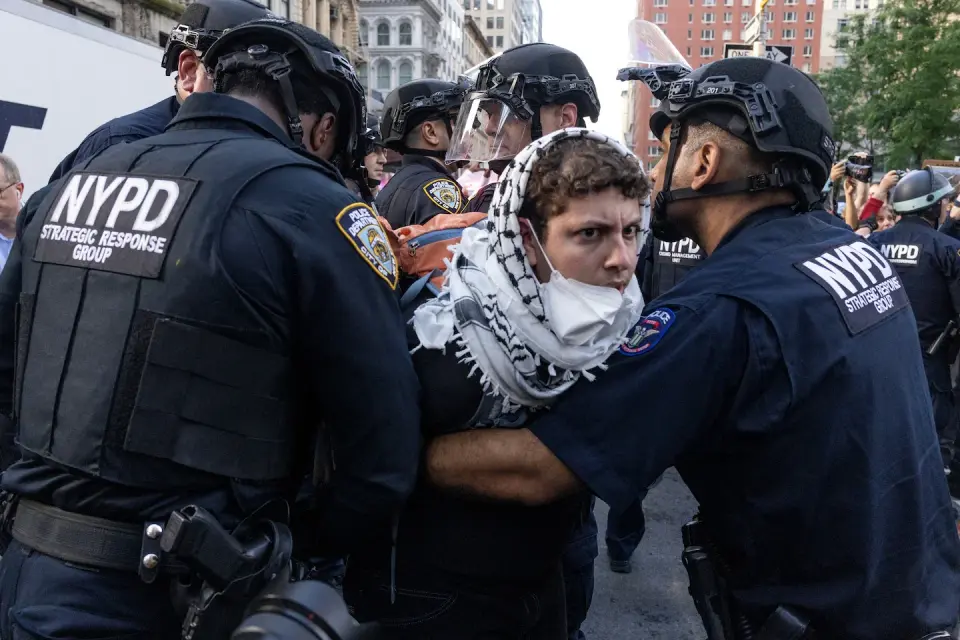
New York Mayor Zohran Mamdani and NYPD Commissioner Jessica Tisch announced the disbanding of the Strategic Response Group (SRG), a unit criticized for aggressive protest tactics. The move fulfills a 2025 campaign promise and introduces a new civilian-led de-escalation framework while banning specific crowd-control methods. Counterterrorism functions will shift to the Intelligence and Counterterrorism Bureau, and the reforms are set to be implemented without additional funding or changes to NYPD headcount.
Key points
- The Strategic Response Group (SRG), created in 2015, is being disbanded after years of criticism for heavy-handed tactics during protests, including the 2020 Black Lives Matter demonstrations.
- A new Community Dialogue and De-escalation Division (CDDD) will be established within the Mayor’s Office of Community Safety, staffed by unarmed civilians without arrest powers.
- The NYPD will create a First Amendment Support Team (FAST) of 30 officers trained in de-escalation, and a Patrol Support Division for rare arrests and major event support.
- Specific tactics are banned during protests, including kettling, tear gas, long guns, and pepper spray as a general crowd-control tool; acoustic devices are limited to 90 decibels.
- Counterterrorism responsibilities previously held by the SRG will be consolidated within the NYPD’s Intelligence and Counterterrorism Bureau.
- The reforms are to be implemented over 90 days without additional funding or changes to the total NYPD workforce size.
Background
The disbanding of the SRG fulfills a key campaign promise made by Mayor Mamdani in 2025. The unit had faced mounting criticism from civil rights groups and progressive supporters, including the Democratic Socialists of America, who argued it suppressed constitutional rights. In 2023, a federal lawsuit led to a settlement requiring slower police responses to demonstrations, which Mamdani’s reforms expand upon. The move follows a broader push by Mamdani to reshape public safety, including the creation of the Mayor’s Office of Community Safety in March 2026 and a review of use-of-force policies.
How outlets are covering it
Civil rights organizations, such as the New York Civil Liberties Union, and progressive groups like the Democratic Socialists of America praised the decision as a historic victory for protest rights. Conversely, police unions, including the Police Benevolent Association and the detectives’ union, criticized the move, arguing it would lead to chaos and leave officers under-resourced. NYPD Commissioner Jessica Tisch defended the changes, stating they strengthen counterterrorism efforts while preserving the department’s ability to protect New Yorkers. Some city council members, like Joann Ariola, questioned whether the reforms would compromise public safety, while others, like Chi Ossé, supported the alignment with the CURB Act.
Why it matters
The disbanding of the SRG marks a significant shift in New York City’s approach to protest policing, separating counterterrorism from demonstration response. It reflects a broader trend toward de-escalation and civilian-led mediation in public safety, potentially setting a precedent for other cities. The move also highlights ongoing tensions between progressive mayors and police unions over the balance between public safety and civil liberties.
What to watch
The new protest-response structure is to be implemented over the next 90 days. The CDDD and FAST will begin operations, with the PSD taking on additional responsibilities. The city plans to hire and train civilians to work with protest organizers before and during demonstrations. The SRG is scheduled to be fully dissolved by the spring of 2027, when a new crowd-control unit will assume responsibility for facilitating nonviolent protests.
- Mamdani disbands NYPD unit criticized for aggressive tactics at protests The Washington Post
- SRG: Mamdani disbands controversial NYPD unit, fulfilling campaign promise CNN
- Mamdani’s Move to Disband N.Y.P.D. Unit Provokes Praise, Anger and Spin The New York Times
- NYPD SRG disbanded: Mamdani, Tisch on NYC protest unit ABC7 New York
- Mayor Mamdani disbands NYPD’s Strategic Response Group PIX11
Want the full story? Read the original reporting
Read on The Washington Post