
Michigan Senate Race Heats Up as El-Sayed Faces Muslim Brotherhood Attacks
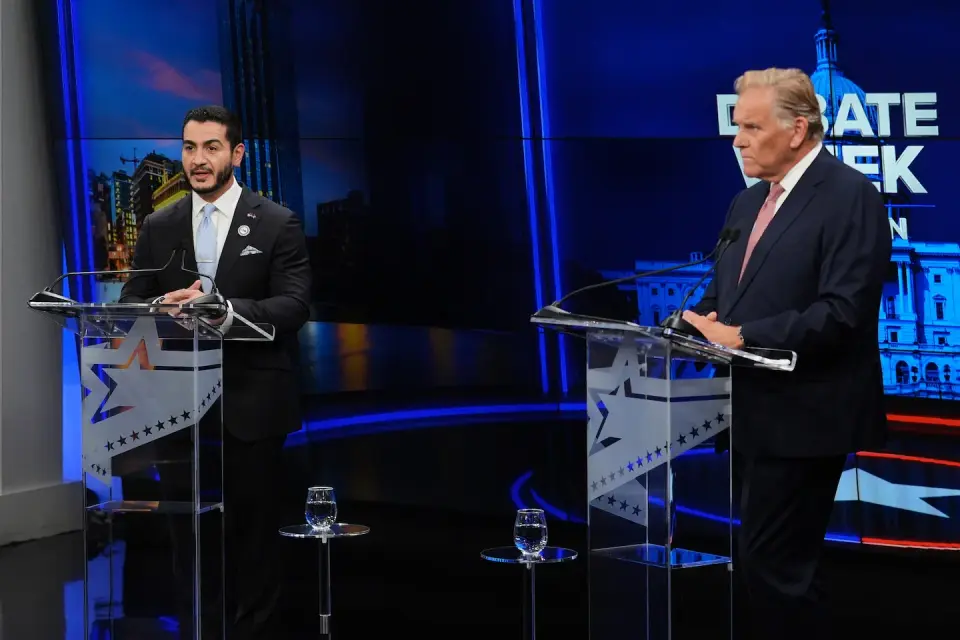
With the November 3 election approaching, Michigan’s Senate race has intensified around allegations that Democratic nominee Abdul El-Sayed has ties to the Muslim Brotherhood. Republican opponent Mike Rogers and President Donald Trump have repeatedly raised these claims, citing El-Sayed’s family history and past writings. El-Sayed has firmly denied any connection, calling the questions Islamophobic 'dual loyalty' attacks. Recent polls show a tight race, with El-Sayed holding a narrow lead, while he prepares to campaign with former President Barack Obama in Detroit.
Key points
- Republican candidate Mike Rogers and President Trump have repeatedly accused El-Sayed of ties to the Muslim Brotherhood, a 98-year-old Islamist organization.
- El-Sayed denied the claims at a town hall, stating he 'disavows' the group but challenged the premise of the question as an attack on his religious identity.
- The controversy centers on social media posts by El-Sayed’s half-sister regarding their mother’s activism in the 1970s, though El-Sayed was not raised by his birth mother.
- Polls show a close race, with El-Sayed leading by a narrow margin, and he is scheduled to campaign with Barack Obama in Detroit on October 24.
- The man who heckled El-Sayed at a town hall was identified as Thomas Teepell, a former aide to Senator Josh Hawley.
Background
This controversy follows earlier debates where El-Sayed rejected Rogers' claims, calling them 'shameful.' PolitiFact had previously rated Rogers' assertion that El-Sayed failed to disavow the group as 'False.' The current attacks represent a broader Republican strategy to associate El-Sayed with Islamic extremism, a tactic that has become more mainstream in recent midterm cycles.
How outlets are covering it
The Washington Post and The New York Times focus on the intensity of the attacks and El-Sayed's forceful rebuttals, noting the personal nature of the scrutiny. CNN emphasizes the linguistic distinction between 'condemning' and 'disavowing,' highlighting how the latter implies a prior affiliation. The Guardian provides specific details on the heckler's identity and the polling data, while also noting the lack of evidence for the claims. All sources agree on the tightness of the race and the strategic importance of the Muslim Brotherhood narrative for Republicans.
Why it matters
The outcome of this race could determine the balance of power in the US Senate, and the use of religious identity as a political weapon has broader implications for how minority candidates are treated in US elections. The controversy also highlights ongoing debates about Islamophobia and the boundaries of political discourse in the United States.
What to watch
El-Sayed will campaign with Barack Obama in Detroit on October 24, the first day of in-person early voting. The general election is scheduled for November 3, 2026. Polls will continue to track the narrow lead El-Sayed holds, and the campaign is expected to remain focused on the Muslim Brotherhood allegations and El-Sayed's religious identity.
- Examining the Muslim Brotherhood claims in Michigan’s Senate race The Washington Post
- Republican 'Muslim Brotherhood' attacks on El-Sayed in Michigan seek to exploit Democratic fault lines Reuters
- What Republicans mean when they ask Abdul El-Sayed to ‘disavow’ the Muslim Brotherhood CNN
- Abdul El-Sayed Confronts Attacks on His Faith and Family Ties The New York Times
- Man who heckled Abdul El-Sayed is former Josh Hawley aide, records show The Guardian
Want the full story? Read the original reporting
Read on The Washington Post