
Midterm Early Voting Surges Across Key States as Data Tracking Intensifies
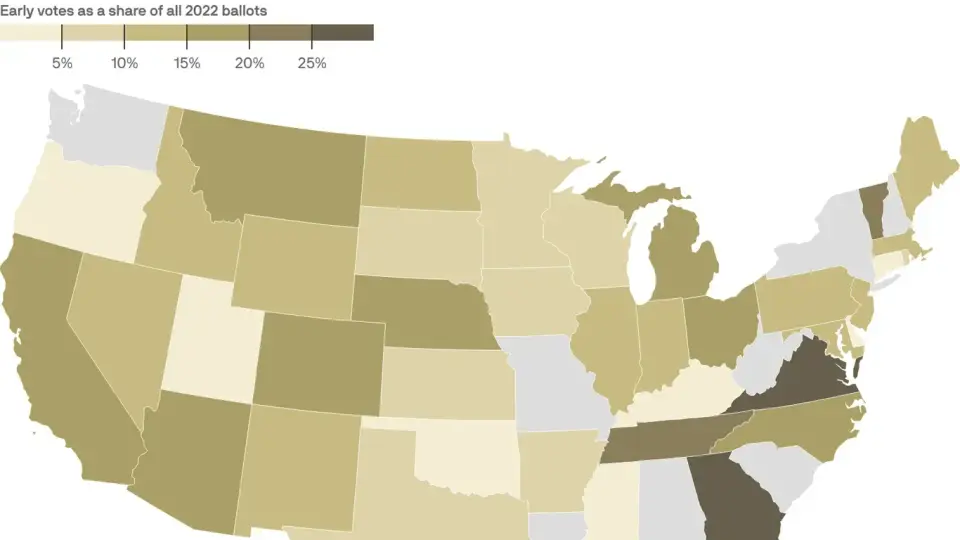
Early voting for the 2026 US midterm elections is underway in multiple states, with significant surges reported in Texas, North Carolina, and Georgia. Data from the University of Florida Election Lab indicates high participation in mail-in and in-person ballots ahead of the November 3 election. While some regions show record-breaking numbers, analysts caution that early turnout does not guarantee final outcomes, noting the importance of mobilizing rural and undecided voters.
Key points
- Early voting is active in South Carolina, North Carolina, and Georgia, with data tracked by the University of Florida Election Lab.
- Texas counties, including Harris and Dallas, have shattered previous early voting records, with Dallas County seeing over 76,000 ballots on the first day.
- President Trump is campaigning in North Carolina to support Republican Senate candidate Michael Whatley, who is trailing Democrat Roy Cooper.
- Analysts warn that high early turnout does not ensure a Democratic victory, citing increased Republican base mobilization since 2018.
- Voter registration in 31 states plus Washington, D.C., includes party affiliation data, which is being tracked where available.
Background
Recent archive entries highlight record early voting in North Texas, with Dallas County surpassing previous benchmarks by nearly 20,000 votes. This surge follows a record 19 million statewide registrations, despite software errors that delayed voter record processing. Additionally, Trump’s recent campaign stops in red states aim to counter Democratic momentum in early voting, particularly in races like the North Carolina Senate contest.
How outlets are covering it
Axios focuses on the geographic spread of early voting surges, emphasizing the data-driven approach to tracking participation. WYFF highlights the specific states of South Carolina, North Carolina, and Georgia, noting the three-week early voting period in Georgia. Both sources rely on the University of Florida Election Lab for data, but WYFF provides more detail on the registration process and party affiliation tracking. In contrast, archive sources emphasize the political implications of the surge, with analysts cautioning against premature conclusions about the final outcome.
Why it matters
Early voting trends provide critical insights into voter engagement and potential shifts in political power. Record-breaking numbers in key states like Texas and North Carolina could influence the outcome of the 2026 midterms, particularly in competitive races. Understanding these trends helps stakeholders assess the effectiveness of campaign strategies and voter mobilization efforts.
What to watch
As early voting continues, data will be updated to reflect changes in turnout and party affiliation. Campaigns will likely intensify efforts to mobilize voters in rural and undecided areas. The final outcome will depend on the ability of both parties to convert early voting momentum into general election support.
- Where midterms early voting is surging Axios
- Early Voting Data Shows Democratic Edge in Midterm Elections Bloomberg.com
- By the numbers: Tracking early voting data in SC, NC, Georgia WYFF
- Early voting surges across key battleground states ahead of midterms KARK
- Early midterm voting surge: Sign of Democratic dominance or GOP’s firm standing? Yahoo
Want the full story? Read the original reporting
Read on Axios