
Midterm Gains Put National Popular Vote Compact Within Reach for 2028
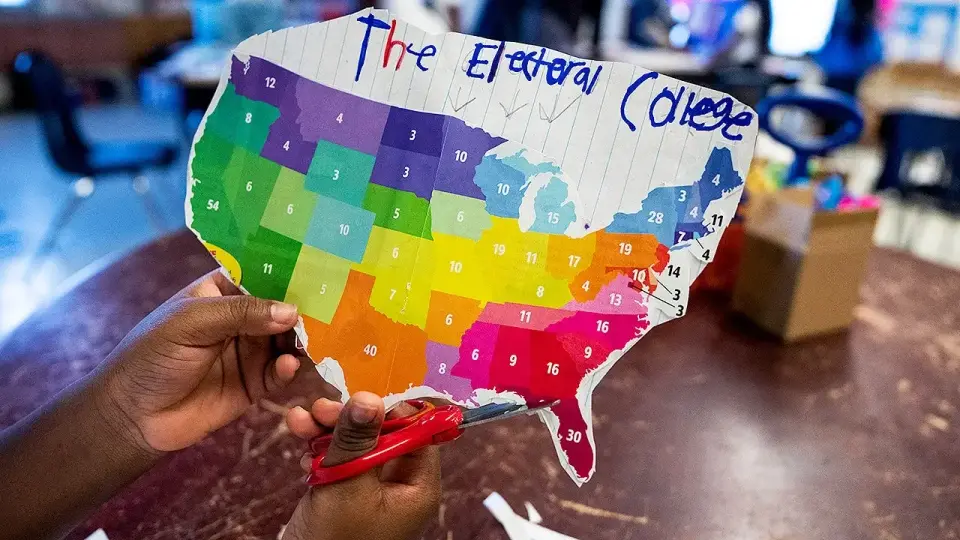
Democratic control of five key statehouses after the 2026 midterms brings the National Popular Vote Interstate Compact close to the 270 electoral votes needed to activate. If Pennsylvania, Michigan, Wisconsin, Nevada, and Arizona join, the compact could bypass the Electoral College for the 2028 election, though legal challenges and legislative priorities remain uncertain.
Key points
- The National Popular Vote Interstate Compact currently holds 222 electoral votes from 18 states and Washington, D.C., requiring 48 more to reach the 270 threshold for activation.
- Democrats now control the governor’s office and both legislative chambers in Michigan, Pennsylvania, Wisconsin, and Nevada, with potential gains in Arizona, totaling 50 to 61 electoral votes.
- The nonprofit National Popular Vote expects to pre-file bills in these states before or early in the 2027 legislative sessions to secure the necessary votes before the July 20, 2028 deadline.
- Legal experts debate whether the compact violates the Constitution’s compact clause or Article II, with some arguing it requires congressional consent while others cite state authority over elector appointment.
- Supporters argue the system ensures every vote counts equally, while critics contend it undermines the structural role of smaller states in presidential selection.
Background
The Electoral College has allowed two Republican presidents to win without the national popular vote since 2000. Previous attempts to abolish it via constitutional amendment have failed due to gridlock. The 2026 midterms marked a historic Democratic sweep of governorships in traditionally Republican states, reshaping the political landscape and increasing pressure to alter presidential selection methods.
How outlets are covering it
Fox News and The New York Times report on the legislative path to activation, noting the compact’s proximity to the 270-vote threshold. Mother Jones emphasizes the democratic implications and historical context of the Electoral College, while Fox News highlights legal challenges from conservative experts like Hans von Spakovsky. Axios provides minimal detail, focusing on the potential activation without extensive analysis. All sources agree on the current vote count and the 2028 deadline but differ on the likelihood of legal success and the political motivations behind the compact.
Why it matters
If activated, the National Popular Vote Interstate Compact would effectively replace the Electoral College with a national popular vote for the 2028 presidential election, fundamentally altering how presidents are chosen. This could reshape campaign strategies, voter engagement, and the balance of power between large and small states, with potential legal battles in the Supreme Court over its constitutionality.
What to watch
State legislatures in the five key states will introduce bills in 2027 to join the compact. Congress may need to approve the compact if required by the Constitution, and non-participating states may challenge its legality in court. The outcome will be determined before July 20, 2028, with the compact’s activation contingent on reaching 270 electoral votes by that date.
- Democrats’ midterm sweep opens path to bypassing Electoral College by 2028 Fox News
- Democrats Now Have a Path to Sidestep the Electoral College. Would It Work? The New York Times
- Democrats' big midterm wins could change how we elect the next president Yahoo
- Democrats' midterm gains could sideline Electoral College by 2028 Axios
- America Finally Has the Votes to End the Electoral College Mother Jones
Want the full story? Read the original reporting
Read on Fox News