
Midterm Senate Debates Turn Personal as Republicans Grapple with Trump’s Iran War and Fuel Prices
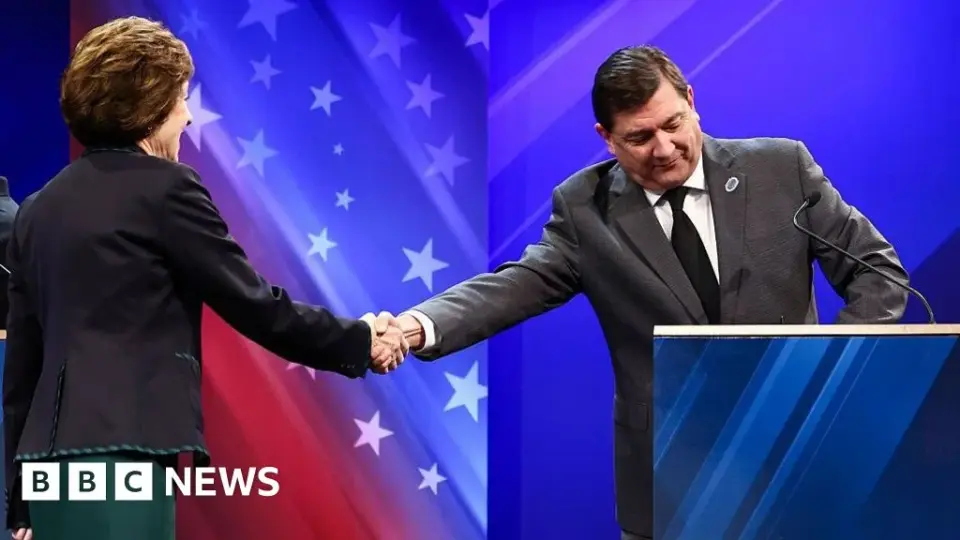
With the November 3 election approaching, US Senate debates have become increasingly hostile, marked by personal attacks and sharp divergences from President Trump. Key races in Maine, Alaska, and Michigan feature candidates distancing themselves from the administration’s Iran conflict and high fuel costs, while some Republicans skip debates entirely. AOC donated $1 million to a Michigan Democrat, and Trump rallied in Georgia to support his candidates.
Key points
- Republican candidates are breaking with Trump on policy, particularly regarding the Iran war and Russian fuel imports, to address voter concerns over high gas prices.
- Personal attacks dominated debates, including accusations of corruption, staff mistreatment, and antisemitism in races in Maine, Alaska, and Georgia.
- 21 of the 35 Senate races have no scheduled debates, notably the Texas contest where incumbent Ken Paxton declined invitations.
- Alexandria Ocasio-Cortez transferred $1 million to Abdul El-Sayed’s Michigan campaign, while Trump rallied in Georgia to support Mike Collins.
- Fuel prices remain elevated, with AAA reporting national averages of $4.33 for gas and $6.33 for diesel, influencing voter sentiment.
Background
This escalation follows a period of intense campaign spending, where billionaires like Elon Musk and Jeff Yass injected over $600 million into Republican efforts. Recent rallies by Trump in Tennessee and Georgia highlight the administration’s focus on maintaining congressional majorities despite low approval ratings.
How outlets are covering it
BBC and CNN emphasize the personal nature of the attacks and the strategic distancing of moderate Republicans from Trump’s foreign policy. Fox News highlights the financial support for El-Sayed and Trump’s active campaigning in Georgia, while also questioning media coverage of El-Sayed’s family ties. KATU’s content was largely inaccessible, but its title suggests a focus on campaign spending and battleground intensity.
Why it matters
These debates signal a fractured Republican base and a volatile political environment where policy disagreements with the president are becoming a viable strategy for candidates in competitive states. The lack of debates in key races like Texas could impact voter information and the outcome of the Senate majority.
What to watch
Voters will cast ballots on November 3, with the outcome of the Senate majority potentially hinging on a few tight races in states like Maine, Alaska, and Texas. Campaign spending is expected to continue surging in the final weeks.
- Three things we learned from the US midterm debates BBC
- ‘You should be ashamed of yourself’: Heated Senate debates in Alaska and Maine become personal CNN
- As midterm Election Day approaches, candidates clash in debates Fox News
- Fact-Checking Senate Debates in Georgia, Maine and Michigan The New York Times
- Senate battlegrounds heat up as candidates clash, campaign spending soars KATU
Want the full story? Read the original reporting
Read on BBC