
Vance's 'Weasel' Attack Ignites Michigan Senate Clash as El-Sayed Pivots to Rural Voters
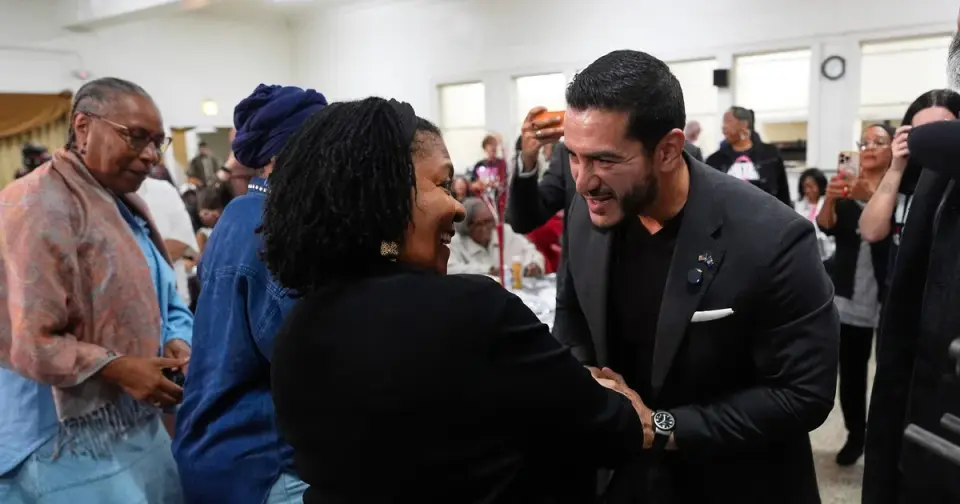
Vice President JD Vance escalated the Michigan Senate race by calling Democratic nominee Abdul El-Sayed a 'weasel' during a rally in Monroe, framing the election as a choice between 'grievance and gratitude.' El-Sayed responded in the Upper Peninsula by rebranding himself as a 'Wolverine' and mocking Vance's Ohio roots. While Republicans focus on cultural and religious attacks, Democrats are targeting rural voters with economic messaging, as the race for Senate control intensifies with three weeks left until the election.
Key points
- Vance labeled El-Sayed a 'weasel' and urged voters to 'punish' him, while El-Sayed countered by calling himself a 'Wolverine' and rejecting Vance's authority to lecture on American values.
- El-Sayed campaigned in the Upper Peninsula with Rep. Alexandria Ocasio-Cortez, targeting Republican-leaning areas with messages about grocery and gas prices, despite the region's historical GOP support.
- Republican candidate Mike Rogers is targeting Detroit's Black and Jewish communities, claiming internal polls show strong support among Jewish Democrats, while El-Sayed's campaign highlights outreach from statewide Jewish leaders.
- Ad spending in Michigan is heavily skewed toward Republicans, with over $119.2 million spent by GOP groups compared to $86.6 million for Democrats, according to AdImpact.
- The race is critical for Senate control, with both parties viewing Michigan as a must-win state, and the campaign has seen increased Islamophobic rhetoric and protests.
Background
The Michigan Senate race has been contentious since the August primary, with prior disputes involving Vance's defense of his wife and El-Sayed's response. Earlier in October, Vice President Kamala Harris also campaigned with El-Sayed, signaling the high stakes of the race for Democratic control of the Senate. The current clash follows a pattern of personal attacks and cultural framing that has defined the campaign.
How outlets are covering it
CBS News and Bridge Michigan highlight the personal nature of the attacks, with Vance's 'weasel' comment and El-Sayed's 'Wolverine' response serving as a focal point. Bridge Michigan provides fact-checks on Vance's claims regarding El-Sayed's past statements on the Green New Deal and 'defund the police,' noting that some claims are taken out of context. WTVG focuses on the economic concerns of Vance's supporters, such as gas prices and the Iran war, while FOX 2 Detroit emphasizes the strategic importance of the race for both parties. The outlets differ in their emphasis: CBS and Bridge focus on the rhetoric and fact-checking, while WTVG and FOX 2 highlight the economic and strategic dimensions of the race.
Why it matters
The Michigan Senate race is a pivotal battleground for control of the U.S. Senate, with the outcome potentially determining the balance of power in Congress. The intense rhetoric and cultural attacks reflect broader national tensions, while the economic messaging from both sides highlights the impact of the Iran war and inflation on voters. The race also underscores the growing role of Islamophobic rhetoric in political campaigns, with El-Sayed facing attacks on his faith and family history.
What to watch
With three weeks left until the November 3 election, both campaigns are expected to intensify their outreach. El-Sayed is set to campaign with former President Barack Obama later in October, while Rogers continues to target Detroit's Black and Jewish communities. Ad spending is likely to increase, with Republicans maintaining a significant advantage in TV ad spending. The race will also see continued focus on economic issues, such as gas prices and the Iran war, as well as cultural and religious attacks.
- El-Sayed responds after Vance calls him a "weasel" as Michigan Senate race grows contentious CBS News
- Fact check: JD Vance attacks Abdul El-Sayed in Michigan Bridge Michigan
- Trump/Vance supporters see optimism as midterms loom WTVG
- El-Sayed, Vance rally as Michigan sprints to Midterms FOX 2 Detroit
- Vance calls El-Sayed ‘little weasel’ as Senate race takes center stage in Michigan speech MLive.com
Want the full story? Read the original reporting
Read on CBS News