
Midterm voters split between fear of unchecked Trump power and DSA-led progressive shifts
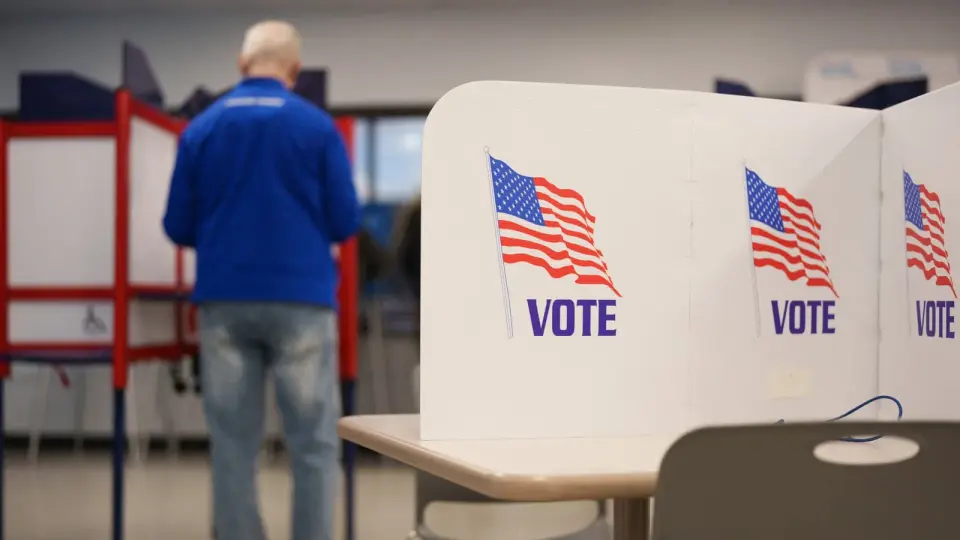
A CNBC survey reveals that voters are deeply polarized in their fears ahead of the November 3 midterms. Republicans worry that a Democratic Congress will enact radical policies associated with the Democratic Socialists of America, while Democrats fear that a Republican-controlled Congress will allow President Trump to exceed constitutional limits. Despite these ideological concerns, affordability remains a top issue across all groups, though it trails behind fears of political extremism in the specific context of opposing party control.
Key points
- The survey, conducted from October 14 to 18 with 1,000 registered voters, shows 44% of all respondents fear Trump operating beyond his constitutional power if Republicans retain control of Congress.
- Conversely, 28% of respondents expressed concern about the implementation of policies linked to the Democratic Socialists of America if Democrats take over Congress, with 54% of Republicans sharing this worry.
- Affordability remains a significant concern, with 22% of voters worried about price failures under a Democratic Congress and 24% under a Republican one, but these figures are lower than fears regarding political extremism.
- Democrats and independents cited government corruption as a top priority, while Republicans prioritized immigration and border security, reflecting the current political advertising landscape.
- Strategists warn that Democrats must avoid appearing too far left to retain gains with working-class and Latino voters, while Republicans must acknowledge voter desire for change from the current administration.
Background
This polling data arrives amid a backdrop of deepening political instability. In September, the Senate failed to pass a war powers resolution regarding the ongoing conflict in Iran, marking the twelfth such failure. Shortly after, House Republicans departed for a seven-week recess without passing measures to address rising consumer costs. Additionally, President Trump’s approval rating hit a record low of 32% in early October, driven by declining support among Hispanic voters and independents. These events have created an environment where voters are highly anxious about both the current administration’s actions and the potential policies of the opposing party.
Why it matters
The results highlight a critical vulnerability for both parties. If Democrats adopt policies perceived as too radical, they risk losing the working-class and Latino voters they have recently gained. Conversely, if Republicans fail to address the desire for change, they may lose support in competitive states. The polarization suggests that the post-election landscape will be defined by intense ideological conflict rather than moderate consensus, potentially leading to legislative gridlock or extreme policy swings depending on which party secures the majority.
What to watch
With less than two weeks until the November 3 election, political advertising is intensifying, with Democrats attacking Trump for corruption and Republicans linking Democrats to far-left movements. The outcome will determine whether Congress can check the executive branch or if the administration will face legislative opposition from a party potentially constrained by fears of appearing too progressive. The coming weeks will likely see a final push to mobilize voters who are anxious about both economic stability and political extremism.
Want the full story? Read the original reporting
Read on CNBC