
Miller Memo Decentralizes Cabinet Messaging as Democrats Reject Cooperation
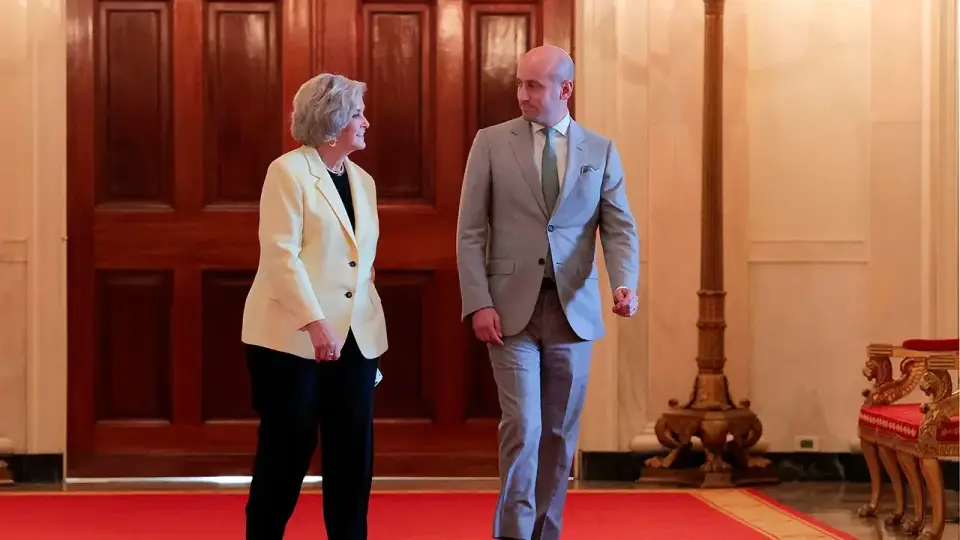
Stephen Miller’s new White House memo decentralizes communications control, ending Susie Wiles’ centralized oversight. While Miller focuses on winning back young voters, Democrats reject cooperation, and RFK Jr. allies celebrate the shift.
Key points
- Miller’s memo replaces the Cabinet Secretary role with 'Director of Cabinet Relations,' allowing departments to control their own messaging.
- Sources indicate Wiles previously enforced strict, centralized communication directives, which Miller’s team views as inefficient.
- Miller plans to target young and minority men who shifted to Democrats in the 2026 midterms, focusing on economic and anti-'woke' issues.
- House Minority Leader Hakeem Jeffries has stated he has 'zero interest' in working with Miller, citing his immigration policies.
- RFK Jr. and MAHA supporters view Miller’s appointment as a major victory for their health agenda, calling him a 'strongest MAHA supporter.'
Background
Miller replaced Susie Wiles as White House Chief of Staff following the 2026 midterm elections, where Democrats gained majorities in both chambers of Congress. Wiles, the first woman to hold the role, transitioned to the Trump Political Operation. The change followed a period of communications instability, including the brief tenure of press secretary Katie Zacharia.
How outlets are covering it
Fox News emphasizes the operational shift, noting that Miller’s memo 'unleashes the Cabinet' by removing Wiles’ 'chokehold' on messaging, which a former official described as controlling through 'threat of duess.' Axios highlights Miller’s strategic pivot toward young, working-class, and minority men, who swung 36 points toward Democrats in the midterms, focusing on economic affordability and anti-'woke' policies. NBC News focuses on the political impasse, noting that Democrats are deeply skeptical of Miller’s willingness to cooperate, with Jeffries labeling him a 'stone-cold racist.' Politico highlights the enthusiasm of RFK Jr. and his MAHA allies, who view Miller as a key ally for their health agenda, contrasting with the broader Democratic rejection.
Why it matters
The shift to decentralized communications may improve policy execution but risks inconsistent messaging. Miller’s focus on regaining young male voters is critical for the administration’s future electoral viability, especially as it faces a Democratic Congress that is likely to obstruct its agenda. The deep partisan divide, exemplified by Jeffries’ refusal to engage, suggests a period of intense legislative and political confrontation.
What to watch
Miller will attempt to advance his agenda through executive orders and bipartisan cooperation on issues like permitting reform, though Democratic resistance is expected. The administration will monitor voter sentiment among young men to gauge the effectiveness of its new messaging strategy. The White House will also navigate the new Democratic Congress, which is poised to investigate executive actions.
- Stephen Miller's internal memo unleashes Trump agencies after 'absolute control' under Wiles' reign Fox News
- Scoop — Stephen Miller's post-midterm focus: MAGA and men Axios
- Democrats deeply skeptical Trump wants to work with them after his elevation of Stephen Miller NBC News
- Stephen Miller’s appointment energizes RFK Jr. and his MAHA allies Politico
- “American Scoundrel”: From Roy Cohn to Stephen Miller, “McCarthyism Lives On,” Says Author Kai Bird Democracy Now!
Want the full story? Read the original reporting
Read on Fox News