
Missouri Supreme Court Reverses GOP Redistricting, Mandates Voter Referendum
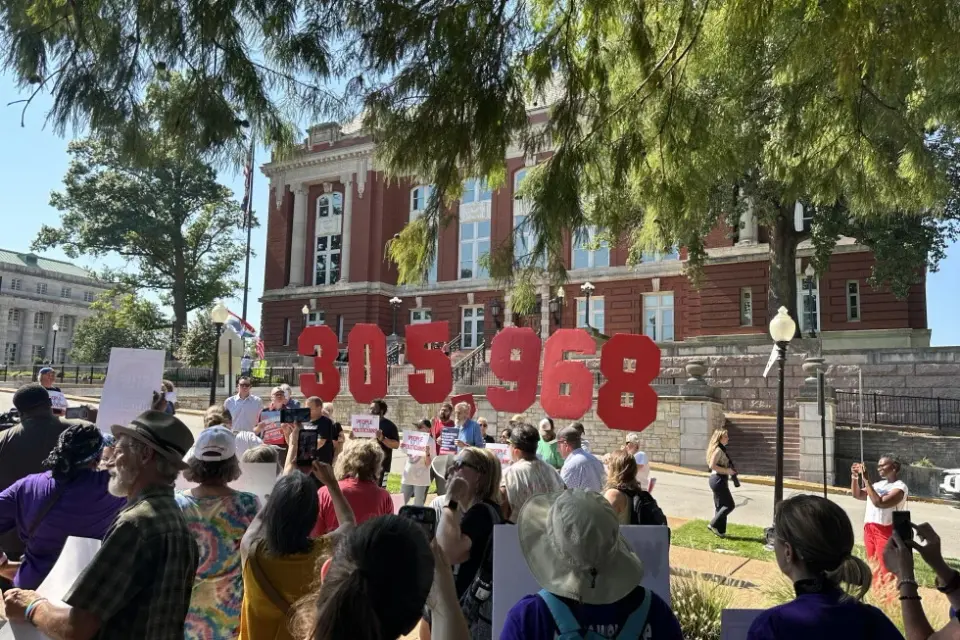
The Missouri Supreme Court unanimously ruled that the Republican-drawn congressional map cannot be used for the November 2026 general election. The court ordered Secretary of State Denny Hoskins to place a referendum on the ballot, requiring voters to approve the new boundaries before they take effect. Consequently, the November election will proceed under the previous district lines, preserving the seat of Democrat Emanuel Cleaver. Attorney General Catherine Hanaway vowed to appeal to the U.S. Supreme Court, calling the decision a constitutional crisis.
Key points
- The Missouri Supreme Court reversed a lower court ruling, declaring that the 2025 redistricting map (HB 1) is invalid for the November general election unless approved by voters via referendum.
- Secretary of State Denny Hoskins was ordered to certify the referendum petition, which gathered over 300,000 signatures from the group People Not Politicians, by the September 8 ballot deadline.
- The ruling ensures Rep. Emanuel Cleaver will run for re-election in his original, heavily Democratic Kansas City-based district rather than the expanded rural district designed to unseat him.
- Attorney General Catherine Hanaway and Gov. Mike Kehoe condemned the decision, with Hanaway stating the state will seek relief from the U.S. Supreme Court to prevent voter disenfranchisement.
- The court also ordered a separate measure, Amendment 6, onto the ballot, which would restrict lawmakers from repealing voter-approved initiatives without an 80% legislative supermajority.
Background
This ruling follows a series of lower court decisions in August 2026 that had initially upheld the Republican-drawn map, blocking referendum efforts. The redistricting occurred during a special session called by Gov. Kehoe in 2025 at the urging of President Trump, part of a national mid-decade redistricting effort aimed at securing House majorities for the 2026 midterms. Prior to this Supreme Court decision, Missouri had already held its August primary using the contested new boundaries.
How outlets are covering it
NBC News and The New York Times emphasized the legal precedent of swapping maps between primary and general elections, noting the uncertainty regarding how candidates will be matched to the old districts. KOMU 8 highlighted the procedural victory for the referendum process, detailing the court's order to Hoskins. All sources reported the strong opposition from state Republicans, with Hanaway and Kehoe framing the ruling as an overreach by 'unelected judges' that disrupts the legislative process. The New York Times noted that while the map was struck down, the court did not specify how primary winners would transition to the old districts, leaving logistical questions unanswered.
Why it matters
The decision halts a key Republican strategy to flip a House seat in Missouri, potentially impacting the national balance of power in the 2026 midterms. It establishes a significant legal precedent regarding the use of referendums to challenge mid-decade redistricting, a trend that has spread to over a dozen states. The outcome also sets the stage for a potential U.S. Supreme Court review, which could define the boundaries of state-level redistricting challenges in future election cycles.
What to watch
The Missouri Secretary of State must finalize the November ballot by September 8, including the referendum on HB 1 and Amendment 6. Attorney General Hanaway is expected to file an appeal with the U.S. Supreme Court. Election officials face the logistical challenge of determining how candidates who won primaries under the new map will be placed on ballots for the old districts in November.
- Missouri court blocks Trump-backed US House map and orders it to be put to a vote AP News
- Missouri Supreme Court rules new GOP-drawn map can’t be used for November elections NBC News
- Missouri Supreme Court Delivers Win for Democrats in Redistricting Case The New York Times
- Missouri Supreme Court orders gerrymandered map, Amendment 6 to go on November ballot KOMU 8
- Missouri Supreme Court puts referendum to overturn new congressional map on ballot stlpr.org
Want the full story? Read the original reporting
Read on AP News