
Missouri Supreme Court Reverses Redistricting Block, Mandates Voter Referendum on Congressional Map
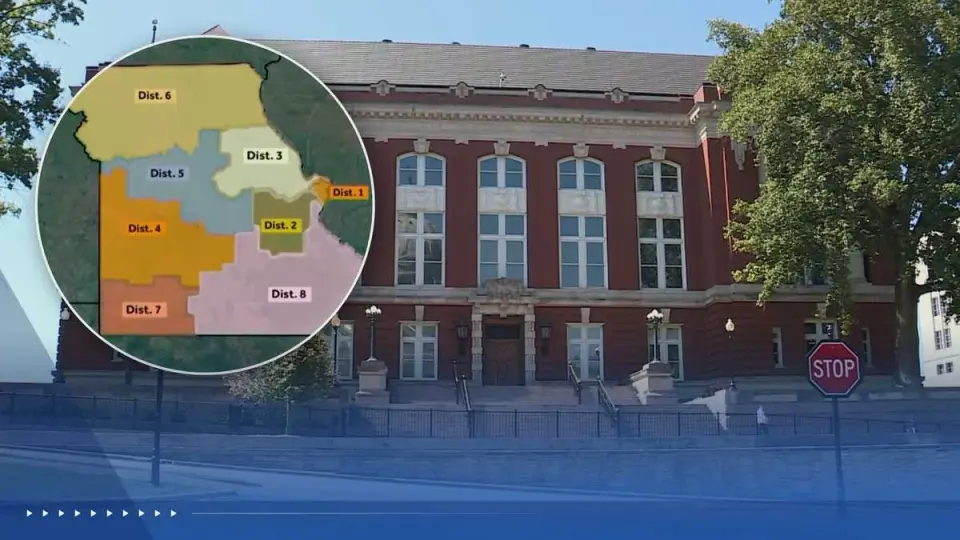
The Missouri Supreme Court unanimously ruled that a new congressional map cannot be used for the November 2026 general election. The court ordered that a referendum on the map must appear on the ballot, restoring the previous district lines for the upcoming election. This decision reverses a lower court ruling and blocks the use of the new map, which was designed to benefit Republicans, until voters approve it. The ruling creates immediate uncertainty regarding how candidates will be selected for the general election, as the primary election was already held under the new map. Missouri Attorney General Catherine Hanaway has vowed to appeal the decision to the U.S. Supreme Court, calling it unprecedented and a violation of federal law.
Key points
- The Missouri Supreme Court unanimously ruled that the new congressional map (HB 1) cannot be used for the November 2026 general election.
- The court ordered Secretary of State Denny Hoskins to place a referendum on the map on the November ballot, reversing his previous decision to reject the petition.
- The previous congressional map, adopted after the 2020 census, remains in full force and effect for the November 2026 general election.
- The new map was designed to benefit Republicans, particularly by altering the 5th Congressional District to challenge Democrat Emanuel Cleaver.
- Missouri Attorney General Catherine Hanaway vowed to appeal the decision to the U.S. Supreme Court, calling it unprecedented and a violation of federal law.
- The ruling creates uncertainty regarding how candidates will be selected for the general election, as the primary election was already held under the new map.
Background
This ruling follows a year of legal battles over the constitutionality and applicability of a new congressional map in Missouri. The new map was passed in September 2025 during a special session called by Governor Mike Kehoe, at the request of President Donald Trump, to improve Republicans' chances in the 2026 midterms. Opponents, including People Not Politicians Missouri, gathered over 300,000 signatures to force a referendum, but Secretary of State Denny Hoskins rejected the petition, claiming it was unconstitutional. The Missouri Supreme Court had previously rejected claims that the special session was illegal, mid-decade redistricting isn't allowed, and the new districts aren't compact enough. The current ruling is one of only a few nationally to go against Republicans' redistricting plans.
How outlets are covering it
The Missouri Supreme Court, in a unanimous ruling, determined that the referendum petition was legal and that the new map could not be used for the November 2026 general election. The court emphasized that the map 'did not go into effect and will not go into effect unless and until approved by the voters.' People Not Politicians Missouri, the advocacy group that organized the referendum, celebrated the ruling as a victory for democracy, stating that 'people, not politicians, will have the final say.' In contrast, Missouri Attorney General Catherine Hanaway, a Republican, called the decision unprecedented and a violation of federal law, vowing to appeal to the U.S. Supreme Court. She argued that the decision would disenfranchise voters and create a constitutional crisis. Republican State Senator Rick Brattin, who won the August primary in the reshaped 5th District, criticized the ruling as unconstitutional and disrespectful to voters, stating that he plans to take legal action in response. Democratic Rep. Emanuel Cleaver, whose district was altered by the map, described the court's decision as a victory for Missouri residents and a rejection of the legislature's attempt to shift his district from Democratic to Republican control. The New York Times noted that the ruling creates uncertainty regarding how candidates will be selected for the general election, as the primary election was already held under the new map. The Guardian highlighted that the ruling is a rare setback for Republicans in a national redistricting battle, while NBC News emphasized that the court's decision means Cleaver will now be seeking re-election for his old seat, which skews heavily Democratic.
Why it matters
The Missouri Supreme Court's ruling has significant implications for the 2026 midterm elections, as it determines which congressional map will be used for the general election. The new map was designed to benefit Republicans, particularly by altering the 5th Congressional District to challenge Democrat Emanuel Cleaver. The ruling restores the previous district lines, which are more favorable to Democrats, and creates uncertainty regarding how candidates will be selected for the general election. The decision also has national implications, as it is one of only a few rulings to go against Republicans' redistricting plans, potentially influencing similar cases in other states. The ruling highlights the ongoing legal battles over mid-decade redistricting and the role of referendums in determining congressional boundaries. It also raises questions about the constitutionality of using different maps for primary and general elections, as the primary was held under the new map. The decision could have long-term effects on the balance of power in the U.S. House of Representatives, as Republicans had hoped to net as many as 10 additional seats nationally through redistricting efforts.
What to watch
Missouri Attorney General Catherine Hanaway has vowed to appeal the decision to the U.S. Supreme Court, seeking an emergency stay to permit the state to use the new congressional map. The court ordered Secretary of State Denny Hoskins to issue a certificate of sufficiency regarding the referendum and to place the referendum petition on the November 2026 ballot before Sept. 8. The court also ordered Hoskins to 'take any and all additions steps necessary' to put the referendum petition on the ballot. The ruling creates uncertainty regarding how candidates will be selected for the general election, as the primary election was already held under the new map. The court did not specify how candidates would be determined for a general election, leaving open questions about whether candidates who won their primaries under the redrawn map might remain the nominees in the same-numbered districts under the old lines, or whether state law allows party nominating committees to select candidates for each district. The decision could lead to further legal battles, as Republican State Senator Rick Brattin stated that he plans to take legal action in response to the ruling. The outcome of the referendum in November will determine whether the new map will be used for future elections, with the map taking effect 30 days after approval by voters.
- Missouri Supreme Court makes ruling on redistricting referendum: Map must go on ballot KMBC
- Missouri Supreme Court rules new GOP-drawn map can’t be used for November elections NBC News
- Missouri supreme court throws out new congressional maps backed by Trump The Guardian
- Missouri Supreme Court Delivers Win for Democrats in Redistricting Case The New York Times
- Missouri Supreme Court orders gerrymandered map, Amendment 6 to go on November ballot KOMU 8
Want the full story? Read the original reporting
Read on KMBC