
Missouri voters pass Amendment 6, imposing 80% legislative threshold to protect citizen initiatives
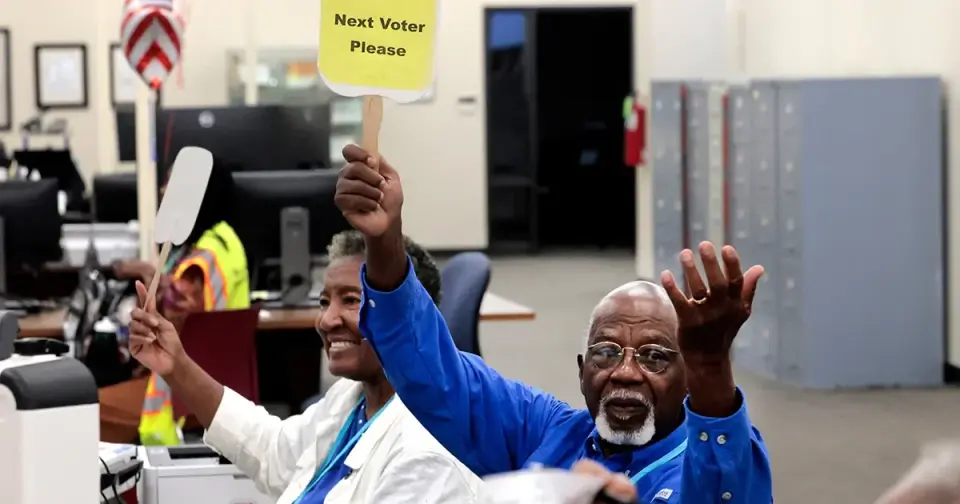
Missouri voters approved Amendment 6, a constitutional change that requires an 80% supermajority in both legislative chambers to overturn laws or amendments passed via citizen initiative. The measure also mandates a simple majority for new initiatives and protects judicial review of ballot language. This follows a decisive rejection of a Republican-backed proposal to restrict ballot access and a failed attempt to reinstate abortion bans. While Democrats gained 16 House seats, Republicans retain control of the legislature and all statewide offices, but now face significant hurdles in reversing voter-approved policies.
Key points
- Lawmakers must now secure 80% support in both the House and Senate to repeal or modify citizen-initiated measures approved since 2010.
- Any legislative attempt to change such measures requires subsequent approval by voters in a statewide election.
- The amendment rejects a higher threshold for passing initiatives, maintaining the simple majority standard for citizen-led laws.
- Voters rejected Amendment 3, which would have restored abortion restrictions and limits on gender-affirming care for minors.
- Secretary of State Denny Hoskins, who previously refused to certify the petition, predicted the amendment would be challenged in court.
Background
This development follows years of conflict between Missouri lawmakers and voters, including legislative attempts to undo voter-approved Medicaid expansion, paid sick leave, and abortion protections. In 2024, voters enshrined reproductive freedom in the state constitution. Earlier this year, Republicans attempted to make citizen initiatives harder to pass, a proposal voters rejected by more than a 4-to-1 margin. The 2026 midterms also saw Democrats gain 16 seats in the state House, though Republicans maintained control of the legislature and all statewide offices.
How outlets are covering it
ProPublica and ABC News emphasize that Amendment 6 represents a direct response to legislative overreach, with ABC highlighting the rejection of the anti-abortion Amendment 3 as a reaffirmation of reproductive freedom. ProPublica notes that the 80% threshold is unprecedented among states, according to law professor Travis Crum. Conversely, Secretary of State Denny Hoskins and former GOP chair John Hancock argue the amendment weakens the legislature and could attract well-funded out-of-state interest groups. While ProPublica frames the result as a shift of power to the people, ABC focuses on the specific policy outcome regarding abortion access, noting that 3,550 abortions were performed in Missouri in 2025, a 53.5% increase from the previous year.
Why it matters
Amendment 6 fundamentally alters the balance of power in Missouri by making it nearly impossible for the legislature to reverse policies enacted through direct democracy. This creates a structural barrier against future attempts to undo voter-approved measures, including abortion protections and paid sick leave. The 80% supermajority requirement, combined with the need for a subsequent voter approval, ensures that citizen-led initiatives have long-term durability. This shift may reduce the legislature's ability to pass laws that contradict the will of the electorate, potentially influencing national debates on direct democracy and legislative authority.
What to watch
Secretary of State Denny Hoskins has indicated that Amendment 6 will likely be challenged in court. Republicans, who still control the legislature, may attempt to find legal loopholes or argue that the amendment violates other constitutional provisions. However, with Democrats gaining 16 House seats, it is unlikely they will gather the 80% support needed to override voter-rejected measures, such as the gerrymandered congressional map. The amendment’s impact on future ballot initiatives, particularly regarding taxation or gun policy, will be monitored as out-of-state interest groups may seek to leverage the new framework.
- Missouri Voters Just Made It Much Harder for Lawmakers to Overturn Citizen-Led Initiatives ProPublica
- Voters Are Siding with Direct Democracy in Seven States boltsmag.org
- Missouri election results: Amendment 3, St. Louis, St. Charles and Jefferson counties STLPR
- With big loss for Amendment 3, what's next for abortion opponents in Missouri? STLtoday.com
- Missouri voters reject anti-abortion rights amendment, reaffirming 'reproductive freedom' ABC News - Breaking News, Latest News and Videos
Want the full story? Read the original reporting
Read on ProPublica