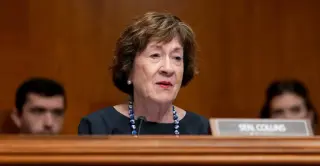
Facing only eight House days before August recess, Republicans are scrambling to advance a new party-line megabill amid internal fights and lukewarm public support, while Democrats counter with a $2.5 million ad campaign targeting Sen. Susan Collins over abortion rights and her Kavanaugh vote.
Former Oregon Republican Sen. Bob Packwood, a long-time advocate for abortion rights who often bucked his party, died at 93. His career ended after a 1993-95 ethics investigation into sexual misconduct and staff harassment, which led to his resignation in 1995, followed by a lobbying career; his legacy remains defined by the scandal despite legislative achievements like the 1986 tax reform.
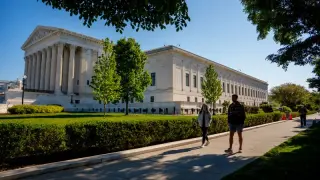
The Supreme Court allowed the continued mailing and telehealth dispensing of mifepristone while the case plays out, but conservative Justices Thomas and Alito dissented, warning that enforcing the 1873 Comstock Act could threaten broader abortion access and hinting at a renewed federal abortion ban push. The decision preserves a critical lifeline for medication abortion in the near term, though advocates warn the threat to access remains tied to ongoing regulatory reviews, potential political maneuvering ahead of the midterms, and the Dobbs framework that eliminated a nationwide abortion right. Medication abortions already account for a large share of U.S. procedures, and while misoprostol-alone options exist, experts note they are less convenient and carry more side effects. This remains a high-stakes, politically charged battleground for abortion access.
The Supreme Court temporarily preserves access to the abortion pill mifepristone by allowing telehealth visits and mail distribution to continue, maintaining the status quo while Louisiana’s challenge proceeds in the federal courts; the court paused a May 1 ruling requiring in-person visits, Justices Thomas and Alito dissented, and the merits will likely be reviewed again in the appeals court before any final ruling.
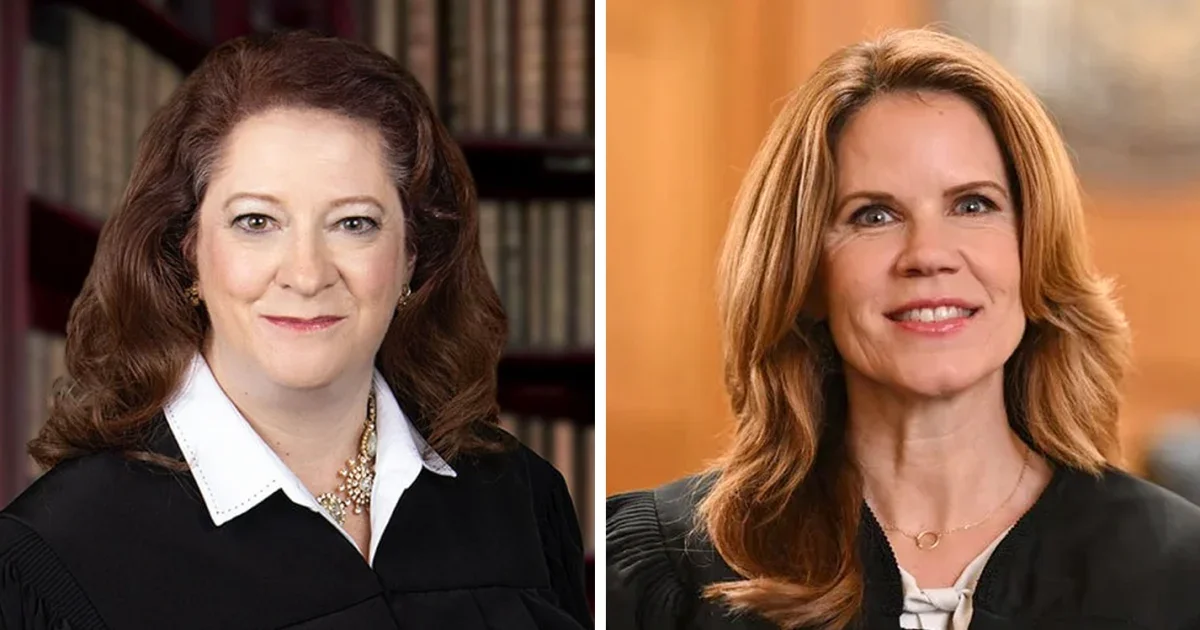
Clark County Judge Lyndsey Boon Brunette announced a 2027 bid for the Wisconsin Supreme Court to replace retiring Justice Annette Ziegler, highlighting her prosecutor background and a commitment to fair, Constitution‑centered rulings with abortion-rights advocacy; the court currently leans liberal with a 5‑2 majority, and conservatives face recruitment headwinds ahead of the open seat.
Democrat-backed Chris Taylor faces Republican Maria Lazar in the April 7 Wisconsin Supreme Court race to fill the seat of retiring conservative Justice Rebecca Bradley. Taylor leads Lazar in fundraising and ads, with Taylor emphasizing abortion rights and voting issues; a win would extend liberal control of the court to four seats and reinforce a trend of activist, issues-based campaigns. Lazar trails financially amid ongoing GOP party tensions and fundraising challenges, while undecided voters and upcoming statewide races add uncertainty.
Kate Walsh discusses Addison Montgomery’s comeback on Grey’s Anatomy, detailing how the character returns amid personal strain with husband Jake Reilly and a high-stakes medical case in Seattle. Walsh notes Addison’s work confronting abortion access politics and the emotional cost of balancing her demanding career with family life, while hinting at future possibilities for the character (and even a Jake reunion) and sharing how her own life between Australia and the U.S. informs the portrayal.
Virginia House Democrats opened the 2026 session by advancing four constitutional amendments: a narrowly crafted measure to allow the General Assembly to redraw congressional districts mid-decade under specific conditions (expires in 2030), plus amendments to protect abortion rights, automatically restore voting rights for felons, and remove a defunct ban on same-sex marriage. All four move to the Senate, with the redistricting proposal potentially going to an April special statewide election if approved.
Following the 2024 election, states that voted on abortion rights have seen mixed results, with some expanding access and others facing ongoing legal battles and restrictions, highlighting the ongoing flux in U.S. reproductive law and the potential for further changes in upcoming elections.
Justice Amy Coney Barrett defends the Supreme Court's decision to overturn Roe v. Wade, describing the 1973 ruling as a historic outlier that went against the will of many Americans, in her new memoir.
Justice Amy Coney Barrett defends her vote to overturn Roe v. Wade in her new memoir, explaining her view that the Court's role is to respect the will of the American people and criticizing Roe as an overreach. She also discusses her decision-making process, her views on religious bias, and the dynamics within the Supreme Court, emphasizing her commitment to the law over personal beliefs.
Planned Parenthood received a temporary court order allowing its clinics to continue Medicaid funding for non-abortion services, challenging a new law that restricts federal funding based on abortion advocacy, which they argue violates free speech rights.
Lena Dunham discusses her decision to take a stand on abortion rights during a significant moment, highlighting her activism through her work and public statements.
Rep.-elect Kelly Morrison, a Democrat from Minnesota, won her seat by defeating a Republican in a district that has shifted towards Democrats. A former OB-GYN, Morrison has been active in state legislation supporting abortion rights and aims to continue this work at the federal level, despite a Republican majority. She plans to focus on bipartisan issues like support for new parents and veterans, joining the New Democratic Coalition. Morrison's medical background and moderate stance are central to her political identity.
Wisconsin's Supreme Court is hearing a pivotal case on whether an 1849 law banning abortion is enforceable, following the overturning of Roe v. Wade. The court's liberal majority suggests a favorable outcome for abortion rights advocates, with a decision expected in 2025. The case highlights tensions over reproductive rights, with implications for medical professionals and victims of sexual assault. The ruling will determine if the old law, which lacks exceptions for incest or the mother's health, stands against more recent legislation.