
Missouri voters reject income tax phaseout and stricter amendment rules in Aug. 4 primary
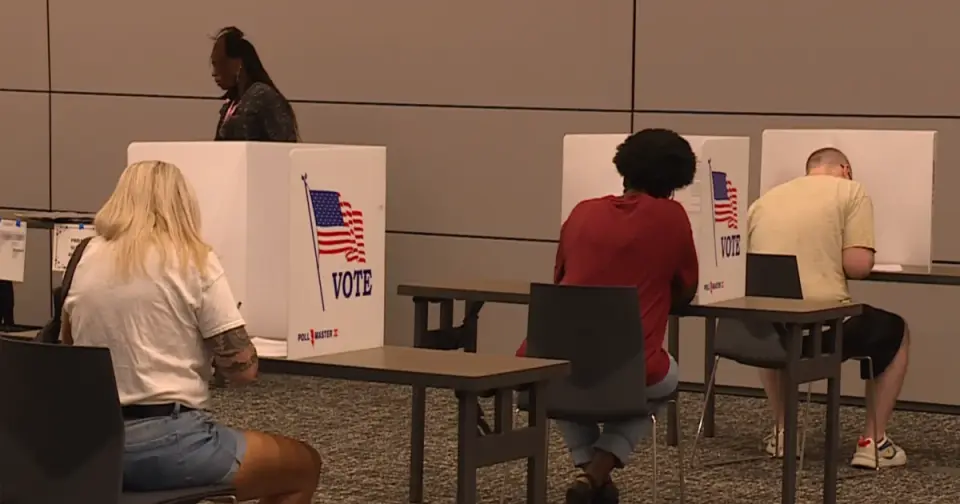
Missouri voters decisively rejected Amendments 4 and 5 in the August 4 primary, preserving the state income tax and the citizen-led initiative process. Amendment 5, which proposed phasing out the income tax in favor of expanded sales taxes, failed with 83.3% of voters voting no. Amendment 4, which would have required a majority in each of the eight congressional districts to pass constitutional changes, also failed with 80.2% voting no. Kansas City Mayor Quinton Lucas praised the results as a rejection of 'voodoo tax schemes' and 'far-out' politics, while the Associated Press confirmed the outcomes. The primary also saw competitive GOP races, including Eric Burlison securing the 7th Congressional District nomination and Lori Rook defeating incumbent Senator Curtis Trent in a local upset.
Key points
- Amendment 5 failed with 83.3% of voters rejecting the proposal to eliminate the state income tax and replace it with expanded sales and use taxes within five years.
- Amendment 4 failed with 80.2% of voters rejecting the measure that would have required a majority vote in all eight congressional districts to pass constitutional amendments, preserving the current statewide majority threshold.
- Kansas City Mayor Quinton Lucas stated that the rejection of Amendment 5 was a 'national service' and a sign against 'voodoo tax schemes' that spare elites while raising costs for families.
- The Associated Press called the primary races for the U.S. Senate in Kansas, with Republican incumbent Roger Marshall facing Democratic challenger Adam Hamilton in the general election.
- In Missouri local races, Lori Rook defeated incumbent State Senator Curtis Trent in the Republican primary for Senate District 20, and Eric Burlison won the GOP nomination for the 7th Congressional District.
Background
Prior to the August 4 vote, Missouri voters had debated these amendments for weeks. Amendment 5 had been proposed by Republican Governor Mike Kehoe to make the state economically competitive, while opponents warned it would disproportionately impact low- and fixed-income families. Amendment 4 was seen as a barrier to citizen-led changes, following recent successful initiatives on marijuana, minimum wage, and abortion rights. A July 19 rally in Kansas City had mobilized opposition to both measures, with about 200 attendees urging a 'no' vote. The current results confirm the strong public resistance to these structural changes to Missouri's tax and constitutional processes.
How outlets are covering it
KSHB 41 highlighted the strong opposition from Kansas City Mayor Quinton Lucas, who framed the rejection of Amendment 5 as a victory against 'voodoo tax schemes' and a repudiation of 'far-out' statewide leadership. The Springfield Daily Citizen provided detailed vote counts, noting that both amendments failed by nearly 80%, and emphasized the competitive nature of the GOP primaries, including the upset victory of Lori Rook over incumbent Curtis Trent. The Columbia Missourian covered the event as part of its live election updates, though specific analytical perspectives were limited in the provided text. All sources agree on the decisive rejection of both amendments, but KSHB 41 focused on the political rhetoric from local leaders, while the Springfield Daily Citizen focused on the numerical outcomes and local legislative impacts.
Why it matters
The rejection of Amendment 5 preserves Missouri's income tax structure, avoiding the shift to a sales-tax-heavy model that opponents argued would raise daily costs for residents. The defeat of Amendment 4 maintains the current threshold for citizen-led constitutional changes, ensuring that statewide majorities can still pass initiatives without needing approval in every congressional district. This outcome signals a strong public preference for maintaining the status quo on tax policy and constitutional amendment processes, potentially influencing future legislative strategies in Jefferson City and the broader political landscape in Missouri for the 2026 and 2028 cycles.
What to watch
The next major step is the November 2026 general election, where voters will decide the final outcomes for the U.S. Senate and House races in Kansas and Missouri. In Missouri, the focus will shift to the November ballot, which may include other measures, though the congressional map petition was blocked by Secretary of State Denny Hoskins, leading to potential lawsuits from 'People Not Politicians.' The political fallout from the rejection of Amendments 4 and 5 will likely influence the 2028 cycle, with Kansas City Mayor Lucas suggesting that 'sanity has prevailed' and that this result should be a warning to Missouri Republican leadership against further extremism.
- LIVE UPDATES | Kansas City-area voters take to the polls in Kansas, Missouri KSHB 41 Kansas City
- Missouri Primary 2026: Live Election Results The New York Times
- Aug. 4 Missouri election results: Constitutional amendments & GOP primaries Springfield Daily Citizen
- RESULTS: Kansas and Missouri August 4 Primary Election KMBC
- Missouri 2026 primary election live results Columbia Missourian
Want the full story? Read the original reporting
Read on KSHB 41 Kansas City