
Nebraska Senate Race: Ricketts Likely to Hold Seat Despite Osborn's Early Lead
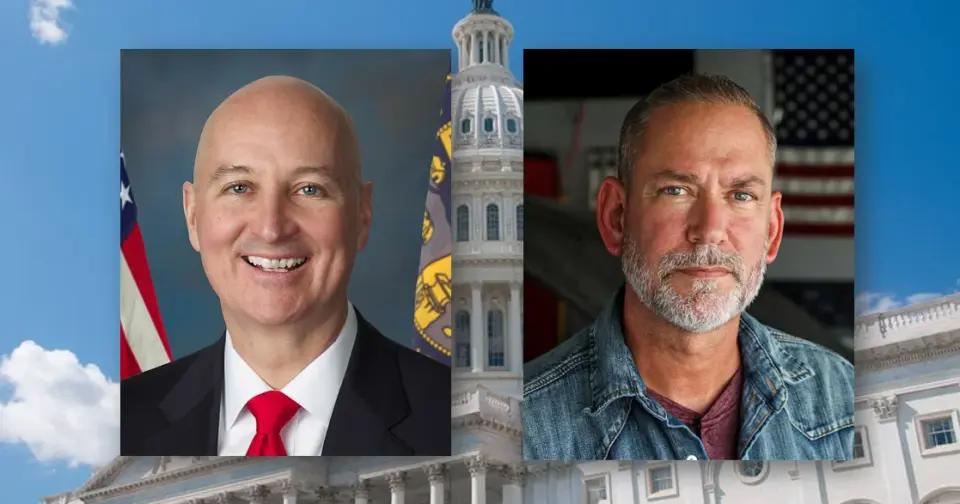
Incumbent Republican Pete Ricketts is projected to retain his U.S. Senate seat in Nebraska despite an early lead by independent challenger Dan Osborn. While initial results from early voters favored Osborn, the New York Times model estimates Ricketts will win by a margin of 4 to 18 points. The race drew national attention due to high spending and visits from President Trump and Vice President Vance, who supported Ricketts. Osborn, a former union leader, criticized Ricketts as a 'rubber stamp' for the administration. The outcome is significant for Republicans, who faced losses in other key states like Texas and South Carolina.
Key points
- The Nebraska Secretary of State released early unofficial results at 8 p.m. Central Time, showing independent Dan Osborn leading incumbent Republican Pete Ricketts.
- The New York Times live forecast estimates Ricketts has a greater than 95% chance of winning, with a projected margin of 4 to 18 points.
- Early results reflected votes from early voters, with Osborn leading in Douglas and Sarpy counties, while Ricketts led in Buffalo and Hall counties.
- President Trump and Vice President J.D. Vance visited Nebraska weeks before the election to support Ricketts, who defended the 'One Big Beautiful Bill' and other Republican legislation.
- Dan Osborn, a former industrial mechanic and union leader, faced allegations of collecting 'dark money' but advocated for campaign finance reform.
- The race included minor party candidates Chuck Conboy and Robin Richards, as well as Mike Marvin, who dropped out due to health issues.
Background
Nebraska's Senate race gained national prominence in the 2026 midterms, which tested the durability of the Republican majority in the U.S. Senate. Previous coverage indicated that Democrats needed to flip several states, including those won by President Trump in 2024, to gain control. The Nebraska contest was notable for significant political action committee spending and high-level White House support for the incumbent. In 2024, Ricketts was appointed to the Senate by Governor Jim Pillen, a financial ally of Ricketts, after Ben Sasse stepped down, and subsequently won a special election. This 2026 race is part of a broader midterm landscape where Republicans faced unexpected losses in states like Texas and South Carolina, while Democrats sought to capitalize on economic concerns and healthcare costs.
How outlets are covering it
Nebraska Public Media reported that early unofficial results showed Dan Osborn leading, reflecting early voter turnout. The New York Times, however, provided a live forecast indicating that Ricketts is 'almost certain to win' with a greater than 95% probability, despite Osborn's early lead. The NYT noted that Ricketts is a 'Republican scion of an influential billionaire family with deep ties to Nebraska,' while Osborn is a 'mechanic, former union leader and military veteran.' KMTV 3 News Now Omaha focused on voter sentiment in Omaha, highlighting that many voters cited the economy, healthcare, and taxes as key issues, with one voter stating that lowering prices was the priority. The McCook Gazette source was inaccessible due to a 403 error, so no perspective could be extracted from it. The outlets differ in their emphasis: Nebraska Public Media and KMTV focused on local voter concerns and early results, while the New York Times provided a broader national context and a statistical forecast.
Why it matters
The outcome of the Nebraska Senate race is significant for the balance of power in the U.S. Senate, particularly as Republicans faced losses in other key states. Ricketts' victory would help maintain the Republican majority, while Osborn's win would be a notable upset for an independent candidate in a traditionally Republican state. The race also highlighted the impact of national political figures, such as President Trump and Vice President Vance, on local elections, and the role of campaign finance in shaping outcomes. Additionally, the race underscored voter concerns about the economy, healthcare, and taxes, which are likely to influence future political dynamics in Nebraska and beyond.
What to watch
The final results of the Nebraska Senate race are expected to be determined as more votes are counted, with the New York Times estimating that 330,000 votes remain to be counted. The race is likely to be called for Ricketts, given the current forecast. In the broader context, the outcome will contribute to the determination of the U.S. Senate majority, with Democrats needing to flip at least two states that President Trump won by double digits in 2024. The results will also have implications for future political strategies and campaign finance practices in Nebraska and other states.
- Here are the results from Nebraska’s U.S. Senate race Nebraska Public Media
- Nebraska U.S. Senate 2026: Live Midterm Election Results, Ricketts vs. Osborn The New York Times
- Omaha voters head to the polls on Election Day, citing economy and cost of living as key issues KMTV 3 News Now Omaha
- Still Electioneering In Action McCook Gazette
- Election results schedule and other election information KLKN-TV
Want the full story? Read the original reporting
Read on Nebraska Public Media