
Judge Cooper orders 30-day notice for Kennedy Center changes after Trump 'Demolished' photo
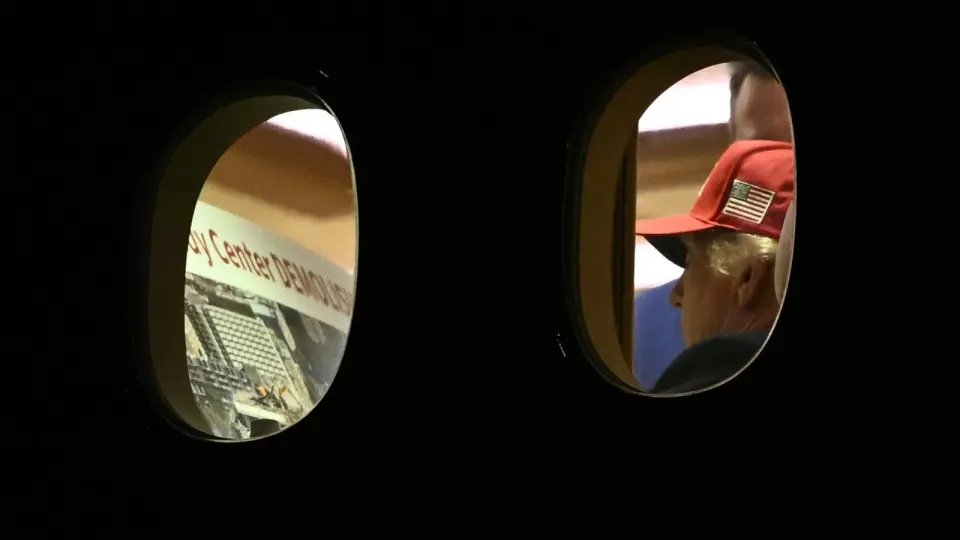
U.S. District Judge Christopher Cooper ruled that the Trump administration must provide 30 days' notice before any changes to the Kennedy Center's renovation plans, including potential demolition. This decision followed a photo of President Trump reviewing a placard reading 'Kennedy Center DEMOLISHED' and his threat to close the venue unless his name is reinstated on the building. While the administration cites structural safety concerns for a temporary seven-day closure, critics argue the move violates prior court orders and prioritizes presidential vanity over public access.
Key points
- Judge Cooper denied an emergency hearing requested by Rep. Joyce Beatty but ordered the administration to notify him of any plan changes within 30 days.
- Trump was photographed on Air Force One reviewing a poster referencing the center's demolition, hours after warning the building would be 'ripped down' without recognition for his renovation efforts.
- The Kennedy Center closed for seven days due to 'acute risks to public safety,' a move the DOJ claims complies with existing injunctions, while Beatty's lawyers call it an unlawful violation of court orders.
- Trump has halted all renovations unless his name is added back to the building, a move blocked by Cooper in May and rejected by the D.C. Circuit in July.
Background
The dispute began in February 2025 when Trump replaced the Kennedy Center board with allies and attempted to rename the institution. In May 2026, Judge Cooper ordered the removal of Trump's name, citing federal statutes. The DOJ previously warned in August that the building might need demolition if renovations were blocked, a claim critics dismissed as exaggerated. The current crisis follows a partial ceiling collapse and a board vote to close the center for two years.
How outlets are covering it
The administration and DOJ argue the closure is a necessary safety measure due to structural deterioration, with White House spokesperson Liz Huston blaming Democrats for letting the building rot. They maintain that no court order forbids temporary closures. Conversely, Rep. Joyce Beatty and her legal team assert the closure is an 'assault on the rule of law' designed to force compliance with Trump's renaming demands. Critics, including Kerry Kennedy and Maria Shriver, describe the situation as a 'tragedy' and 'narcissistic' behavior that distracts from national issues. Historians note the center's bipartisan legacy, warning that its closure marks the end of a unifying cultural institution.
Why it matters
The conflict highlights the tension between executive authority and judicial oversight regarding federal cultural assets. It raises questions about the legal limits of presidential influence on public institutions and the potential for permanent loss of a historic venue. The ruling sets a precedent for how temporary closures and structural claims are handled in ongoing litigation involving government-funded landmarks.
What to watch
The administration must report on the center's status by next Wednesday. The outcome of the seven-day closure assessment will determine if the building reopens or faces extended shutdown. The D.C. Circuit or Supreme Court may eventually rule on the name removal, which Trump has stated is a prerequisite for any reconstruction work.
- Trump photo seems to reference Kennedy Center demolition amid legal battle over closure CNBC
- Trump photographed with 'Kennedy Center Demolished' sign as venue says closure 'temporary' ABC News - Breaking News, Latest News and Videos
- The last day at the Kennedy Center washingtonpost.com
- Kennedy Center executive director says the building's closure is due to safety concerns WUSA9
- What on earth happened to the Kennedy Center? USA Today
Want the full story? Read the original reporting
Read on CNBC