
Nithya Raman becomes L.A. mayor, ending Karen Bass's tenure in a generational shift
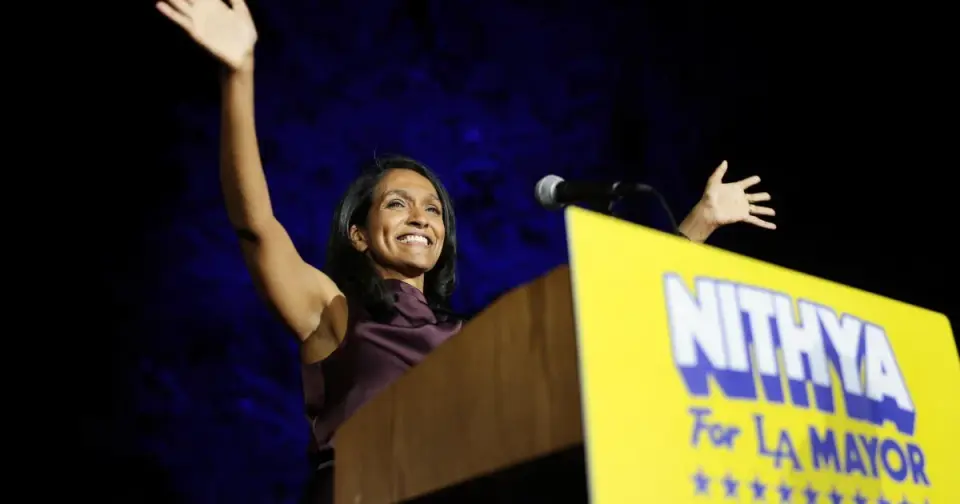
Nithya Raman, 45, has been elected the next mayor of Los Angeles, defeating incumbent Karen Bass, 73, in a close race decided by late-arriving mail-in ballots. Raman, a city councilmember and democratic socialist, secured 52% of the vote compared to Bass's 48%. This marks the first time in over 20 years that a challenger has defeated an incumbent mayor in the city. Raman's term begins December 8, and she has pledged to cut street homelessness by half before the 2028 Olympics. Bass conceded on Thursday, acknowledging the voters' decision and promising a smooth transition. The victory highlights a significant generational shift, with Raman winning strong support from younger voters while Bass performed better among older demographics.
Key points
- Nithya Raman defeated incumbent Mayor Karen Bass with 52% of the vote, making her the first challenger to beat an incumbent L.A. mayor in over 20 years.
- Raman entered the race hours before the filing deadline in February, previously having endorsed Bass, which angered many local Democratic establishment figures.
- The race was characterized as a generational divide, with Raman sweeping the youth vote and Bass performing better with voters over 50.
- Raman, backed by the Democratic Socialists of America, promised to cut street homelessness by half before the 2028 Olympics and improve city services like fixing potholes and streetlights.
- Bass, 73, conceded on Thursday, accepting the voters' decision and committing to a smooth transition, despite a 71.7% disapproval rating in late October.
- The LAPD union expressed severe concerns about Raman's victory, warning of potential staffing crises and describing the outcome as 'Armageddon' for the department.
Background
Prior to the election, Bass faced a 71.7% disapproval rating and significant polling deficits, with outside spending exceeding $10 million on both sides. The race was fueled by voter frustration over Bass's handling of the 2025 Pacific Palisades wildfires, housing costs, and homelessness. Raman's late entry into the race in February capitalized on this dissatisfaction, positioning herself as a progressive pragmatist. The Democratic Socialists of America had previously debated rescinding their endorsement of Raman over her stance on the Boycott, Divestment and Sanctions movement, but ultimately supported her bid.
How outlets are covering it
The Los Angeles Times emphasized the generational nature of the race, noting that Raman's victory was driven by younger, progressive voters who tend to mail in ballots later. CNN highlighted the broader national trend of democratic socialist ascendance, noting that Raman's win places Los Angeles alongside New York, Washington, D.C., and Seattle as cities led by DSA-backed mayors. NBC Los Angeles focused on the immediate reaction from the LAPD union, which warned of severe staffing issues and described Raman's potential victory as 'Armageddon' for the police department. All sources agreed on the final vote count and the significance of Raman's late entry into the race, but differed in their emphasis on the ideological implications versus the practical concerns of city services and public safety.
Why it matters
Raman's victory signals a significant shift in Los Angeles politics, moving away from the establishment and toward progressive, democratic socialist leadership. Her promise to cut street homelessness by half before the 2028 Olympics sets a high bar for her administration and will likely shape national debates on urban policy. The generational divide highlighted in the race suggests a broader trend in U.S. politics, where younger voters are increasingly favoring progressive candidates. The LAPD union's warnings also raise concerns about potential impacts on public safety and city services, which will be closely monitored as Raman takes office.
What to watch
Raman's term begins December 8, and she will need to navigate the transition from Bass while addressing the city's pressing issues, including homelessness, housing, and infrastructure. The City Council is expected to schedule a special election to fill Raman's vacancy on the council. The 2028 Democratic presidential primary will also be influenced by the outcomes of these mayoral races, as party leaders and voters debate the viability of progressive strategies in deep-blue cities versus national elections.
- Nithya Raman defeats Bass to become next L.A. mayor Los Angeles Times
- Nithya Raman ousts incumbent Karen Bass in L.A. mayor’s race Los Angeles Times
- Karen Bass concedes, Nithya Raman set to become next mayor of Los Angeles KTLA
- Democratic socialist Nithya Raman will defeat Karen Bass in LA mayor’s race, CNN projects CNN
- As Nithya Raman widens lead over Karen Bass, LAPD union warns of ‘Armageddon' in LA NBC Los Angeles
Want the full story? Read the original reporting
Read on Los Angeles Times