
NYT Maps Reveal Precinct-Level Nuances in 2026 Senate Blue Wave
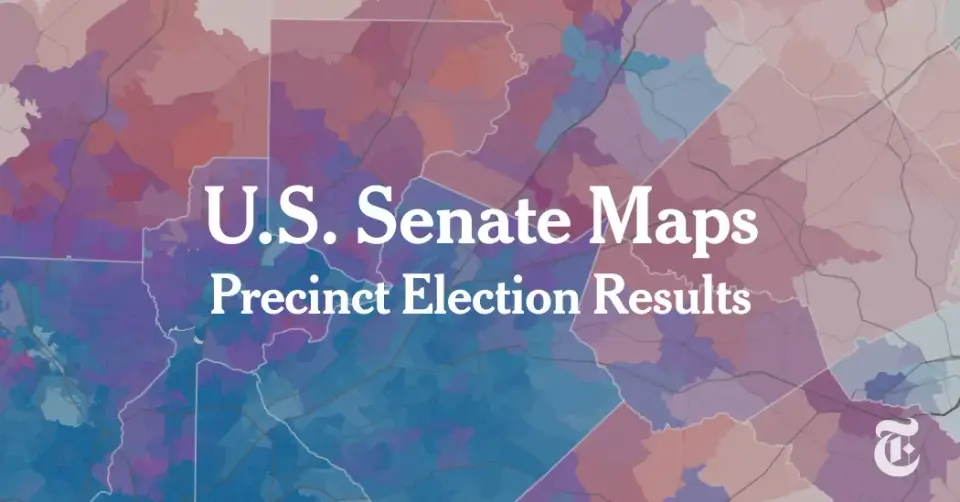
The New York Times has released detailed precinct-level maps for the 2026 US Senate elections, highlighting the geographic spread of Democratic victories. The data, current as of November 4, 2026, covers key states including Georgia, Texas, and Florida, showing how vote density and margin variations contributed to the party's overall majority.
Key points
- The New York Times published interactive maps displaying precinct-level results for the 2026 Senate races across multiple states.
- The visualization includes data from Georgia, South Carolina, Nebraska, North Carolina, Michigan, Texas, Florida, Virginia, Ohio, and Iowa.
- The maps use color blending to indicate close races, with purple representing margins of 50 percentage points or less.
- Voter density is calculated based on reported votes and precinct area, with lighter areas indicating lower density.
- The data aggregates all ballot types, including mail, early, and Election Day votes, as of 8:01 a.m. Eastern time on November 4.
Background
This release follows the broader 2026 midterm election results where Democrats secured control of both the Senate and House, winning 53 Senate seats. Previous coverage noted significant Democratic gains in traditionally Republican states like Texas and South Carolina, as well as a close race in Mississippi. The new maps provide a granular view of these shifts at the local level.
Why it matters
Precinct-level data offers a more accurate picture of voter behavior than statewide totals, revealing how specific geographic areas contributed to the national shift. This granular analysis helps explain the mechanics behind the Democratic majority and identifies areas of intense competition or consistent support.
What to watch
Analysts and political strategists will likely use these detailed maps to assess the durability of Democratic gains in swing states and to plan future campaigns. The data may also inform discussions on voter turnout patterns and the effectiveness of early and mail voting strategies in close races.
Want the full story? Read the original reporting
Read on The New York Times