
Ohio Election Chaos: Supreme Court Halts Ballot Counting in Lucas County Amid Statewide Disputes
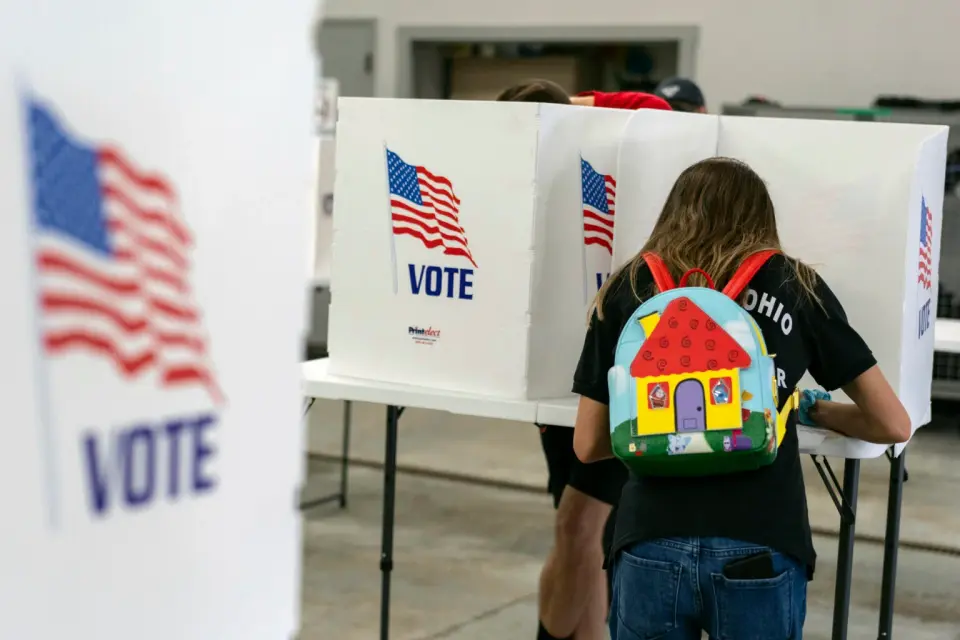
The Ohio Supreme Court has ordered provisional ballots in Lucas County to remain uncounted pending a ruling on a Republican candidate's challenge, while Secretary of State Frank LaRose refused to break ties on similar ballot disputes in Hamilton and Delaware counties, leaving several close races in limbo.
Key points
- The Ohio Supreme Court granted a request from Republican state House candidate Edward Schimmel to seal and hold uncounted provisional ballots in Lucas County, pending a decision on his challenge.
- Schimmel argued that voters who moved between Ohio counties without updating their addresses should have voted at a board of elections office rather than a polling place, despite state guidance allowing in-person voting.
- Lucas County officials stated they had already counted approximately 3,000 provisional ballots and rejected around 600 as invalid for reasons unrelated to Schimmel's complaint, arguing the suit is now moot.
- Secretary of State Frank LaRose declined to break ties on provisional ballot counting in Hamilton and Delaware counties, stating the matter was not suitable for a tie-vote determination and requiring a 3-1 majority for counties to count the ballots.
- Voting rights groups criticized LaRose for 'hiding behind procedural excuses,' arguing that voters followed state guidance and should not be disenfranchised for voting at a polling location instead of a board of elections office.
Background
This dispute follows a pattern of post-election legal challenges over provisional and absentee ballots seen in other states, such as the uncounted ballots in Georgia's Seminole County and the pending Mississippi Senate race. These cases highlight ongoing tensions over ballot handling procedures and the impact of close margins on election outcomes.
How outlets are covering it
The Democracy Docket emphasizes the Ohio Supreme Court's order to hold ballots uncounted in Lucas County and the argument that voters followed state guidance from Secretary of State Frank LaRose. The Cincinnati Enquirer focuses on LaRose's refusal to break ties in Hamilton and Delaware counties, highlighting the procedural hurdle of requiring a 3-1 majority for counties to count the ballots. Both sources agree that the disputes center on voters who moved between counties and voted at a polling location rather than a board of elections office, but they differ in their focus on the judicial versus administrative responses to the challenges.
Why it matters
The outcome of these disputes could determine the results of several close races in Ohio, including state House and county commissioner seats. The handling of provisional ballots and the role of state officials in breaking ties or enforcing procedural rules have significant implications for voter access and the integrity of the election process.
What to watch
The Ohio Supreme Court is expected to rule on the Lucas County challenge, which could set a precedent for similar disputes in other counties. Election officials in Hamilton and Delaware counties will continue to await court orders or further guidance from LaRose on whether to count the provisional ballots in question.
- Ohio Supreme Court orders some ballots to remain uncounted following GOP challenge Democracy Docket
- Ohio Supreme Court orders some uncounted provisional ballots to remain sealed after complaint from Ed Schimmel WTOL
- Ohio elections chief sidesteps tie vote as 740 ballots hang over 19-vote Cincinnati House race The Business Journals
- GOP candidate for Ohio House seeks to throw out ballots weeks after Election Day Democracy Docket
- LaRose says he can't break ties over Hamilton, Delaware county ballots Cincinnati Enquirer
Want the full story? Read the original reporting
Read on Democracy Docket