
Mississippi Mayor Defies Trump's Flag Order for Dolly Parton, Citing Home Rule
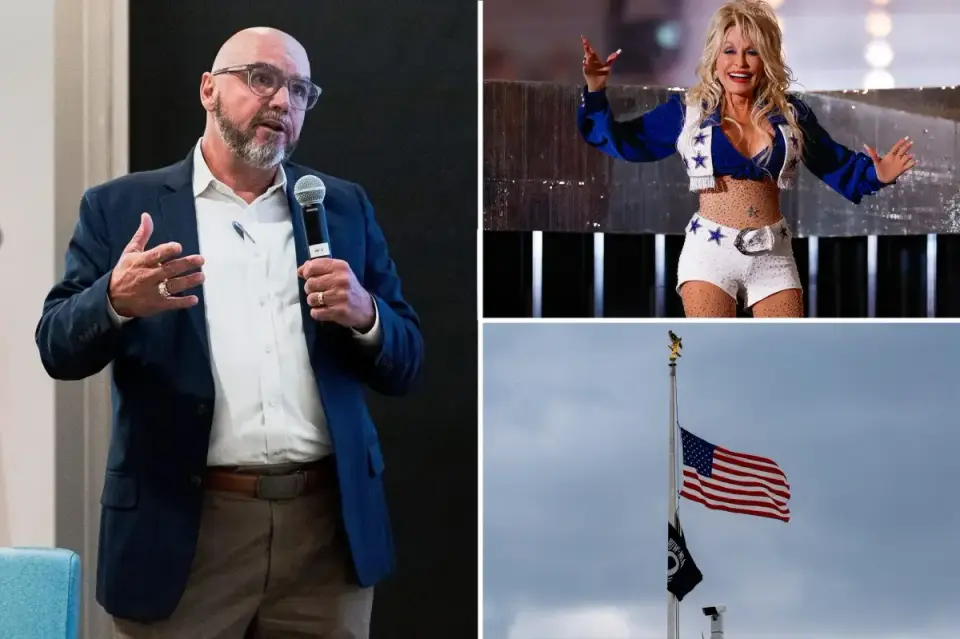
Ken Adams, the Republican mayor of Olive Branch, Mississippi, refused to lower the U.S. flag to half-staff for Dolly Parton, defying a directive from President Trump and Governor Tate Reeves. Adams argued that the gesture should be reserved for military heroes and national leaders, not celebrities, despite acknowledging Parton's impact. The decision sparked intense public backlash, with critics citing Parton's philanthropy and previous flag honors for other figures.
Key points
- Dolly Parton died on August 25, 2026, at age 80, prompting President Trump and Mississippi Governor Tate Reeves to order flags lowered for one week.
- Olive Branch Mayor Ken Adams posted on Facebook that half-staff flags should be reserved for 'military heroes, fallen first responders, presidents and other major national leaders.'
- Adams cited Mississippi's Home Rule laws to justify his local decision, stating he was not elected to be a 'salute and execute' mayor.
- The post generated over 1,000 comments, with many critics pointing out that flags were previously lowered in Olive Branch for Charlie Kirk and Bob Hope.
- Critics highlighted Parton's support for the military and her delivery of 270 million books to children, arguing her impact warranted the honor.
Background
Dolly Parton's death on August 25, 2026, triggered a nationwide mourning period, with the White House flag lowered on August 25. While most jurisdictions complied with the federal and state directives, the controversy in Olive Branch highlights ongoing debates about local autonomy versus federal ceremonial standards. Previous archive coverage noted that Parton had declined the Presidential Medal of Freedom, a distinction Adams's critics used to argue her contributions exceeded those of many political figures.
How outlets are covering it
The New York Post and Fox News framed the story as a conflict between local autonomy and federal authority, emphasizing Adams's argument that the flag's meaning is diluted by frequent use. The Tennessean focused on the procedural aspect, noting that Adams did not clarify if the flag was actually lowered, only that he opposed the principle. Public comments, reported by all three outlets, were sharply divided: some veterans and first responders supported Adams's view on preserving the honor's significance, while others condemned the decision as disrespectful, citing Parton's extensive philanthropy and military support. Critics also pointed to historical precedents in Olive Branch, such as the 2003 flag lowering for Bob Hope, to challenge Adams's consistency.
Why it matters
This incident underscores the tension between federal ceremonial directives and local governance in the United States. It also reflects broader cultural debates about the criteria for national honors, particularly whether philanthropic and cultural contributions should be weighed equally with military or political service in determining the highest levels of respect.
What to watch
It remains unclear if the city of Olive Branch will reverse its stance or if Adams will face political consequences for the backlash. The Tennessean reported that Adams did not directly answer questions about whether the flag was lowered, leaving the practical outcome of his statement ambiguous. Further scrutiny may come from state officials or local residents who view the decision as a breach of civic duty.
- Mississippi mayor argues against lowering American flag for Dolly Parton after her death New York Post
- Mississippi mayor argues aginst lowering flag for Dolly Parton after her death Fox News
- Mississippi mayor pushes back on lowering flags to honor Dolly Parton The Tennessean
- Mississippi mayor opposes lowering flag for Dolly Parton, says honour should be reserved for ‘truly extraordinary circumstances’ The Times of India
- A Mississippi mayor’s decision about Dolly Parton is dividing people across the country Cleveland.com
Want the full story? Read the original reporting
Read on New York Post