
Paxton Blames Iran War and DC Control for Texas Senate Struggles
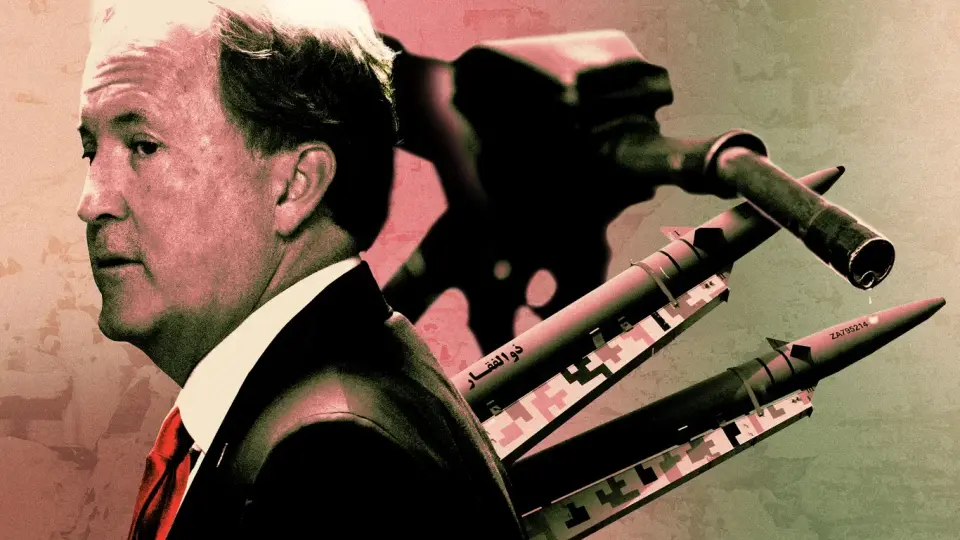
Texas Republican Senate nominee Ken Paxton privately blamed the ongoing Iran war and high fuel costs for his campaign’s struggles, while also admitting he has little control over his messaging due to Washington-based influence. Speaking at a closed-door fundraiser in late September, Paxton told donors that affordability issues, specifically diesel prices exceeding $6 per gallon, are the primary obstacles to his victory. He acknowledged that national decisions, including the conflict with Iran, are beyond his control, though he proposed tax cuts and write-offs as remedies. This admission highlights the tension between Paxton’s local campaign and the national Republican strategy, as polls show him trailing Democratic opponent James Talarico in a tight race for the Texas Senate seat.
Key points
- Paxton identified the Iran war and rising gas/diesel prices as the main factors hurting his campaign numbers, stating he has no control over these federal decisions.
- He admitted to donors that his campaign messaging and strategy are largely dictated by Washington, D.C., a sentiment echoed in separate audio recordings obtained by Politico and The New York Times.
- Paxton proposed his own tax cut plan, including housing and healthcare write-offs, as a solution to affordability issues, while acknowledging he cannot stop the war or lower fuel prices directly.
- Polls from Fox News, The New York Times, and Marist University show Democratic nominee James Talarico holding a narrow lead over Paxton, with Talarico potentially becoming the first Democrat to win a Texas Senate seat since the 1980s.
- Paxton’s campaign dismissed the reports as 'manipulated nonsense,' claiming he was referring to Super PACs rather than the Trump administration, and emphasized his ground-level efforts in Texas.
Background
This development follows a period of intense scrutiny on the impact of the Iran war on domestic energy prices, which have surged to an average of $4.36 per gallon for gas and near $6 for diesel. Earlier this month, the Senate blocked a resolution to end the conflict, and President Trump predicted the war would end after the midterms. Paxton, who defeated incumbent John Cornyn in a primary runoff, has faced criticism for his lack of control over the national narrative, a shift from his previous 'outsider' stance against the D.C. establishment.
How outlets are covering it
Axios and Politico report that Paxton explicitly blamed the Iran war and gas prices for his polling struggles, while also admitting a lack of control over his campaign’s messaging due to D.C. influence. The Guardian notes that while Paxton did not explicitly name the Trump administration in the recording, the context of the conversation suggested national political forces were the cause. Fox News frames the situation as Paxton being frustrated by the same D.C. establishment he previously criticized, highlighting the irony of his current reliance on national support. The Paxton campaign, through advisor Nick Maddux, rejected the interpretation that he was criticizing the Trump administration, stating he was referring to Super PACs and emphasizing his active ground game in Texas.
Why it matters
The Texas Senate race is a critical battleground for the 2026 midterms, with the outcome potentially determining the balance of power in the U.S. Senate. Paxton’s admissions reveal the vulnerability of Republican candidates in red states facing national economic headwinds, particularly those tied to the Iran war and energy costs. If Talarico wins, it would mark a significant shift in Texas politics, ending decades of Republican dominance in the Senate. The race also highlights the tension between local candidates and national party strategy, as Paxton’s frustration with D.C. control may resonate with voters who feel disconnected from federal decision-making.
What to watch
President Trump is scheduled to rally with Paxton in San Antonio on Wednesday, aiming to boost the nominee’s standing before the election. The race will likely see increased spending, with projections estimating up to $850 million in ad expenditures. Paxton’s campaign will continue to emphasize his tax cut proposals and ground-level efforts, while Talarico will likely focus on affordability and the impact of the Iran war on Texas families. The outcome of the race will be a key indicator of the broader Republican performance in the 2026 midterms.
- Exclusive: Paxton privately blames woes on Iran war, gas prices Axios
- Campaign ‘all coming from DC,’ Paxton says Politico
- Republican Ken Paxton admits forces in DC control his Texas Senate campaign The Guardian
- New Ken Paxton Leaked Audio Says He’s Lost Control Of His Campaign To Washington Forbes
- Paxton vents over lack of campaign control as DC establishment he once battled comes to his aid Fox News
Want the full story? Read the original reporting
Read on Axios