
Pennsylvania Democrats Secure Trifecta to Advance Marijuana, Wage, and Election Reforms
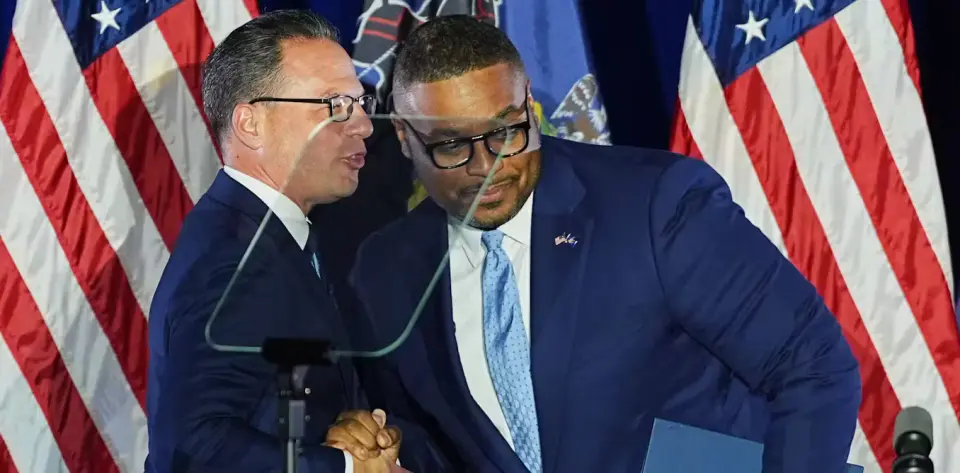
Pennsylvania Governor Josh Shapiro has secured a party trifecta after winning re-election and Democrats taking control of the state Senate and House. This shift ends decades of divided government, allowing Democrats to pursue long-stalled priorities including recreational marijuana legalization, a phased minimum wage increase to $15, and expanded mail voting protections. While national attention focuses on Shapiro’s potential 2028 presidential run, state leaders face immediate legislative hurdles regarding cannabis regulation, AI data center rules, and LGBTQ+ nondiscrimination protections.
Key points
- Shapiro defeated Republican Stacy Garrity, and Democrats flipped the state Senate to a 26-24 majority, securing full control of state government for the first time in over 30 years.
- The new Democratic majority can now pass legislation stalled by previous Republican control, including a minimum wage increase to $11 in 2027, $13 in 2028, and $15 in 2029.
- Recreational marijuana legalization is a top priority, though Democrats must resolve disagreements over whether sales occur through private dispensaries or state-run stores, similar to alcohol.
- Election reform measures, such as mandatory ballot drop boxes and clear rules for curing mail ballots, can now pass without compromise on stricter voter ID requirements.
- The legislature is also expected to address AI-generated advertising regulations and data center impacts on energy and water usage, following criticism of AI ads used in the recent gubernatorial race.
Background
This development follows the 2026 midterm elections, where Democrats also made gains in the U.S. House and key Senate races. The shift in Pennsylvania mirrors broader national trends where economic concerns and affordability drove voter support for Democratic candidates. Previously, Pennsylvania had a divided government for decades, with Republicans controlling the Senate while Democrats held the House and governorship. The current trifecta allows for the first time in over 30 years for a single party to control all three branches of state government, enabling the passage of controversial bills that previously died in committee or failed to reach a vote.
How outlets are covering it
The Conversation emphasizes the legislative potential of the new Democratic control, highlighting specific bills passed by the House that are now likely to become law, such as marijuana legalization and minimum wage increases. The Washington Post frames the victory through the lens of national politics, noting that Shapiro’s success bolsters his standing as a potential 2028 presidential contender and reflects his strategy to counter Republican policies that cut Medicaid and food assistance. Spotlight PA provides the factual election results, confirming that Democrats won the governor’s race, the state House, and the state Senate, while also noting that Democrats flipped four U.S. House seats in Pennsylvania. While The Conversation focuses on policy details like social equity measures for cannabis, The Washington Post focuses on the political implications for Shapiro’s future career, and Spotlight PA focuses on the raw electoral data and certification processes.
Why it matters
The establishment of a Democratic trifecta in Pennsylvania, a large and influential state, signals a significant shift in state-level policy power. It allows for the implementation of progressive policies that were previously blocked by Republican legislative control, potentially setting precedents for other states. The ability to pass a minimum wage increase and legalize marijuana could have substantial economic and social impacts on Pennsylvania residents. Additionally, the success of these policies may influence national debates on similar issues, such as data center regulations and election integrity, as other states look to Pennsylvania’s approach. The outcome also strengthens the Democratic Party’s position in a state that has historically been a swing state in national elections.
What to watch
The new General Assembly will need to reintroduce and pass the minimum wage and marijuana legalization bills, as previous versions did not pass the Senate. Lawmakers must also negotiate details on cannabis regulation, including the role of state versus private dispensaries and social equity provisions. The governor’s office will likely push for the Affordability Action Plan, which includes property tax rebates and housing protections. Additionally, the legislature may attempt to amend the state constitution to enshrine same-sex marriage rights and add LGBTQ+ individuals to nondiscrimination protections, a move that is procedurally difficult but politically significant. The outcome of these legislative battles will determine the tangible impact of the new Democratic control on Pennsylvania residents.
- Pennsylvania Democrats now have power to push forward on election reform, marijuana legalization and minimum wage increases The Conversation
- Shapiro’s big wins in Pennsylvania fuel talk about his national future The Washington Post
- 2026 Pennsylvania election results Spotlight PA
- Pennsylvania Democrats secure trifecta victory ABC27
- What races are still undecided in PA? FOX43
Want the full story? Read the original reporting
Read on The Conversation