Oregon minimum wage rises across all regions on July 1
Oregon’s minimum wage increased on July 1, boosting hourly pay across its three wage regions; the new regional rates apply statewide and will remain in effect through the next review period.
All articles tagged with #minimum wage

Oregon’s minimum wage increased on July 1, boosting hourly pay across its three wage regions; the new regional rates apply statewide and will remain in effect through the next review period.

July 1 kicks off a wide wave of new laws across Virginia, Maryland, and Washington, D.C., covering topics from Virginia’s law on law‑enforcement masks and cooperation with ICE to protections for immigrant workers and automatic sealing of many low‑level criminal records; Virginia’s assault‑weapons ban faces a court injunction, and new speed‑control devices will be mandatory for drivers who reach 100 mph. Other changes include contraception coverage, renter‑payment protections, Maryland’s bell‑to‑bell school cellphone policy by 2027–28, free menstrual products on college campuses, cocktails‑to‑go in Baltimore County, civically engaged excused absences for students, a racehorse‑slaughter ban, and lottery‑debt withholding; D.C. raises the minimum wage to $18.40 with tipped‑wage adjustments.

Starting July 1, Virginia, Maryland, and Washington, D.C. implement a broad slate of new laws covering Virginia’s gun safety and ICE-cooperation rules, immigrant-worker protections and automatic sealing of many criminal records, contraception coverage, and renter protections; Maryland imposes bell-to-bell school cellphone bans and requires free period products on campus, while allowing cocktails-to-go in Baltimore County; D.C. raises the minimum wage for all workers (with higher pay for tipped workers) and enacts related workplace and civics-related policy changes.
Oklahoma voters rejected State Question 832, which would have raised the minimum wage from $7.25 to $15 by 2029 with annual increases and CPI-based adjustments after 2030. Opponents argued it would hurt job growth and raise prices; supporters said wages are too low amid inflation. Gov. Kevin Stitt and much of the GOP establishment opposed it. With about 93% of precincts reporting, roughly 56% voted against SQ 832, making it the sole statewide ballot item on Tuesday. Results are unofficial until certified by the state election board.

Oklahoma’s primary saw independents only eligible to vote on State Question 832, which would raise the minimum wage to $15 an hour, while criticizing the closed primary system that keeps them out of governor and U.S. Senate races. Separately, State Question 836, which would have opened primaries, failed to reach the ballot. Many independents advocate open primaries and some say they may re-evaluate party registration to gain broader voting rights in future elections, highlighting ongoing debates over how Oklahoma runs its primary system.

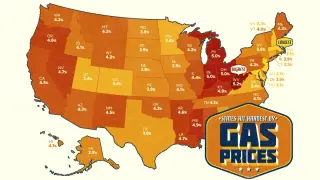
A 2026 data visualization shows gas affordability depends more on income than price: West Virginia has the highest burden for a 15-gallon fill-up (5.2% of median weekly income), while California pays the most per gallon but ranks lower in burden due to higher incomes. Top-burden states include Ohio, Michigan, Indiana, Mississippi, and Kentucky; for some minimum-wage earners, a tank of gas can take up roughly a quarter of weekly earnings. Data from SmartAsset and AAA as of May 2026.

UC Santa Cruz researchers studied 100+ fast‑food outlets and found that California’s $20 minimum wage for franchised outlets increased prices, reduced hours and overtime, and boosted automation, with local restaurants feeling the labor-cost pressure; the study frames these as unintended consequences and adds to the debate over wage mandates in policy.

Ministers are reportedly weighing delaying the plan to remove discretionary age bands and raise 18–20-year-olds’ minimum wage to match those over 21, despite Labour’s manifesto commitment. With youth unemployment around 16% and employers warning higher wages may deter hiring, ministers may slow the timetable, though a full reversal is unlikely.

Almost 24 states and numerous cities are raising their minimum wages in 2026, with most reaching or exceeding $15 per hour, significantly above the federal minimum of $7.25, to help workers cope with inflation and economic challenges.

Nineteen states increased their minimum wage on January 1, affecting over 8 million workers, with Washington, D.C. leading at $17.95 per hour. Several states now have wages above $15, while twenty states still adhere to the federal minimum of $7.25 or have no set minimum wage.

Several innovative state laws are taking effect in 2026, including Hawaii's first climate change tourism tax, Utah's strict alcohol ID checks for all customers, California's sale of state-branded insulin to lower drug prices, Washington's minimum wage surpassing $17, and new patriotic license plates in Georgia supporting President Trump.

Starting January 1, 2026, Michigan will implement new laws including a 24% wholesale tax on recreational cannabis, a raise in minimum wage to $13.73, increased unemployment benefits up to $530 per week, and measures to crack down on ticket bots, along with various safety, education, and infrastructure reforms.

Nearly 20 U.S. states will raise their minimum wage in 2026, affecting about 8.3 million workers and increasing their earnings by $5 billion, with Washington and New York offering the highest wages. The changes reflect inflation adjustments and scheduled hikes, but many southern states will see no change due to lack of minimum wage laws. The federal minimum wage remains at $7.25 since 2009, losing over 30% of its value to inflation.

Michigan's minimum wage will increase from $12.48 to $13.73 in 2024, with plans to reach $15 by 2027, while tipped workers' wages will also rise, amid ongoing legal and legislative debates that have shaped these changes. The increases aim to benefit low-wage workers but pose challenges for some businesses, especially in the restaurant industry.

Michigan's minimum wage will increase to $13.73 an hour starting Jan. 1, 2026, with further increases planned through 2027 and beyond, as part of the Improved Workforce Opportunity Wage Act, which also adjusts wages for tipped workers and minors, and ties future increases to inflation.