
USPS Whistleblower Warns Rushed Ballot System Could Block Millions of Votes
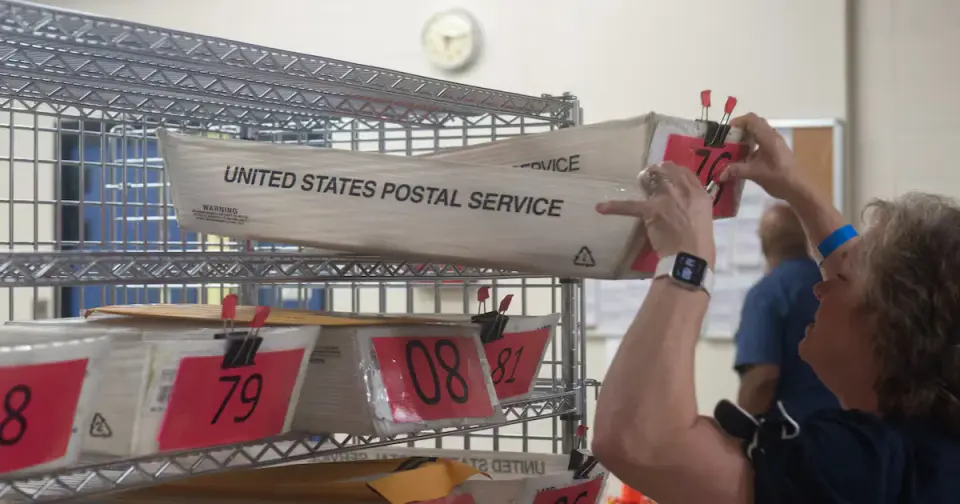
An anonymous USPS whistleblower alleges that a rushed, poorly tested mail ballot verification system could prevent millions of Americans from receiving ballots in the November 2026 midterms. The system, mandated by a Trump executive order, requires states to upload voter lists to a new portal and uses strict barcode checks that could reject entire batches of mail if a single error is found. While the plan is currently frozen by a federal court order, the Trump administration is appealing to the Supreme Court. Critics, including Sen. Richard Blumenthal, call the effort a deliberate attempt to suppress votes, while the White House defends it as a security measure. Election officials warn that compliance is logistically impossible due to time, cost, and staffing constraints.
Key points
- A 20-page whistleblower complaint, released by Sen. Richard Blumenthal, describes the USPS mail ballot system as 'secretive, rushed, chaotic, and fundamentally flawed.'
- The system requires states to upload voter lists to a new portal; if a random sample of mail fails a barcode check, the entire batch is rejected and returned to the state.
- The plan is currently frozen by a temporary injunction from U.S. District Judge Indira Talwani, but the Trump administration is appealing to the Supreme Court.
- Election officials warn that compliance is impossible due to lack of time, high costs for reprinting envelopes, and insufficient staff to manage the new portal.
- The White House dismissed concerns, calling the rules 'commonsense measures' to protect election security, while Democrats and voting rights groups argue the system is designed to disenfranchise voters.
Background
This controversy stems from a March 2026 executive order by President Trump directing the USPS to restrict mail ballot delivery. The order triggered a wave of lawsuits from Democratic-led states and voting rights groups. A federal judge in Massachusetts issued a temporary injunction blocking the system, but the Supreme Court allowed some steps to proceed. The whistleblower complaint adds to ongoing concerns about the system's reliability and potential to disrupt the November 2026 midterms.
How outlets are covering it
Votebeat and The Washington Post emphasize the whistleblower's allegations of rushed development and potential for 'catastrophic failure' that could block millions of ballots. CNN highlights the practical impossibility of compliance, citing lack of time, high costs, and insufficient staff. The White House and USPS defend the system as a necessary security measure, while Democrats and voting rights groups argue it is a deliberate attempt to suppress votes. The AP News notes the Trump administration's appeal to the Supreme Court to lift the block on the mail-voting restrictions.
Why it matters
The outcome of this legal and logistical battle could directly impact the ability of millions of Americans to vote by mail in the November 2026 midterms. If the system is implemented, it could lead to widespread delays, rejected ballots, and potential disenfranchisement, particularly in states with high mail voting rates. The case also highlights the ongoing tensions between federal and state authority over election administration and the potential for federal policies to disrupt voting access.
What to watch
Judge Indira Talwani is expected to decide in the coming days whether to issue a permanent ban on the system for the November election. The Trump administration is appealing to the Supreme Court to lift the block on the mail-voting restrictions. Election officials are focused on carrying out the election while assuring voters that their ability to cast ballots will be protected, despite the uncertainty and confusion caused by the proposed rules.
- USPS whistleblower says rushed new mail ballot systems could disenfranchise voters votebeat.org
- Federal judge considers whether to extend ban against US Postal Service mail voting changes AP News
- Election officials say they can’t comply with Trump’s proposed mail ballot rules CNN
- Whistle-Blower Says Trump Officials Are Defying Court Orders on Voting by Mail The New York Times
- Postal Service plans may keep voters from getting ballots, whistleblower says The Washington Post
Want the full story? Read the original reporting
Read on votebeat.org