
Senate Democrats Split Over Climate Rollback in Lame-Duck Permitting Bill
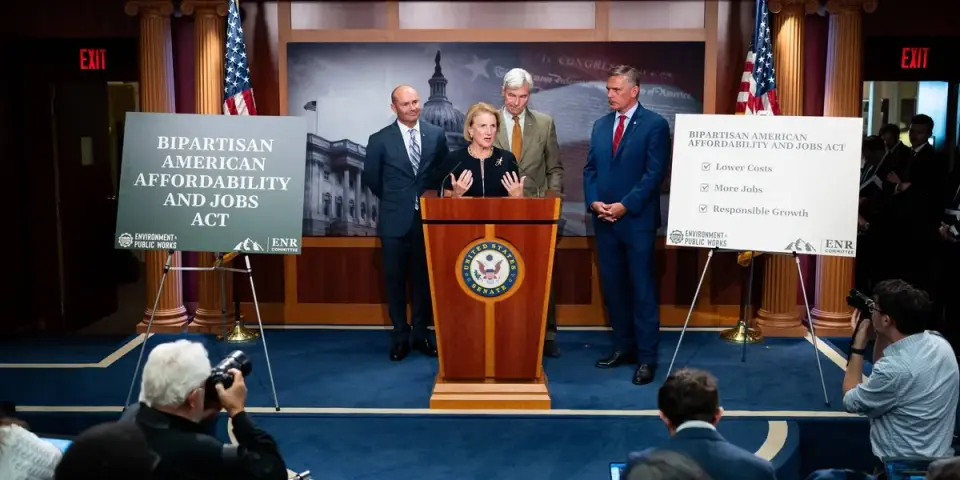
Twenty-one Senate Democrats joined Republicans to end debate on the Bipartisan American Affordability and Jobs Act (BAAJA), a permitting reform bill that weakens environmental safeguards to speed up energy projects. The cloture motion sets the stage for final passage before the new Congress convenes. Critics argue the bill acts as a 'kill switch' for future climate action, while supporters cite its provisions for clean energy transmission lines. The bill faces opposition in the House, where Democrats have urged a pause until January.
Key points
- Twenty-one Senate Democrats voted to end debate on the Bipartisan American Affordability and Jobs Act (BAAJA), joining Republicans in advancing the legislation.
- The bill aims to speed up federal approval for energy projects, including fossil fuel infrastructure and data centers, by weakening environmental safeguards.
- Senator Catherine Cortez Masto of Nevada opposed the cloture motion, citing concerns over changes to the National Historic Preservation Act, after previously voting to advance the bill.
- Critics, including Oil Change International, warn the bill would leave US emissions over 2.1 billion tons short of modest climate goals by 2040.
- The Congressional Progressive Caucus opposes the bill for rolling back key environmental laws, such as the Clean Water Act and Endangered Species Act, despite supporting its transmission line provisions.
- Approximately 100 environmental and energy law scholars warned that the bill would inflict permanent damage on core environmental laws and set a precedent for broader regulatory rollbacks.
Background
This development follows a contentious midterm election cycle where Democrats gained ground in traditionally red states, as noted in our October 2026 coverage of GOP fractures. The current legislative push occurs during a lame-duck session, with the incoming Congress set to take office in January. Previous debates over party unity, such as the controversy surrounding Michigan Democrat Haley Stevens, highlight the internal divisions within the Democratic caucus that may influence future votes on major legislation.
Why it matters
The passage of BAAJA could significantly alter the regulatory landscape for energy projects in the US, potentially accelerating fossil fuel development while undermining environmental protections. The split within the Democratic caucus signals deep disagreements over balancing climate goals with economic interests, which may shape future legislative priorities. The bill's potential to set a precedent for broader regulatory rollbacks raises concerns about the long-term impact on public health and environmental enforcement.
What to watch
The Senate is expected to vote on final passage of BAAJA soon. If passed, the bill will move to the House, where it faces significant opposition from Democrats, including the Congressional Progressive Caucus. Environmental groups and other opponents have urged lawmakers to pause the bill until the new Congress convenes in January. The outcome will depend on whether House Democrats can block the bill or if it advances despite opposition.
Want the full story? Read the original reporting
Read on Common Dreams