
Senate narrowly rejects symbolic Iran war powers resolution as GOP holds line
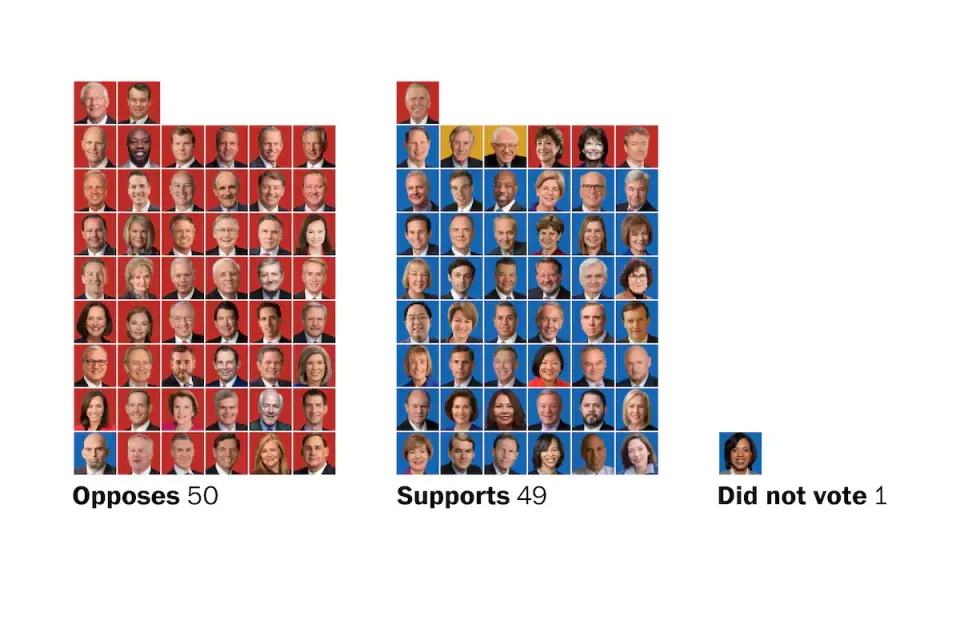
The Senate voted 49-50 to reject a non-binding resolution demanding President Trump end the U.S. war with Iran. Four Republicans defied the White House, but the measure failed to secure the two-thirds majority needed to override a potential veto. The vote occurs amid rising fuel costs and growing Republican discontent ahead of the midterms.
Key points
- The Senate rejected a concurrent resolution to end the Iran war by a 49-50 margin on September 24, 2026.
- Four Republicans (Collins, Murkowski, Paul, Tillis) joined Democrats in supporting the measure, while one Democrat (Fetterman) opposed it.
- The resolution is symbolic and does not carry the force of law, as it is a concurrent resolution not signed by the president.
- Gas prices have spiked to an average of $4.48 per gallon, driving economic frustration and voter fatigue.
- Several Republican candidates in battleground states have publicly called for an end to the war, despite Senate leadership opposing the measure.
Background
This vote follows a series of similar resolutions since the conflict began, including one that passed both chambers but was ignored by the White House. The House passed a similar measure in July with seven Republican defections. The current vote is part of a months-long Democratic strategy to force votes on war powers to highlight Republican support for the conflict.
How outlets are covering it
The Washington Post and CNBC emphasize the symbolic nature of the vote and the narrow margin, noting that even if it had passed, it would not have legal force. Politico highlights the growing rift within the GOP, noting that while Senate leadership held the line, vulnerable candidates in battleground states are breaking with Trump. Fox News frames the vote as a Republican victory in blocking Democratic attempts to rein in the president, while acknowledging the economic frustration among voters. All sources agree that the vote is largely symbolic but politically significant ahead of the midterms.
Why it matters
The vote underscores the deepening political divide over the Iran war and its economic impact, particularly on gas prices. It highlights the tension between the White House and Congress, as well as the growing pressure on Republican candidates to address voter concerns ahead of the midterms. The symbolic nature of the resolution means it does not change policy, but it signals a shift in public opinion and political dynamics.
What to watch
The Senate plans to stay in session next week, which may lead to another vote on the war. Republican candidates in battleground states will continue to campaign on the issue of gas prices and the war, potentially influencing the outcome of the midterms. The White House is expected to continue its stance that the War Powers Act is unconstitutional, ignoring the resolution.
- How every senator voted on the Iran war powers resolution The Washington Post
- Senate narrowly votes down resolution calling for end to Iran war CNBC
- GOP breaks ranks on Iran as voters fume over war’s costs thehill.com
- GOP holds the line on Iran despite growing midterm rift with Trump Politico
- 4 GOP senators rebel against Trump on Iran war, vote with Dems to rein in authority Fox News
Want the full story? Read the original reporting
Read on The Washington Post