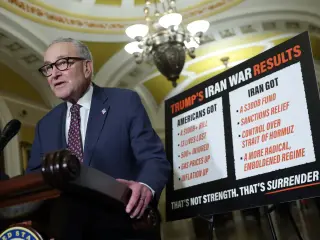
Sen. John Fetterman (D-Pa.) cast the deciding vote to defeat a war powers resolution ending the US conflict with Iran, allowing the war to continue despite growing Republican dissent and a new lawsuit challenging its legality.
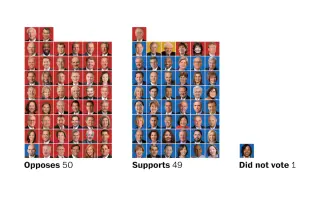
The US Senate failed to pass a war powers resolution to end the conflict with Iran, with the measure losing 49-50. This marks the 12th failed attempt to rein in the war, which has now lasted over 200 days. While several vulnerable Republicans publicly criticized the conflict on the campaign trail due to rising fuel costs, most voted to support the administration.
The Senate rejected a concurrent resolution to force President Trump to end U.S. military strikes on Iran, failing 50-49. Four Republicans joined Democrats in support, while one Democrat opposed. The vote is symbolic, as the administration argues such resolutions lack legal force. Rising gas prices and midterm election concerns are driving growing Republican dissent over the conflict.
The Senate voted 49-50 to reject a non-binding resolution demanding President Trump end the U.S. war with Iran. Four Republicans defied the White House, but the measure failed to secure the two-thirds majority needed to override a potential veto. The vote occurs amid rising fuel costs and growing Republican discontent ahead of the midterms.
The Senate rejected a symbolic resolution demanding President Trump end the U.S. war with Iran, 49-50. Most Republicans backed the administration, though four defied him. The vote follows rising fuel costs and low public approval, with some GOP candidates in tight races shifting their stance ahead of midterms.
The Senate voted 49-50 on Thursday to reject a concurrent resolution demanding President Trump end the U.S. war with Iran. The measure, which passed the House in July, is symbolic and does not carry the force of law. While most Republicans supported the administration, four GOP senators joined Democrats in favor of ending the conflict. The vote occurred amid rising fuel costs and low public approval for the war, with several Republican candidates in tight midterm races recently breaking from the White House stance to address voter concerns.
The Senate is set to vote on a non-binding war powers resolution to end the Iran conflict, with Democrats needing just one additional Republican vote to pass it. Rising gas prices and economic frustration are driving a rare split within the GOP, as several candidates in tight races call for an end to the war, though leadership remains opposed.
The U.S. House voted 220 to 204 to pass a resolution requiring President Donald Trump to end military operations in Iran or seek congressional authorization. Seven Republicans joined Democrats in supporting the measure, marking the third such vote in the chamber since the conflict began in February. While the resolution lacks the force of law and faces a likely presidential veto, it signals growing bipartisan frustration over the war's impact on gas prices and the upcoming midterm elections.
Republican Rep. Thomas Massie introduced articles of impeachment against Defense Secretary Pete Hegseth, forcing a House vote before the midterm elections. Massie accused Hegseth of violating the War Powers Resolution by continuing the war in Iran without congressional authorization, ignoring civilian casualty laws, and retaliating against critics. The move, which Massie kept secret from GOP leadership, creates a political dilemma for Republicans just weeks before the November elections. While the impeachment is unlikely to succeed, it highlights deep intraparty rifts and forces lawmakers to take a public stance on the Iran conflict.
The U.S. House passed a second war powers resolution directing President Trump to withdraw U.S. forces from Iran in a largely party-line 214-208 vote, a largely symbolic rebuke given the administration’s stance on war powers. Democrats argue it’s unconstitutional and highlights the toll of the conflict, while four Republican colleagues joined most Democrats in support. A related effort to compel a lawsuit against the president was floated but faces long odds. The vote comes as renewed fighting raises regional tensions and drives oil prices higher.
The House passed a Democratic-led war powers resolution to halt the Iran conflict for a second time, with four Republicans crossing the aisle in a 214-208 vote. The measure is largely symbolic and not expected to become law or be signed by President Trump, but it underscores growing congressional dissatisfaction as hostilities intensify and four U.S. service members were killed amid escalating tensions; the Senate may take up a companion vote later.
The U.S. conducts a second night of strikes on Iranian targets after Tehran’s retaliation, prompting Democratic critics to accuse President Trump of violating the 1973 War Powers Resolution. Congress has passed a nonbinding measure to curb or halt hostilities, but the White House says it has no legal effect, while lawmakers threaten court challenges and consider funding implications as regional tensions continue under the Iran MoU framework.
At a closed-door Capitol lunch, Sen. Bill Cassidy pressed President Trump over U.S. Iran war powers, insisting on more information before backing a war powers resolution; Trump challenged him and the two traded barbed remarks before Cassidy sat down to de-escalate. The episode comes as Cassidy, who recently lost a Louisiana Senate primary to a Trump-backed opponent, emphasizes accountability, while Trump also canceled a signing ceremony for a bipartisan housing bill and pressed other policy priorities.
Four Republican senators—Susan Collins, Bill Cassidy, Lisa Murkowski and Rand Paul—broke with Trump by voting to block him from resuming war in Iran under the War Powers Resolution, marking a rare Senate-White House rift as the vote passed 50-48 with two absent. The move underscores intensified congressional oversight of military action and could shape U.S.-Iran policy going forward.
The U.S. Senate approved a war powers resolution to curb the president’s actions against Iran and require explicit congressional authorization for new hostilities, voting 50-48 with several Republicans breaking ranks; while the move signals Congress reasserting its war-declaration power, Trump is expected to veto, and the measure faces a symbolic fate even as Switzerland-based ceasefire talks continue.