
Senate Permitting Bill Faces Backlash Over Tribal Rights and ICE Detention Concerns
The Senate is set to vote on the Bipartisan American Affordability and Jobs Act, a sweeping permitting reform bill, on November 9. While supporters argue it will lower energy costs, critics warn it undermines tribal consultation rights and could accelerate the construction of ICE detention centers. Democrats are divided, with some pushing for immediate passage and others demanding changes to protect civil liberties and indigenous sovereignty.
Key points
- The Senate Committee on Energy and Natural Resources is expected to vote on the Bipartisan American Affortability and Jobs Act on November 9, following a bipartisan deal negotiated by Senators Martin Heinrich and Sheldon Whitehouse.
- The bill amends the National Environmental Policy Act (NEPA) and other laws to expedite federal permitting for energy, mining, and infrastructure projects, aiming to reduce household electricity bills by billions of dollars.
- Critics, including the ACLU and Native American organizations, argue the bill could allow ICE to build detention centers without meaningful legal review and eliminate mandatory tribal consultation for projects impacting cultural sites.
- The American Civil Liberties Union warns that the bill’s NEPA changes could cement the Trump administration’s anti-immigration efforts by allowing 'massive, irreversible projects' to proceed without legal recourse.
- Tribal leaders describe the proposed changes to the National Historic Preservation Act as an 'existential threat' to sovereignty, noting that consultation would become optional and the scope of protected cultural sites would narrow.
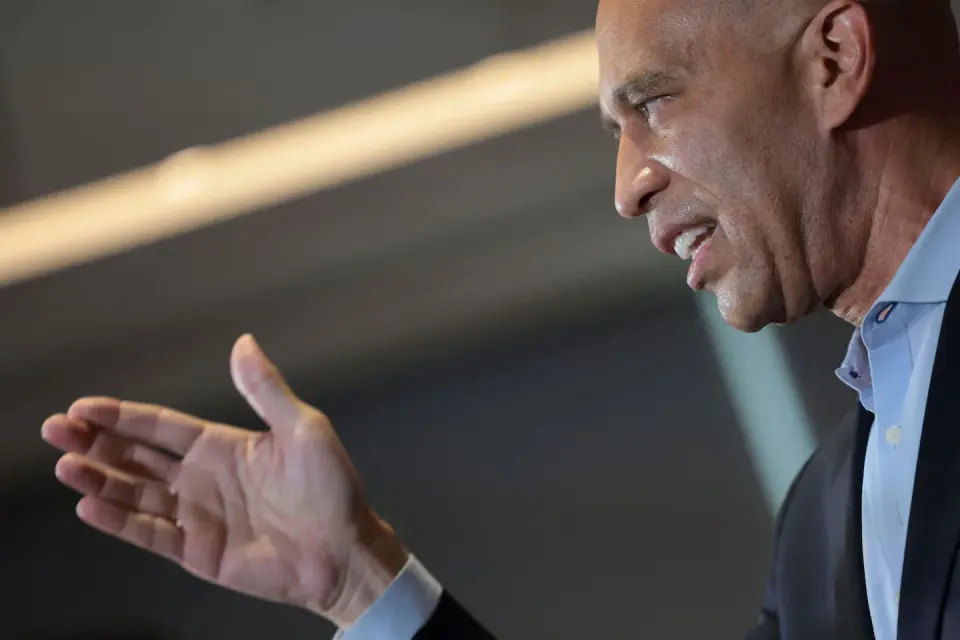
- House Minority Leader Hakeem Jeffries has stated the bill 'falls short' and demands more House input, while Senator Heinrich insists on passing the measure before the year ends to address affordability concerns.
Background
This debate follows the Senate’s finalization of the bipartisan energy permitting deal in October 2026, which resolved disputes over wind power and data center costs. The current controversy arises after the midterm elections, where Democrats gained control of both chambers of Congress, emboldening progressives to challenge Republican energy priorities. Previous coverage noted that Democrats are also preparing to investigate Trump administration energy deals, including critical minerals agreements and renewable energy cancellations, though the permitting bill remains a separate, bipartisan legislative effort.
How outlets are covering it
Supporters, including Senators Heinrich and Whitehouse, argue the bill is essential for lowering energy costs and unlocking clean energy projects, with Heinrich stating that 'Americans spoke clearly' about wanting affordability. They reject claims that the bill facilitates ICE detention, asserting that NEPA provisions do not exclude federal detainees. Conversely, the ACLU and Native American groups, such as the National Congress of American Indians, argue the bill is a 'hatchet job' on tribal rights and a tool for immigration enforcement. The ACLU notes the irony of a bill sold as an affordability measure potentially funding detention centers, while tribal leaders warn that the removal of mandatory consultation undermines their ability to protect sacred sites and water resources. High Country News highlights that the bill could prevent tribes from using their own scientific data in environmental reviews, a change that critics say ignores the expertise of indigenous nations in fisheries and hydrology.
Why it matters
The outcome of this vote will determine the future of federal environmental review processes and the balance between economic development and civil rights. If passed, the bill could accelerate the construction of energy and infrastructure projects but may also erode legal protections for tribal sovereignty and immigrant rights. The conflict highlights the tension between bipartisan efficiency goals and the rights of marginalized communities, with potential long-term implications for how the federal government manages land use and environmental impact assessments.
What to watch
The Senate is expected to vote on the bill on November 9. If passed, it will move to the House, where leadership is divided, with Jeffries demanding changes. Advocacy groups are urging senators to make amendments to protect tribal consultation and civil liberties before the vote. If the bill passes without changes, it could lead to legal challenges from tribal nations and civil rights organizations, potentially resulting in court battles over the validity of the new permitting standards.
- Opinion | Jeffries flirts with derailing long-overdue permitting reform The Washington Post
- Do midterms change the calculus for bipartisan permitting reform? The Hill
- Estimating the US Energy System Impacts of the Bipartisan American Affordability and Jobs Act Rhodium Group
- Jeffries says Senate permitting deal ‘falls short’, demands more House input Politico
- New bill slashes tribes’ role in projects that impact ancestral sites, water and wildlife High Country News
Want the full story? Read the original reporting
Read on The Washington Post