
Senate's 417-Page Permitting Overhaul Faces House Resistance and Environmental Scrutiny
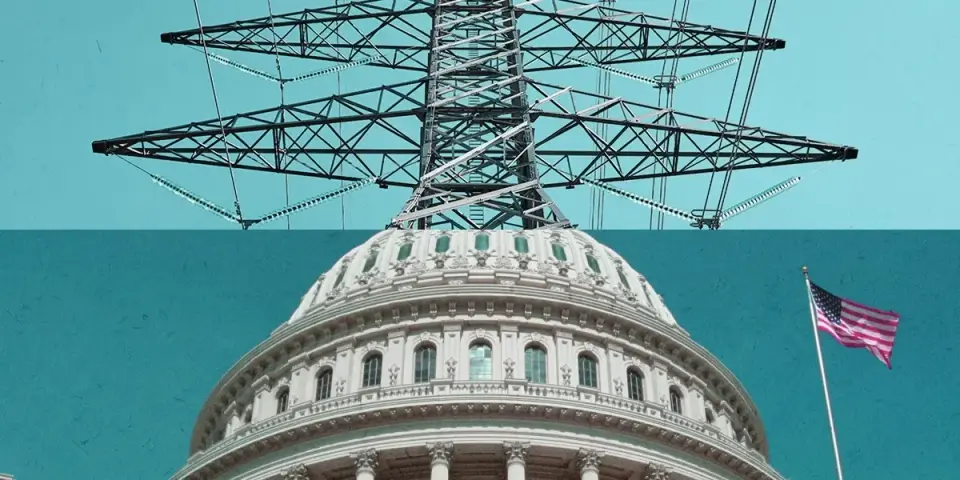
The U.S. Senate has released the Bipartisan American Affordability and Jobs Act (BAAJA), a 417-page omnibus bill designed to streamline federal permitting for energy and infrastructure projects. Negotiated by a bipartisan group of four senators known as the 'Four Corners,' the legislation aims to reduce delays in building power grids, pipelines, and renewable energy facilities. Key provisions include shortening environmental review timelines, limiting litigation windows under the National Environmental Policy Act, and requiring AI data centers to pay for their own transmission infrastructure costs. While the Senate plans to vote on the bill during the post-election lame-duck session, significant opposition exists in the House, and environmental groups have criticized the measure for weakening protections.
Key points
- The BAAJA was released on September 30, 2026, by Senators Shelley Moore Capito, Martin Heinrich, Mike Lee, and Sheldon Whitehouse, who dubbed themselves the 'Four Corners.'
- The bill narrows the scope of the National Environmental Policy Act, excluding certain projects like geothermal testing and gas pipelines from full environmental reviews.
- It limits the time for legal challenges under the National Environmental Policy Act, Clean Water Act, and Endangered Species Act to 150 days, requiring cases to bypass district courts and go directly to appeals courts.
- The legislation grants the Federal Energy Regulatory Commission authority to approve interstate transmission lines if states do not act within one year, aiming to overcome local blocking of power grid expansion.
- A major provision requires AI data centers and crypto miners to pay for both new and existing transmission infrastructure, preventing these costs from being passed to general ratepayers.
- The bill includes specific incentives for geothermal and hydropower, including expedited leasing processes on public lands and streamlined permitting for micro-hydrokinetic projects.
Background
This development follows years of stalled efforts to reform federal permitting, with previous proposals failing to gain traction across two presidential administrations. The current deal builds on earlier legislative attempts like the House-passed SPEED Act and various bipartisan geothermal bills. It also addresses ongoing tensions between the Trump administration and renewable energy developers, particularly regarding wind power permits and Department of Defense airspace clearances, which have been a point of contention in recent negotiations.
How outlets are covering it
Heatmap News and CNBC emphasize the bill's potential to lower energy costs and accelerate infrastructure development, highlighting the bipartisan nature of the deal and its focus on data center cost allocation. Axios notes the broad support from major business and energy industry groups, including oil, gas, and renewables sectors, while also pointing out criticism from left-flank climate groups who view the bill as a giveaway to fossil fuels. Politico highlights significant resistance in the House, with Representative Jared Huffman arguing that most House Democrats oppose the bill as written and prefer to wait for a stronger negotiating position after the midterms. Environmental organizations, such as the Natural Resources Defense Council, have expressed concern over the weakening of environmental protections, particularly regarding the Clean Water Act and the limitation of state authority to block pipeline expansion.
Why it matters
The BAAJA represents a potential shift in how the U.S. approaches energy and infrastructure development, aiming to reduce the years-long delays that have hindered projects. If passed, it could significantly impact the pace of renewable energy deployment, the cost of electricity for consumers, and the regulatory landscape for large-scale data centers. However, the bill's passage is uncertain due to opposition in the House and concerns from environmental groups, making it a critical test for bipartisan cooperation on energy policy in the current political climate.
What to watch
The Senate is expected to vote on the BAAJA during the lame-duck session following the November 3 midterm elections. The bill will require 60 votes to pass, and Senate Democrats are still seeking assurances from the Trump administration regarding wind power permits. In the House, Representative Jared Huffman has urged Democrats to resume negotiations after the elections, arguing that they will have a stronger position. Environmental groups and industry stakeholders will continue to monitor the bill's progress and may push for revisions or amendments. The outcome of the midterm elections could also influence the bill's fate, as a change in control of either chamber could alter the political dynamics surrounding the legislation.
- The Senate’s Big Bipartisan Permitting Deal, Explained Heatmap News
- Senate bipartisan permitting deal faces a House buzz saw Politico
- US senators hit deal on energy project permitting bill, vote after midterm elections Reuters
- Senators clinch construction permitting deal before election jet-set CNBC
- The rocky road to a new permitting law axios.com
Want the full story? Read the original reporting
Read on Heatmap News