
Supreme Court faces emergency appeal over USPS mail ballot rules ahead of midterms
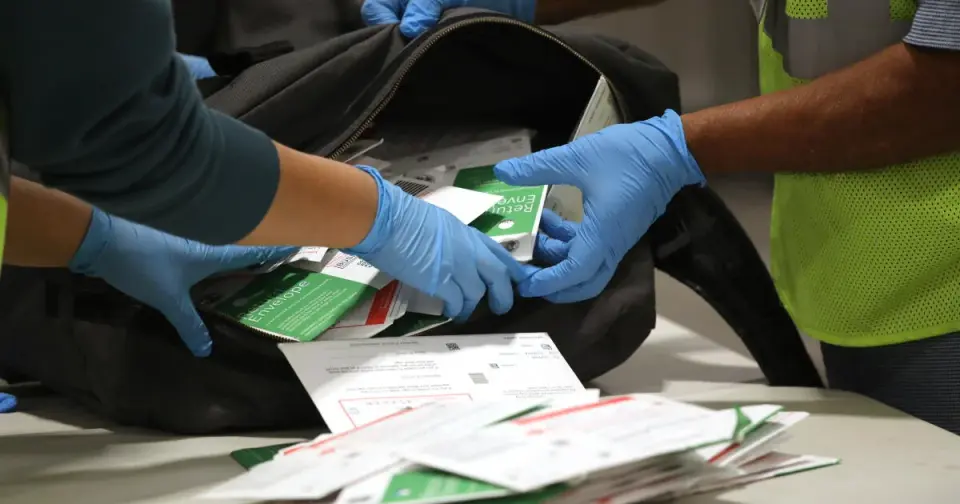
California and 23 other states warned the Supreme Court that enforcing new U.S. Postal Service rules for mail ballots would cause chaos and disenfranchise millions of voters before the November 2026 midterms. The rules, stemming from a March executive order, require states to submit voter lists to the USPS and use specific barcoded envelopes. A federal judge in Boston has blocked the rules, but the Trump administration has appealed three times, arguing the changes are modest and necessary to prevent fraud. The Court is expected to rule quickly given the election timeline.
Key points
- The USPS rule requires states to upload voter data to a federal portal and use barcoded envelopes, with ballots rejected if they do not match the list.
- California and 23 other states, plus D.C., argue compliance is impossible before November and would disenfranchise millions, citing a whistleblower's claim that the USPS portal is flawed.
- The Trump administration argues the rule is a modest envelope-design requirement that does not seize control of state elections, while critics call it an overreach of federal authority.
- U.S. District Judge Indira Talwani issued a preliminary injunction blocking the rules, but the administration has appealed to the Supreme Court three times, seeking to overturn the block.
- Election experts and civic groups, including the ACLU and League of Women Voters, argue there is no evidence of widespread mail ballot fraud and that the rules threaten vulnerable voters.
Background
This dispute began in March 2026 when President Trump signed an executive order directing federal agencies to restrict mail voting. The order included provisions for the Department of Homeland Security to create voter lists and for the USPS to regulate ballot envelopes. Democratic-led states challenged the order in federal court, leading to a series of injunctions and appeals. The Supreme Court previously ruled that the states' initial challenge was premature, but the case has escalated as the November 3 election approaches and states begin mailing ballots.
How outlets are covering it
The Los Angeles Times and SCOTUSblog emphasize the states' argument that the rules would cause 'chaos' and disenfranchise millions, citing a whistleblower's concerns about the USPS portal's reliability. The NBC News report highlights the administration's third appeal to the Supreme Court, noting that North Carolina has already begun mailing ballots. The AP News source, while largely obscured by technical code, indicates that mail ballots are already reaching voters, adding urgency to the dispute. The Trump administration, via Solicitor General D. John Sauer, argues the rules are 'modest' and constitutional, while critics, including UCLA Law's Rick Hasen, call the fraud claims 'speculative and weak.'
Why it matters
The outcome will determine whether the federal government can impose new restrictions on mail voting for the 2026 midterms, potentially affecting millions of voters. A Supreme Court ruling could set a precedent for federal authority over state-run elections and the USPS's role in election administration. The dispute also highlights tensions between federal and state power in election management and the potential for disenfranchisement if new rules are implemented with insufficient time for compliance.
What to watch
The Supreme Court is expected to rule relatively quickly on the emergency appeal. If the Court overturns the preliminary injunction, the USPS could implement the rules before the November 3 election, potentially leading to ballot rejections and voter disenfranchisement. If the Court upholds the injunction, the rules will remain blocked, and states will continue to manage mail voting under existing state laws. The case may also lead to further litigation over the Department of Homeland Security's voter list provisions.
- California, other states warn Supreme Court of ‘chaos’ if it lets USPS mail ballot rules stand Los Angeles Times
- How Trump’s Mail Voting Plan Would Work The New York Times
- Midterm mail ballots start to go to voters as litigation over Trump’s order creates uncertainty AP News
- States, civic groups urge Supreme Court to leave order in place prohibiting Trump administration from implementing parts of mail-in ballot rule SCOTUSblog
- Trump administration asks Supreme Court to allow mail ballot restrictions to move forward for a third time NBC News
Want the full story? Read the original reporting
Read on Los Angeles Times