
Supreme Court Lifts Injunction, Clearing Path for Border Wall Construction in Big Bend
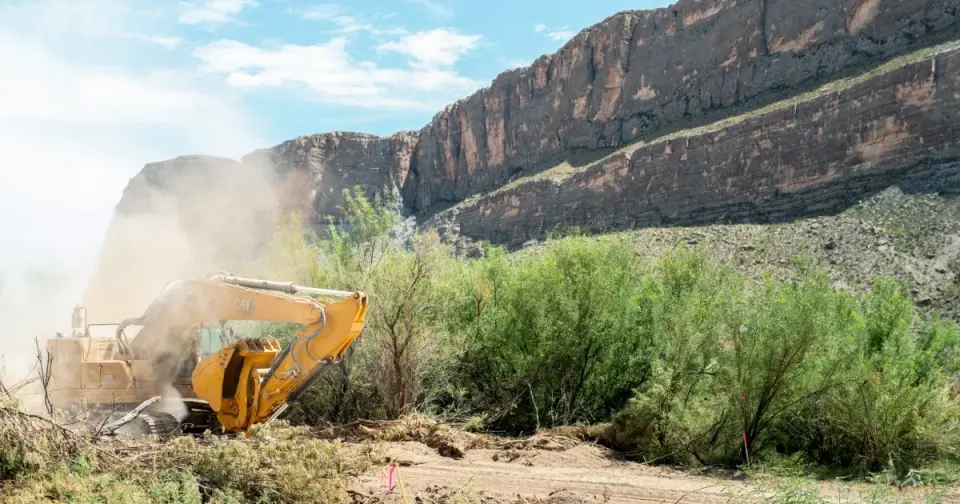
The Supreme Court has overturned a federal injunction, allowing the Trump administration to resume border wall construction in the Big Bend region of Texas. The court ruled that the lower court judge lacked authority to block the project, citing compelling national security interests. This decision permits the government to proceed with a 341-mile barrier project, including within Big Bend National Park, despite environmental and historic preservation challenges.
Key points
- The Supreme Court issued an unsigned decision on Monday, blocking a federal judge's injunction that had halted border wall construction in the Big Bend area of southwest Texas.
- The court ruled that the district judge had no authority to issue the injunction and stated the Trump administration was 'extremely likely to prevail' on the issue.
- The project involves approximately 341 miles of construction, including steel panels and surveillance technology, within and around Big Bend National Park.
- The legal dispute centers on three waivers issued by former Homeland Security Secretary Kristi Noem and her successor Markwayne Mullin, which allowed the government to bypass environmental and historic preservation laws.
- Justice Ketanji Brown Jackson was the only dissenter, though she did not explain her reasoning in the unsigned opinion.
- The challengers, including the Center for Biological Diversity and a local river guide, argue the construction will permanently alter the landscape and threaten historic sites, noting the area has the lowest migrant apprehension rates along the border.
Background
This ruling follows a series of legal battles in late 2026. In October, a federal judge issued a preliminary injunction halting construction, voiding waivers that allowed the Department of Homeland Security to bypass environmental protections. The Trump administration, arguing that a gap in the border would be exploited by cartels, appealed to the Supreme Court. CBP Commissioner Rodney Scott had previously defended the project as 'non-negotiable' while acknowledging that tall steel walls would not be built inside the national park due to ongoing legal challenges. The current decision reverses that lower court pause, allowing the administration to resume work on its broader 2,000-mile border security initiative.
How outlets are covering it
NBC News and The New York Times report that the Supreme Court's decision was unsigned and that Justice Ketanji Brown Jackson dissented. CNN notes that the court's opinion emphasized Congress's preference for 'expeditious border construction' over the harms asserted by respondents. While the administration and its supporters frame the project as essential for national security, citing 89,000 recent detentions in the region, challengers and environmental groups argue the area has the lowest apprehension rates along the border. The New York Times highlights the scope of the project as a 500-mile stretch, whereas NBC News specifies 341 miles of construction in the immediate dispute. All sources agree that the decision allows the administration to resume construction while litigation over the legality of the environmental waivers continues.
Why it matters
The Supreme Court's ruling sets a significant precedent for the balance between national security priorities and environmental protections in federal infrastructure projects. By allowing the government to bypass environmental and historic preservation laws through waivers, the decision may accelerate the construction of border barriers in other sensitive areas. It also signals a judicial willingness to defer to the executive branch on border security matters, potentially limiting the ability of lower courts to issue injunctions against such projects. This move is a key component of the Trump administration's hard-line immigration policy and its goal to complete a 2,000-mile border installation.
What to watch
The Trump administration is expected to resume construction activities in the Big Bend region immediately following the Supreme Court's decision. The legal battle over the validity of the environmental waivers will continue in lower courts, but the injunction blocking ground-disturbing activities has been lifted. The administration aims to complete primary barriers by December 2027, though it has acknowledged that tall steel walls will not be built inside Big Bend National Park. Opponents may continue to file legal challenges, but the Supreme Court's ruling provides a strong legal foundation for the government to proceed with the project.
- Supreme Court paves way for Trump to build a section of his border wall in the Big Bend area of Texas NBC News
- Supreme Court clears the way for border wall construction in Texas’s Big Bend to resume The Washington Post
- Supreme Court allows Trump to continue border wall construction in Big Bend region of Texas CNN
- Supreme Court allows Trump border wall at Big Bend National Park in Texas Reuters
- Supreme Court Allows Construction of Trump’s Border Wall in Big Bend The New York Times
Want the full story? Read the original reporting
Read on NBC News