
Supreme Court Lifts Injunction, Resuming Border Infrastructure Build in Big Bend
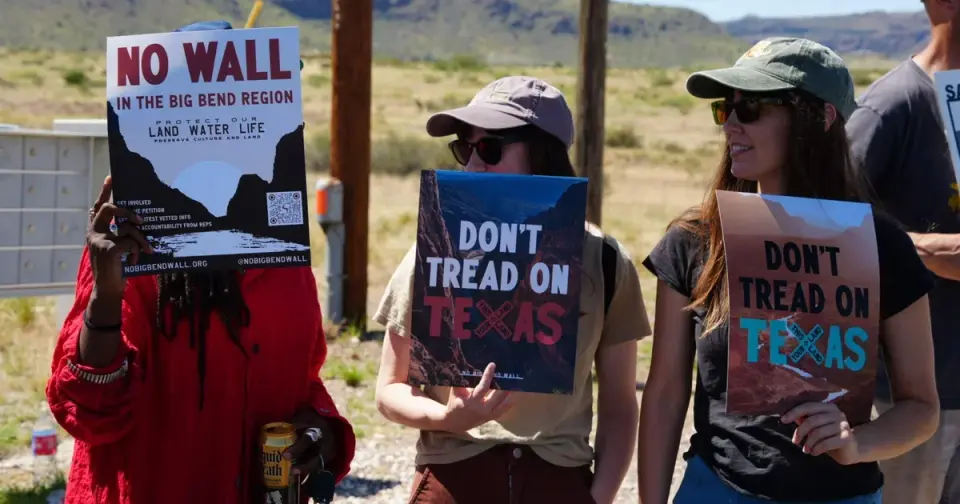
The Supreme Court issued an unsigned decision on Monday allowing the Trump administration to resume construction of border infrastructure in the Big Bend region of Texas. The ruling lifts a preliminary injunction imposed by a federal district judge that had halted work on a 500-mile stretch of the southern border, including areas within Big Bend National Park. The Court determined that the lower court exceeded its authority and that federal immigration laws permit the Secretary of Homeland Security to waive environmental protections for expedited border construction. While the administration argues the project is vital for security, opponents contend the area has minimal illegal entry and that the construction will cause irreversible damage to protected landscapes and historic sites.
Key points
- The Supreme Court lifted a district court injunction, permitting the resumption of border wall and infrastructure construction in the Big Bend sector.
- The Court ruled that the 1996 Illegal Immigration Reform and Immigrant Responsibility Act allows the Secretary of Homeland Security to waive environmental and conservation laws for 'expeditious' border construction.
- Justice Ketanji Brown Jackson dissented, stating she would have denied the Justice Department's request for emergency relief.
- The project involves approximately 341 miles of construction, including roads, surveillance equipment, and vehicle barriers, with some segments potentially affecting Big Bend National Park.
- The administration argues the pause creates a security vulnerability, while challengers argue the area has the lowest apprehension rates along the southern border.
Background
In late October 2026, U.S. District Judge Kathleen Cardone issued a preliminary injunction halting the $1.7 billion border security project in the Big Bend region. The judge ruled that the waivers issued by the Department of Homeland Security to bypass environmental laws were likely unlawful. The Trump administration immediately appealed to the Supreme Court, arguing that the halt created a 300-mile gap in border defenses exploitable by cartels. Prior to the Supreme Court's intervention, Customs and Border Protection had paused construction inside Big Bend National Park following public backlash, but continued work in surrounding areas.
How outlets are covering it
The Trump administration and Solicitor General D. John Sauer argued that the lower court's injunction was 'baseless' and that the 1996 immigration law grants broad authority to waive environmental regulations to ensure 'expeditious' border construction. They emphasized 'compelling interests' in border security, warning that the pause would create a massive vulnerability for illegal entry and trafficking. Conversely, the Center for Biological Diversity, Friends of the Ruidosa Church, and river guide Danny Miller argued that the construction would permanently alter an 'irreplaceable landscape' and destroy historic and cultural resources. They contended that Big Bend has the lowest apprehension rates of any border sector, making the security justification weak. The New York Times noted that Senator John Cornyn, a Republican, had recently urged the administration to halt construction in the area, suggesting technology and staffing were better solutions than physical barriers. The Washington Post highlighted the bipartisan opposition in Texas, including from ranchers and local law enforcement, who feared the project would disrupt the region's ecology and economy.
Why it matters
This ruling is the first major test of the Trump administration's border security policies at the Supreme Court since the midterm elections. It establishes a precedent that federal courts have limited authority to block border construction projects when the executive branch invokes specific immigration statutes to waive environmental laws. The decision allows the administration to proceed with a significant portion of its 2,000-mile border wall plan, potentially setting the stage for similar legal challenges in other border sectors. It also highlights the tension between federal border enforcement priorities and environmental conservation laws, particularly in protected national parks.
What to watch
The Trump administration is expected to resume construction of roads, surveillance equipment, and vehicle barriers in the Big Bend region immediately. The underlying litigation over the legality of the waivers will continue in the lower courts, but the Supreme Court's decision allows physical construction to proceed. The administration aims to complete primary barriers by December 2027. Environmental groups and local stakeholders may continue to monitor the construction for compliance with any remaining legal requirements and may pursue further legal challenges if they believe the construction violates specific environmental protections not covered by the waivers.
- Supreme Court allows Trump administration to resume border wall construction in Big Bend region CBS News
- Supreme Court Allows Construction of Trump’s Border Wall in Big Bend The New York Times
- Supreme Court allows major part of Trump’s border security project in Texas The Washington Post
- Supreme Court paves way for Trump to build a section of his border wall in the Big Bend area of Texas NBC News
- Supreme Court allows border wall construction over Justice Jackson’s dissent MS NOW
Want the full story? Read the original reporting
Read on CBS News