
Tarrant County slashes 92 polling sites for 2026 midterms amid fierce partisan clash
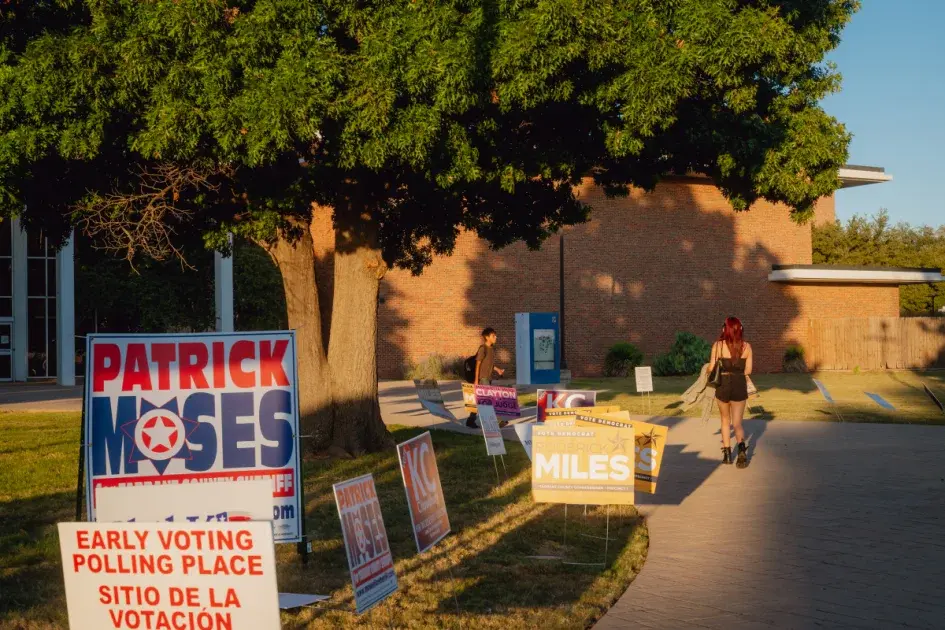
Tarrant County commissioners voted 3-2 on September 1, 2026, to reduce Election Day polling sites from 316 to 224 and early voting sites from 50 to 47 for the November midterms. The decision, which cut 92 locations total, followed eight hours of testimony and significant public protest. Republican officials supported the reduction as a cost-saving measure, while Democrats and civil rights groups condemned it as voter suppression that disproportionately impacts minority and low-income communities.
Key points
- The new plan reduces Election Day sites by 30% and early voting sites by 6%, totaling 92 fewer locations than the 2022 midterms.
- Commissioners voted along party lines: Republicans O’Hare, Krause, and Ramirez supported the cuts; Democrats Simmons and Miles opposed them.
- Opponents argue the cuts disproportionately affect Black and brown neighborhoods, with some zip codes losing all local polling sites.
- Supporters cite statutory requirements, facility unavailability, and cost efficiency, noting the new plan still exceeds legal minimums.
- The decision follows a contentious August meeting where commissioners tabled a more drastic cut after public outcry and arrests.
Background
Tarrant County, home to Fort Worth and over 1.3 million registered voters, has shifted from a Republican stronghold to a competitive battleground. Recent high turnout in March primaries and a Democratic victory in a January special election heightened stakes for the 2026 midterms. This dispute follows a pattern of state-level efforts to tighten voting rules and reduce polling infrastructure, with civil rights organizations warning of potential legal challenges.
How outlets are covering it
The Texas Tribune and ABC News report the vote as a straightforward partisan split, with Republicans emphasizing efficiency and legal compliance while Democrats highlight the political nature of the cuts. MS NOW frames the event as a national issue of voter disenfranchisement, noting that protesters argued the cuts disproportionately harm communities of color and those without transportation. Democracy Docket provides specific data, noting that the lowest-poverty ZIP codes will lose 15% of sites, while the highest-poverty areas lose 41%. All sources agree on the 3-2 vote count and the reduction from 316 to 224 Election Day sites, but differ in emphasis: MS NOW focuses on the social impact and protests, while The Texas Tribune and ABC News detail the procedural history and specific site closures, such as the University of Texas at Arlington.
Why it matters
The reduction in polling sites in a key swing county could influence turnout in the 2026 midterms, potentially affecting the balance of power in the U.S. Senate. The dispute highlights ongoing tensions over voting access in Texas, where Republican and Democratic leaders frame the election as critical. The outcome may set a precedent for how local governments balance budgetary constraints with voter accessibility in competitive districts.
What to watch
Early voting begins October 19, 2026, with Election Day on November 3. The deadline to register to vote is October 5. Civil rights organizations may pursue legal challenges if they determine the cuts violate voting rights statutes. County Judge Tim O’Hare faces a re-election challenge from Democratic Commissioner Alisa Simmons, making the polling site decision a central campaign issue.
- Tarrant County removes 92 polling sites ahead of November election The Texas Tribune
- Tarrant County commissioners to vote on new plan reducing polling locations CBS News
- Protests erupt over plan to slash polling locations in key Texas swing county MS NOW
- ‘A deliberate barrier’: Texas battleground county cuts 30% of midterm voting locations Democracy Docket
- Amid public outcry, Tarrant County, Texas cuts polling locations ahead of 2026 midterm elections ABC News - Breaking News, Latest News and Videos
Want the full story? Read the original reporting
Read on The Texas Tribune