
Texas Supreme Court Justice James Sullivan Nominated for Federal Bench After Election Loss
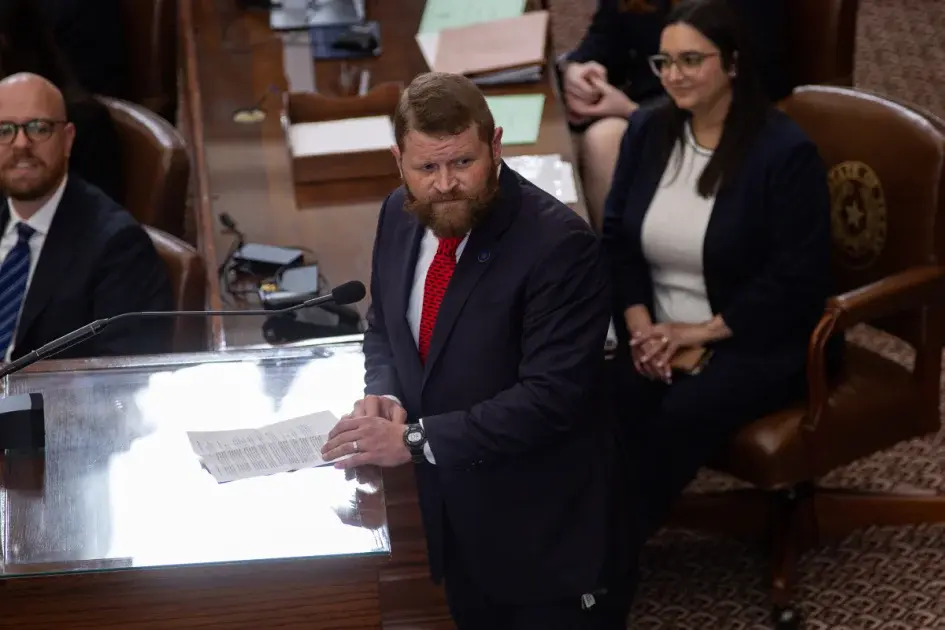
James Sullivan, 45, was nominated by President Donald Trump to serve as a federal judge in the Western District of Texas just one week after losing his seat on the Texas Supreme Court. Sullivan, a Harvard Law graduate and former clerk for the D.C. Circuit Court of Appeals, had risen through conservative legal ranks under Governor Greg Abbott, serving as assistant solicitor general and later as the governor’s general counsel before his 2025 appointment to the state high court. In last Tuesday’s election, Sullivan lost to Democrat Chari Kelly, contributing to a Democratic sweep that narrowed the Republican majority on the Texas Supreme Court from 9-0 to 5-4. Despite his electoral defeat, Senator John Cornyn argued that Sullivan’s record of ability and integrity warrants confirmation, noting he had already been approved by a bipartisan committee. Trump praised Sullivan as an 'incredible jurist.' The nomination occurs as Republicans attempt to fill judicial vacancies before their Senate majority ends.
Key points
- President Trump nominated James Sullivan for a federal judgeship in the Western District of Texas via social media announcement.
- Sullivan lost his Texas Supreme Court seat to Democrat Chari Kelly in a recent election, part of a broader Democratic sweep of statewide offices.
- The Democratic victory reduced the Republican majority on the Texas Supreme Court from 9-0 to 5-4.
- Senator John Cornyn defended the nomination, stating that Sullivan’s prior approval by a bipartisan committee and his professional record justify confirmation despite the election loss.
- Sullivan previously served as general counsel for Governor Greg Abbott and was appointed to the Texas Supreme Court in January 2025.
Background
This nomination follows a period of significant judicial activity in Texas, including recent Supreme Court decisions affecting immigration enforcement and voting rights. Earlier in October 2026, the U.S. Supreme Court allowed a settlement between Texas and the Department of Justice to void a Biden-era immigration pause rule, a move that aligned with the conservative legal strategies Sullivan helped advance during his time in the Abbott administration. Additionally, the federal judiciary has seen challenges to longstanding laws, such as the 1868 ban on home distilling and noncitizen voting statutes, reflecting ongoing tensions between federal and state authority that figures like Sullivan have navigated in their careers.
Why it matters
The appointment signals a strategic effort by the Trump administration and Republican senators to secure judicial positions before losing their Senate majority, prioritizing candidates with established conservative credentials over those who lost recent state elections. It highlights the tension between electoral accountability and federal judicial appointments, as well as the continued influence of the Abbott legal network on the state’s highest courts.
What to watch
The nomination will proceed through the Senate confirmation process, where Democrats may oppose it given Sullivan’s recent electoral defeat. The outcome will depend on the remaining days of the Republican Senate majority and the political will to confirm a candidate who lost a state race to a Democrat.
Want the full story? Read the original reporting
Read on The Texas Tribune