
Supreme Court’s Procedural Delays Enable Trump’s Election and Construction Pushes
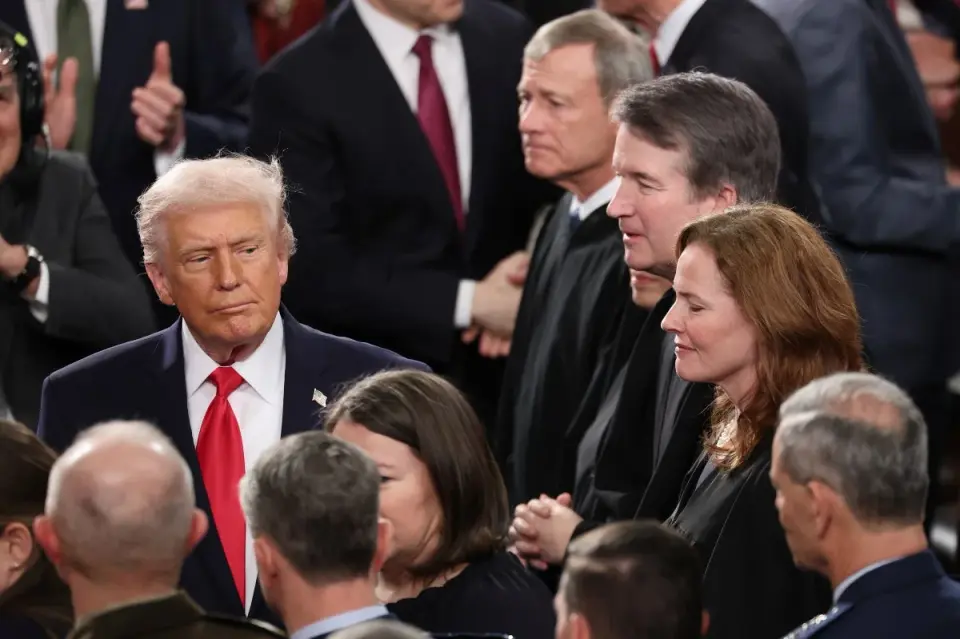
The Supreme Court’s recent decisions have enabled President Trump to advance controversial initiatives, including mail voting restrictions and White House construction, by deferring substantive legal reviews. This strategy allows the administration to implement policies before courts can block them, creating a pattern of 'catch-me-if-you-can' enforcement.
Key points
- The Supreme Court lifted lower court injunctions against Trump’s mail voting executive order, citing procedural ripeness issues.
- Judge Indira Talwani ruled the mail voting order unconstitutional, but the Supreme Court delayed substantive review, allowing implementation to proceed.
- The Court similarly allowed White House ballroom construction to continue, avoiding a ruling on its legality despite preservation challenges.
- Justice Ketanji Brown Jackson criticized the Court’s approach, arguing it empowers the administration to prolong unlawful conduct.
- A whistleblower report revealed the Postal Service is rapidly implementing Trump’s mail voting directives despite court orders.
Background
This situation follows earlier Supreme Court decisions that allowed the White House ballroom project to proceed, with Chief Justice John Roberts dissenting and calling the project likely unlawful. The Court’s pattern of deferring substantive reviews has been consistent across multiple cases involving Trump’s executive actions.
How outlets are covering it
TPM and Democracy Docket emphasize the Supreme Court’s role in enabling Trump’s lawbreaking by delaying substantive reviews, while Fox News criticizes Judge Talwani for defying the Supreme Court and argues the Court’s decisions protect election integrity. The outlets disagree on the legitimacy of the Court’s procedural delays, with TPM and Democracy Docket viewing them as enabling unlawful conduct, and Fox News viewing them as necessary to prevent judicial overreach.
Why it matters
The Supreme Court’s procedural delays have significant implications for the 2026 midterm elections, as they allow the administration to implement policies that could disenfranchise voters. This pattern of deferring substantive reviews could set a precedent for future executive actions, potentially undermining the rule of law and democratic processes.
What to watch
The next steps include potential appeals of Judge Talwani’s rulings on the mail voting order and continued implementation of the Postal Service’s new rules. The Supreme Court may eventually rule on the substantive legality of these actions, but the delay allows the administration to proceed in the meantime.
- How the Supreme Court Helps Trump Run Out the Clock Talking Points Memo
- Judge again blocks Trump mail ballot executive order in ruling that’s likely to be swiftly appealed AP News
- States and voters warn appeals court that granting Trump's proposed vote-by-mail rule would 'get rid of' mail-in ballots Yahoo
- A federal judge has said from the start Trump's anti-mail voting order is unconstitutional. Here's how Democracy Docket
- MIKE DAVIS: Why SCOTUS defying Obama judge must be impeached to protect elections Fox News
Want the full story? Read the original reporting
Read on Talking Points Memo