
Trump Defends Iran War to Aides Despite Growing Rift with Vance
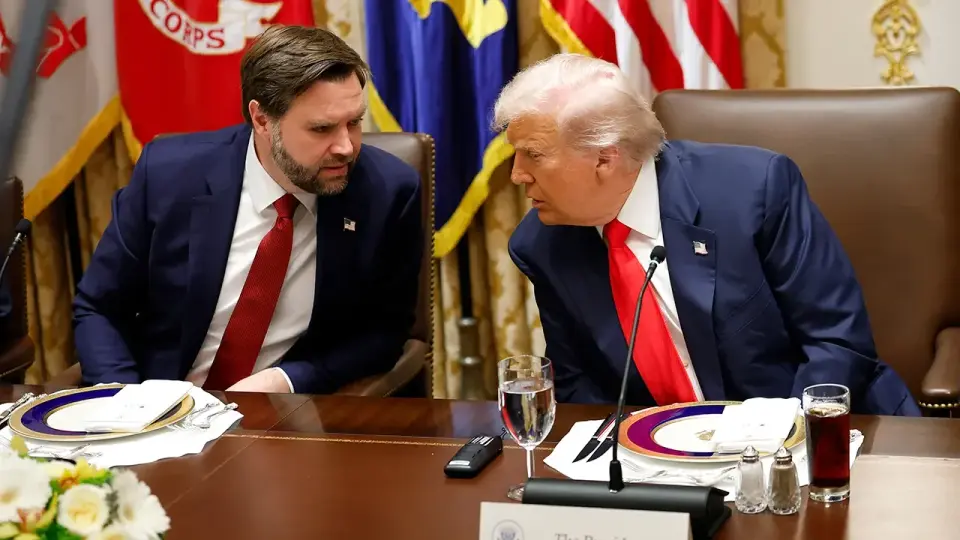
President Donald Trump publicly reaffirmed his support for the military conflict with Iran, stating he would launch the operation again to prevent Tehran from acquiring nuclear weapons. This statement followed a period of reported tension with Vice President JD Vance, who publicly blamed the war for the Republican Party’s historic losses in the 2026 midterm elections. While Trump initially praised Vance’s honesty, internal frustrations have emerged over the VP’s failure to explicitly defend the president’s decision-making. The conflict has intensified speculation regarding a competitive 2028 presidential primary, with figures like Ron DeSantis and Ted Cruz positioning themselves as alternatives. Meanwhile, a trilateral summit in Asia produced a peace declaration that notably omitted references to the ongoing wars in Ukraine and Iran.
Key points
- Trump told reporters he would have launched the Iran war regardless of political costs, citing the necessity of preventing a nuclear arms race.
- Vance publicly attributed the Republican midterm defeat to the war and rising oil prices, a stance Trump initially called 'accurate' but later criticized for lacking explicit defense of the president.
- The 2026 midterms resulted in a Democratic 'blue wave,' including the first Democratic governor of Texas since 1995 and majorities in both chambers of Congress.
- A trilateral summit between the US, China, and Russia produced a peace statement that avoided mentioning the wars in Ukraine and Iran, focusing instead on UN reform and oil supplies.
- Oil prices, which spiked during the conflict, have since fallen to approximately $80 a barrel, a figure Trump noted was lower than his initial projection of $300.
Background
The current friction between the President and Vice President follows a series of post-election statements in late 2026. Earlier coverage indicated that while Trump initially endorsed Vance’s critique, he later halted peace negotiations and expressed frustration that Vance did not publicly validate the war as a necessary strategic choice. This dynamic has fueled speculation about a fractured 2028 Republican primary, with candidates like Ron DeSantis and Ted Cruz emerging as potential challengers to the Vance-Trump axis. The broader context includes a significant shift in US foreign policy, marked by the recent trilateral summit in Asia, where the US, China, and Russia agreed on a peace declaration that conspicuously excluded the active conflicts in Ukraine and Iran.
How outlets are covering it
Fox News emphasizes the unity between Trump and Vance, highlighting the President’s public defense of the war and his dismissal of reports of tension. In contrast, The New York Times reports that Trump has grown increasingly frustrated with Vance over the past two weeks, complaining to aides that the VP should have explicitly defended the decision to go to war. The Guardian provides a broader diplomatic context, noting that the recent trilateral summit between the US, China, and Russia produced a peace statement that omitted any mention of the wars in Ukraine and Iran, suggesting a strategic silence on these conflicts at the international level. While Fox focuses on the domestic political fallout and oil prices, The Guardian highlights the diplomatic maneuvering and the lack of concrete denuclearization frameworks in the new peace declaration.
Why it matters
The public and private disagreements between the President and Vice President signal a potential fracture within the Republican Party that could reshape the 2028 presidential landscape. The admission that the Iran war drove the Democratic 'blue wave' in the 2026 midterms, including the historic flip of Texas, indicates a significant shift in voter sentiment regarding foreign policy and economic stability. Furthermore, the omission of the Iran and Ukraine wars from the recent trilateral peace declaration suggests a complex diplomatic environment where the US is navigating conflicting priorities between domestic political costs and international strategic interests. The falling oil prices may mitigate some economic damage, but the political cost of the war remains a central issue for the administration's future viability.
What to watch
The administration is expected to continue navigating the political fallout of the 2026 midterms as Democrats take control of Congress. The White House is scheduled to hold a press conference following the APEC summit to discuss trade deals with Asian nations. Internally, the tension between Trump and Vance may lead to further strategic disagreements on foreign policy, particularly regarding the Iran conflict and the ongoing war in Ukraine. The 2028 presidential primary is likely to become more competitive as figures like Ron DeSantis and Ted Cruz position themselves as alternatives to the current administration's leadership. Additionally, the US will likely continue to monitor the implementation of the trilateral peace declaration, though the lack of specific denuclearization frameworks suggests that diplomatic tensions may persist.
- Trump responds after Vance blames Iran war for midterm losses, VP says his job is to support president Fox News
- Republican senator blocks Trump pick to lead cybersecurity agency who denied US Capitol was attacked on January 6 – live The Guardian
- Trump Grows Frustrated With Vance Over Iran War Critique The New York Times
- Trump getting annoyed at JD Vance — all because VP didn’t say these 16 words AL.com
- Trump Says Vance Erred in Critique of Iran War as Questions Swirl About VP WSJ
Want the full story? Read the original reporting
Read on Fox News