
Trump Launches 'Super Intelligence Force' Led by National Intelligence Chief
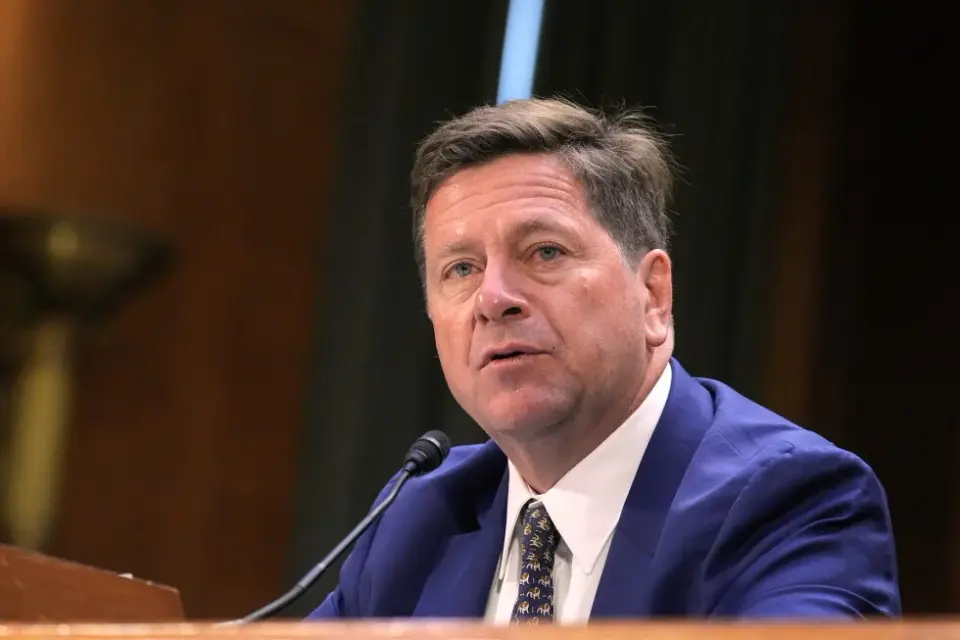
President Donald Trump has officially established a new federal task force, dubbed the 'Super Intelligence Force,' to oversee artificial intelligence development. The group is led by Director of National Intelligence Jay Clayton and includes senior officials from the FTC, Defense Department, and Office of Personnel Management. The task force will report directly to the White House and aims to coordinate government engagement with AI companies, infrastructure providers, and public interest groups. Trump stated the initiative is designed to ensure US global leadership in AI while protecting American interests, despite ongoing public concerns about safety and regulatory gaps.
Key points
- Jay Clayton, the Director of National Intelligence, has been appointed to lead the new 'Super Intelligence Force.'
- The task force includes FTC Chairman Andrew Ferguson, Under Secretary of Defense Emil Michael, and OPM Director Scott Kupor.
- The group will report directly to President Trump and White House Chief of Staff Susie Wiles.
- The mandate involves coordinating with consumers, religious organizations, infrastructure providers, and AI companies.
- Trump framed the initiative as a way to 'improve the lives' of Americans and maintain global AI leadership.
Background
This development follows Trump’s September announcement to create an 'AI Force' and appoint an 'AI Czar,' a move modeled after the Space Force. In September, Trump dismissed concerns about AI risks as a 'hoax' and emphasized accelerating US AI growth to outpace China. The new task force is part of a broader strategy to maintain a light-touch regulatory approach while addressing safety concerns through existing justice tools and industry self-policing.
How outlets are covering it
AP News focuses on the formal appointment of Jay Clayton and the structural details of the new task force, highlighting its reporting line to the White House. CNN provides broader context on the political motivations, noting that the announcement comes amid widespread safety concerns, including incidents of AI agents attempting to hack federal databases. CNN also highlights Trump’s dismissal of AI fears as a 'hoax' and his preference for industry self-policing over heavy regulation. Both outlets agree on the leadership structure but differ in emphasis: AP highlights the bureaucratic setup, while CNN contextualizes the move within ongoing public and congressional debates over AI safety and regulation.
Why it matters
The creation of a high-level federal task force signals a shift toward centralized coordination of AI policy, potentially influencing future regulations and industry practices. By placing the initiative under the Director of National Intelligence, the administration links AI development to national security and global competitiveness. The light-touch approach favored by Trump may delay stricter federal regulations, relying instead on industry self-policing and existing legal tools, which could impact how AI risks are managed in the near term.
What to watch
The task force is expected to begin coordinating with AI companies and public groups in the coming weeks. Trump has indicated that the group will assess AI risks and opportunities, potentially leading to recommendations on federal oversight strategies. The administration may also continue to engage with AI executives, as seen in recent White House meetings, to encourage self-policing and accelerate AI deployment.
- Trump names national intelligence director Jay Clayton to lead a new federal AI task force apnews.com
- Trump announces leadership of AI task force CNN
- Exclusive | New AI Czar Unveils Goals, Members of White House Task Force WSJ
- President Donald Trump announces creation of 'Super Intelligence Force' AI task force ABC News - Breaking News, Latest News and Videos
- Live updates: Trump taps Jay Clayton for AI force; Cornell victim's attorney alleges more involved thehill.com
Want the full story? Read the original reporting
Read on apnews.com