
Trump Proclaims Gold-Decorated Oval Office a National Monument to Block Future Changes
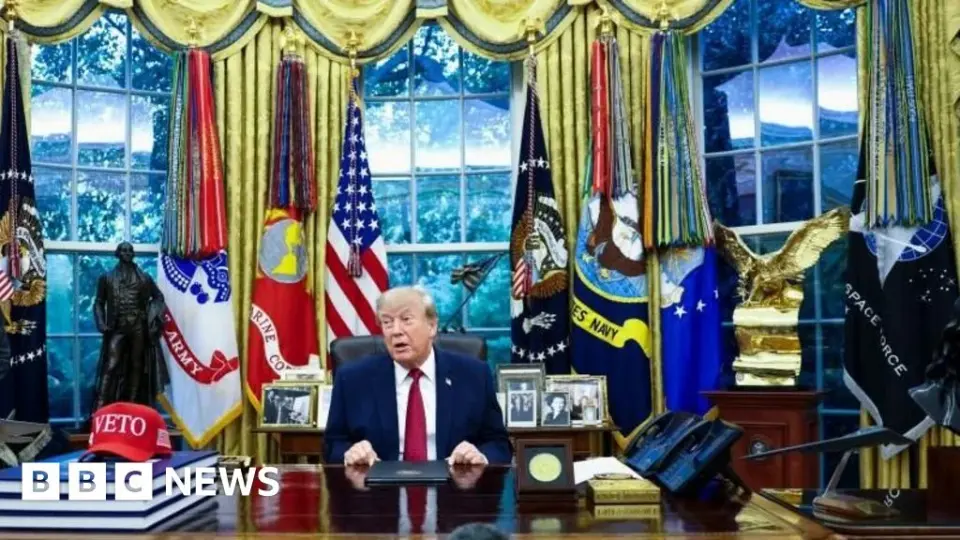
President Donald Trump signed a proclamation on November 5, 2026, designating the Oval Office and Cabinet Room as national monuments. The move aims to prevent future administrations from altering the spaces, which Trump has extensively redesigned with gold accents and portraits. The action follows significant Republican losses in the midterm elections, where Democrats regained control of Congress.
Key points
- Trump declared the Oval Office and Cabinet Room national monuments to protect his specific design choices, including gold wall features and portraits.
- The proclamation allows future presidents to change furniture and make minor operational adjustments but blocks major structural changes without congressional approval.
- The signing occurred two days after Democrats won control of both chambers of Congress in the 2026 midterm elections.
- Trump has undertaken extensive White House renovations, including a $600 million ballroom project that involved demolishing the East Wing.
- Critics argue the move is legally weak given existing historic preservation laws and contrasts with the administration's efforts to undermine other preservation statutes.
Background
The White House has been a National Historic Landmark since 1960, and the current Oval Office layout dates back to the early 1930s under Franklin D. Roosevelt. In October 2026, Trump suggested the room might need demolition for security reasons, a claim he later rejected. This proclamation follows a period of intense renovation activity, including the Lincoln Memorial Reflecting Pool upgrades and the East Wing demolition, which drew criticism from preservation groups and former President Barack Obama.
How outlets are covering it
BBC and AP report the core facts of the proclamation and Trump's statements. NBC News emphasizes the political timing, noting this was Trump's first major public appearance after the midterm losses. The Guardian highlights the contrast between Trump's preservation of the Oval Office and his administration's lawsuits against other historic site protections. Legal expert Greg Werkheiser, cited by BBC, argues the order is largely symbolic because presidents already have discretion over temporary alterations, while NBC notes the requirement for congressional ratification for major changes. All sources agree on the gold-heavy aesthetic and the post-election context.
Why it matters
The move signals an attempt to cement a physical legacy despite losing legislative power. It highlights tensions between presidential discretion and historic preservation laws, and serves as a symbolic response to the Democratic victory in the midterms, where voters rejected the administration's economic policies.
What to watch
The proclamation will be sent to Congress for ratification. Future presidents will face legal hurdles if they attempt major structural changes to the Oval Office or Cabinet Room. The new Democratic Congress may scrutinize the legal basis of the order and other preservation efforts by the Trump administration.
- Trump signs order to prevent future presidents from changing Oval Office BBC
- Trump makes the Oval Office a national monument. But future presidents can still redecorate AP News
- Trump signs proclamation to try to prevent changes to gold-covered Oval Office The Guardian
- Trump focuses on White House decor for second straight day in post-midterm remarks NBC News
- Trump signs proclamation to prevent changes to Oval Office, other White House rooms Fox News
Want the full story? Read the original reporting
Read on BBC