
Trump cites 22nd Amendment to dismiss 2028 run, despite prior 'succession' hints
President Trump stated on August 12, 2026, that the 22nd Amendment prevents him from seeking a third term in 2028, calling the law 'very strong.' This follows earlier ambiguous remarks where he suggested a potential vice-presidential succession route, a strategy constitutional scholars deem invalid under the 12th Amendment.
Key points
- Trump dismissed a reporter's question about a 2028 run at Joint Base Andrews, citing the 22nd Amendment's two-term limit.
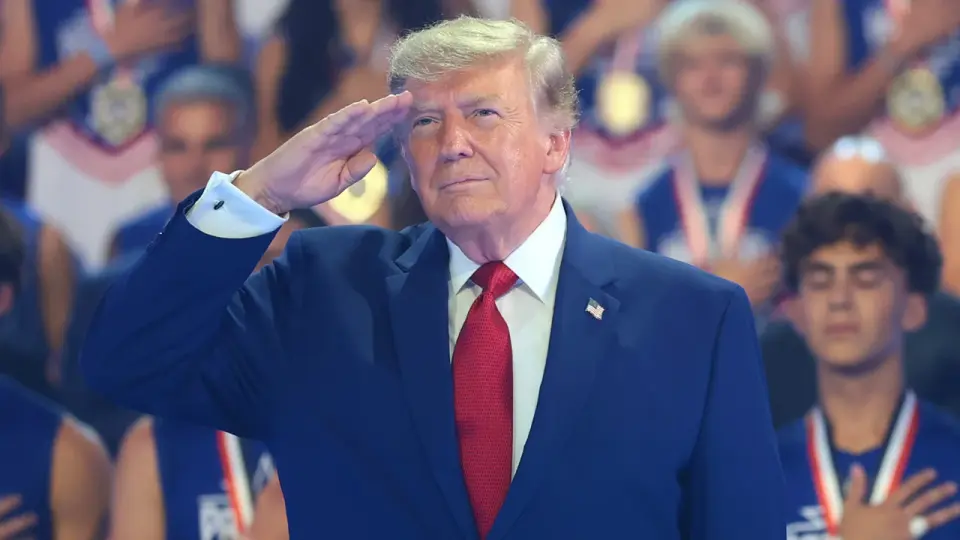
- The president acknowledged he would 'love to run' but emphasized the legal barrier, referencing crowd chants at the Patriot Games.
- In March 2025, Trump told NBC that he was not 'joking' about a third term, suggesting a scenario where VP JD Vance wins and resigns to allow Trump to succeed him.
- Constitutional scholars, including Princeton's Deborah Pearlstein, argue the 12th Amendment blocks this succession strategy as it bars 'constitutionally ineligible' persons from the vice presidency.
- The 22nd Amendment was ratified in 1951, limiting presidents to two elected terms after Franklin D. Roosevelt served four.
Background
This follows a pattern of mixed signals from the White House regarding term limits. Earlier in 2026, Trump joked about a third term at the Correspondents' Dinner, while simultaneously facing judicial blocks on immigration and DEI policies, as noted in our July archive. The current statement marks a clearer public acknowledgment of constitutional constraints, contrasting with his earlier 'succession' theory.
How outlets are covering it
Fox News frames the August 12 comments as a definitive dismissal of a third term, highlighting Trump's deference to the law. The Independent and Yahoo focus on a separate, recent controversy involving AI-generated images of Trump in military uniforms, which they link to broader questions about his 2028 ambitions. While Fox emphasizes the legal barrier, the other outlets scrutinize the administration's use of digital media to project power, creating a divergence between legal reality and political branding.
Why it matters
The 22nd Amendment remains a firm constitutional boundary, but Trump's prior exploration of succession loopholes highlights ongoing tensions between political ambition and legal limits. The current dismissal may signal a shift in strategy, but the lack of a formal amendment or clear legal precedent for 'succession' keeps the 2028 landscape uncertain.
What to watch
Watch for any formal legal challenges or constitutional interpretations regarding the 12th Amendment's 'ineligibility' clause. Also, monitor whether Trump's 2028 messaging shifts from legal loopholes to broader political branding, as suggested by the AI image controversy.
- Trump brushes off reporter question about running for third term in 2028: 'The law is very strong' Fox News
- Trump on third term: ‘The law is very strong’ The Hill
- ‘Trump 2028’: President poses as decorated general and threatens to run again in bizarre series of AI posts The Independent
- Fact Check: Trump DID Post AI-Generated Image Of Himself With Patton, MacArthur -- All In Historically Inaccurate Uniforms Yahoo
- Trump finally admits the ‘law is very strong’ against his hinted third term as president The Independent
Want the full story? Read the original reporting
Read on Fox News