
Trump Silences MS Now Reporter Amid Ongoing White House Press Access Dispute
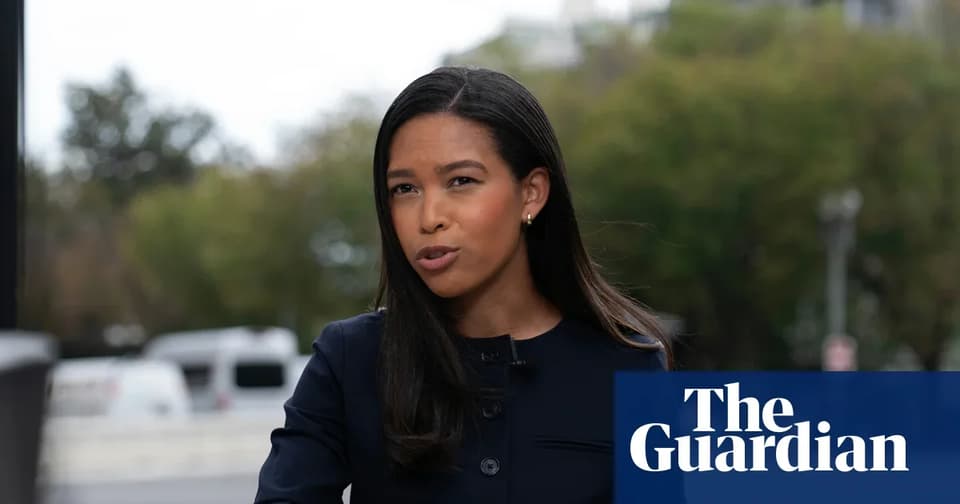
Donald Trump told MS Now correspondent Akayla Gardner to 'be quiet' during a Saturday press interaction, intensifying a week-long standoff over White House access. After a federal judge temporarily restored credentials for CNN, MS Now, and Politico, the administration excluded CNN from Air Force One pool coverage for a trip to Tennessee. The legal battle continues, with the Justice Department seeking to overturn a 50-year-old precedent on press due process.
Key points
- Trump dismissed MS Now reporter Akayla Gardner’s question about press pool restrictions by telling her to 'be quiet' and labeling her outlet 'fake news.'
- CNN was removed from the Air Force One television pool rotation for Trump’s trip to Knoxville, Tennessee, replaced by the pro-Trump network Real America’s Voice.
- Judge Timothy Kelly issued a temporary restraining order on September 24, restoring credentials for CNN, MS Now, and Politico, but the order expires on October 8.
- The Justice Department has argued in court that a 1977 precedent requiring due process for press credential revocation is 'wrong and should be overruled.'
- CNN’s chief media analyst Brian Stelter warned that excluding specific networks sets a precedent that could target any outlet in the future.
Background
This dispute follows a series of escalating conflicts between the Trump administration and the press, including a previous confrontation with CNN at the United Nations and a temporary ban that led to a boycott of White House pool coverage by major networks. The current standoff is part of a broader pattern of tensions over press access during Trump’s second term.
How outlets are covering it
The Guardian and The New York Times emphasize the personal confrontation and the administration’s control over pool assignments, highlighting the exclusion of CNN from Air Force One. CNN focuses on the legal proceedings, noting Judge Kelly’s skepticism of the administration’s national security justifications and the potential for the case to reach the Supreme Court. The Atlantic frames the incident as a preview of future conflicts, suggesting that the administration’s actions undermine its own authority while damaging democratic norms. All sources agree that the legal battle is ongoing, but they differ in emphasis: The Guardian and NYT focus on the immediate exclusion and rhetoric, CNN on the judicial timeline, and The Atlantic on the long-term implications for press freedom.
Why it matters
The outcome of this legal battle could redefine the boundaries of press access in the White House and set a precedent for how future administrations handle media relations. If the Justice Department succeeds in overturning the 1977 precedent, it could allow for the revocation of press credentials without due process, potentially chilling investigative journalism and limiting public access to information about the executive branch.
What to watch
Judge Timothy Kelly is expected to rule on a preliminary injunction request by the media outlets, with the administration’s response due by October 2 and the plaintiffs’ final submission by October 5. The temporary restraining order expires on October 8, after which the case may proceed to a longer-term injunction or appeal. The administration may continue to restrict access to specific outlets or events, while the media organizations will document any further exclusions to support their legal arguments.
- Trump tells female MS Now reporter to ‘be quiet’ amid questions on press pool ban The Guardian
- A 7-Day Standoff That Said So Much About Trump and the Media The New York Times
- Here’s how Trump can still win his fight to ban CNN, MS NOW and Politico from the White House CNN
- The Two-Year Temper Tantrum to Come The Atlantic
- A White House press ban was lifted this week. But the tensions and legal battle aren't over yet AP News
Want the full story? Read the original reporting
Read on The Guardian