
Trump's 250-Foot Arch Sparks Legal Battle and Imperial Criticism
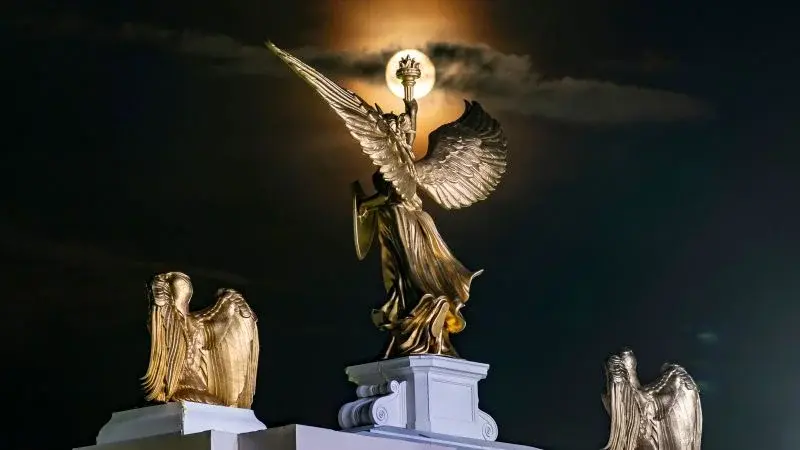
President Donald Trump is pushing forward with the construction of a 250-foot 'triumphal arch' near Arlington National Cemetery, a project critics argue lacks legal authorization and historical justification. While Interior Secretary Douglas Burgum announced excavation work would begin within two weeks, Vietnam War veterans have filed for a temporary restraining order, citing violations of notice requirements and the absence of congressional approval. The project, which would block sight lines to the Lincoln Memorial, is framed by some as a symbol of imperial overreach and personal ego, while the administration defends the initial digging as standard archaeological survey work.
Key points
- Interior Secretary Douglas Burgum announced excavation for the 250-foot arch would begin within two weeks, describing it as a 'Great Piece of American Architecture.'
- Vietnam War veterans filed a motion for a temporary restraining order, arguing the project lacks congressional authorization and violates a court order requiring 14 days' notice before construction.
- The Justice Department countered that the planned digging is merely 'archaeological survey work' and not construction, claiming it does not trigger the notice requirement.
- Critics, including CNN and MS NOW, argue the arch lacks a historical triumph to justify its existence and serves as a monument to presidential ego and imperial ambitions.
- The National Capital Planning Commission has approved preliminary plans but has not yet issued final approval, while the National Park Service acknowledged the project would have adverse effects on existing monuments.
Background
This development follows a series of controversial construction projects by the Trump administration, including the White House ballroom and the renovation of the Reflecting Pool. The arch project has been in the news since early 2026, with the Commission of Fine Arts and the National Capital Planning Commission granting preliminary approvals despite public opposition. The current legal battle is part of a broader pattern of challenges to Trump's 'Washington makeover' initiatives, which critics argue bypass standard bureaucratic and legal processes.
How outlets are covering it
CNN frames the arch as a symbol of Trump's 'imperial' ambitions, linking it to his foreign policy and a desire to impose his persona on Washington in perpetuity. MS NOW views the arch as a 'grotesque' monument to narcissism that a future Democratic president should dismantle. The Washington Post and ABC News focus on the legal and procedural battles, highlighting the veterans' lawsuit and the administration's defense that the initial digging is not construction. The outlets disagree on the primary significance of the arch: CNN and MS NOW see it as a political and symbolic statement, while The Post and ABC News emphasize the legal and procedural conflicts.
Why it matters
The arch project highlights the tension between executive power and legal constraints, as well as the broader debate over the role of monuments in American public space. It also reflects the administration's approach to foreign policy and domestic governance, which critics argue is characterized by a disregard for established norms and institutions. The outcome of the legal battle could set a precedent for future construction projects and the limits of executive authority.
What to watch
The next steps depend on the ruling of U.S. District Court Judge Tanya Chutkan, who must decide whether to grant the temporary restraining order. If the court allows the excavation to proceed, the administration may move forward with the project, potentially leading to further legal challenges. If the court blocks the work, the administration may appeal or seek alternative legal justifications. The National Capital Planning Commission's final approval will also be a critical factor in the project's future.
- Why Trump’s dream of an arch is his most revealing legacy play CNN
- Trump won the battle over his awful arch. The next Democratic president can win the war. MS NOW
- Veterans and Democrats intensify fight against Trump’s planned arch The Washington Post
- Vietnam vets ask judge to block excavation work on Trump's 'triumphal arch' ABC News - Breaking News, Latest News and Videos
- Construction of "Arc de Trump" set to begin in next two weeks Dezeen
Want the full story? Read the original reporting
Read on CNN