
Trump’s Post-Midterm Chaos: From Press Secretary Gaffe to Congressional Power Struggles
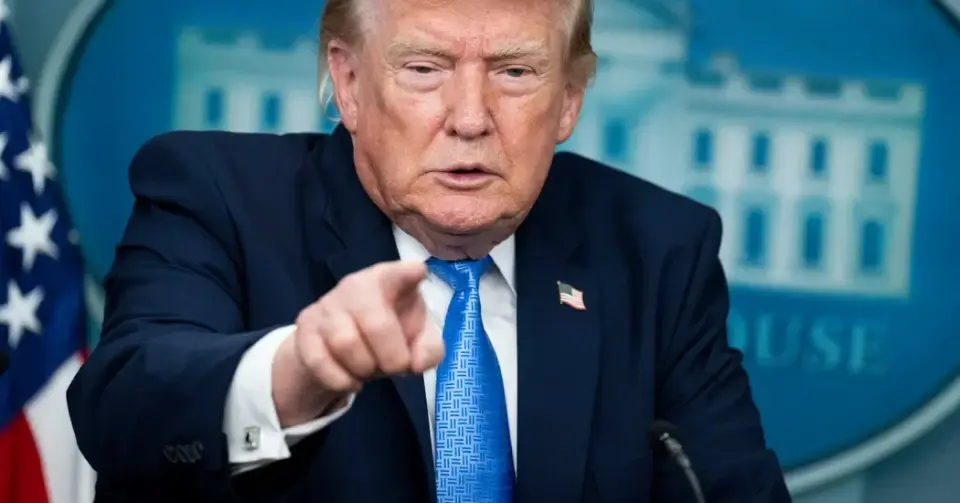
Following a decisive Democratic victory in the 2026 midterm elections, President Donald Trump has responded with a series of erratic actions, including renewing claims of election fraud and attempting to appoint UFC executive Dana White as press secretary. Simultaneously, the incoming Democratic majority in Congress is fracturing over leadership, with progressive 'Bloc' members resisting Speaker-elect Hakeem Jeffries, while the White House undergoes a major leadership shakeup with Stephen Miller replacing Susie Wiles as chief of staff.
Key points
- President Trump renewed false claims about rigged elections and floated UFC executive Dana White as a potential press secretary, though White reportedly declined the offer or Trump joked about it, according to The New York Times and CNN.
- The White House replaced chief of staff Susie Wiles with Stephen Miller, a move that coincided with a subdued dinner at Mar-a-Lago, contrasting sharply with the 'euphoric' mood before the election, according to Politico.
- Incoming House Democrats are divided, with progressive members of the 'Bloc' withholding support for Speaker-elect Hakeem Jeffries until he commits to a bold agenda including Medicare for All and abolishing ICE, according to Politico.
- Former Trump political director James Blair denied corruption allegations made by former RFK Jr. aide Calley Means, calling the claims 'scurrilous' and 'defamatory,' while Means argued that the removal of Wiles and Blair was a victory for Americans, according to Politico.
- Senate Democrats are facing internal unrest, with a movement to draft Sen. Chris Van Hollen to challenge Chuck Schumer for majority leader gaining steam, according to Politico.
Background
This turmoil follows the 2026 midterm elections, where Democrats secured a significant victory, shifting legislative control in Washington. Prior coverage noted that Trump’s final campaign rallies in late October emphasized nostalgia over policy, failing to address voter concerns about affordability and the Iran war. The current chaos reflects the transition of power as Democrats prepare to assume control of Congress, while the administration scrambles to adjust to its loss of legislative leverage.
How outlets are covering it
The New York Times frames Trump’s recent actions as a predictable 'mayhem' response to a 'weary public' and a 'nearly wholesale rejection' of the Republican Party, highlighting his erratic behavior as a coping mechanism for electoral defeat. In contrast, Politico focuses on the structural consequences of the election, detailing the internal power struggles within the new Democratic majority and the specific personnel changes in the White House. While The New York Times emphasizes the chaotic nature of Trump’s public appearances and statements, Politico provides a granular look at the political maneuvering in Congress, such as the progressive 'Bloc'’s leverage over Speaker-elect Jeffries and the potential challenge to Senate Majority Leader Chuck Schumer. Both outlets agree that the post-election period is defined by instability, but they diverge in focus: The New York Times centers on the president’s behavior, while Politico centers on the legislative and administrative fallout.
Why it matters
The post-midterm chaos signals a significant shift in the balance of power, with Democrats now controlling Congress and facing internal divisions over their agenda. The White House’s leadership changes and Trump’s erratic behavior may impact the administration’s ability to govern effectively during the lame-duck session. The potential for impeachment votes against Defense Secretary Pete Hegseth and the struggle over the House speakership indicate a period of intense political conflict that could shape the next two years of U.S. policy.
What to watch
Congress is set to begin its lame-duck session, where Speaker-elect Hakeem Jeffries will face a decision on whether to negotiate with Republicans or aggressively investigate the administration. An impeachment vote against Defense Secretary Pete Hegseth is expected this week. In the Senate, the movement to challenge Chuck Schumer for majority leader may intensify, while the White House adjusts to Stephen Miller’s new role as chief of staff. Trump is scheduled to meet with Qatari Prime Minister Mohammed bin Abdulrahman Al Thani to discuss the Iran war, though signals remain mixed regarding future strikes.
- Trump Trots Out His Chaotic Greatest Hits to a Weary Public The New York Times
- The future of Trumponomics: compromise or failure The Economist
- ‘Buckle up. This is going to be a nasty two years’ The Times
- Between the Bloc and a hard place Politico
- The Memo: Trump’s mixed signals give way to a doubling down after midterms defeat The Hill
Want the full story? Read the original reporting
Read on The New York Times