
U.S. secures expanded Arctic military access in Greenland via new trilateral pact
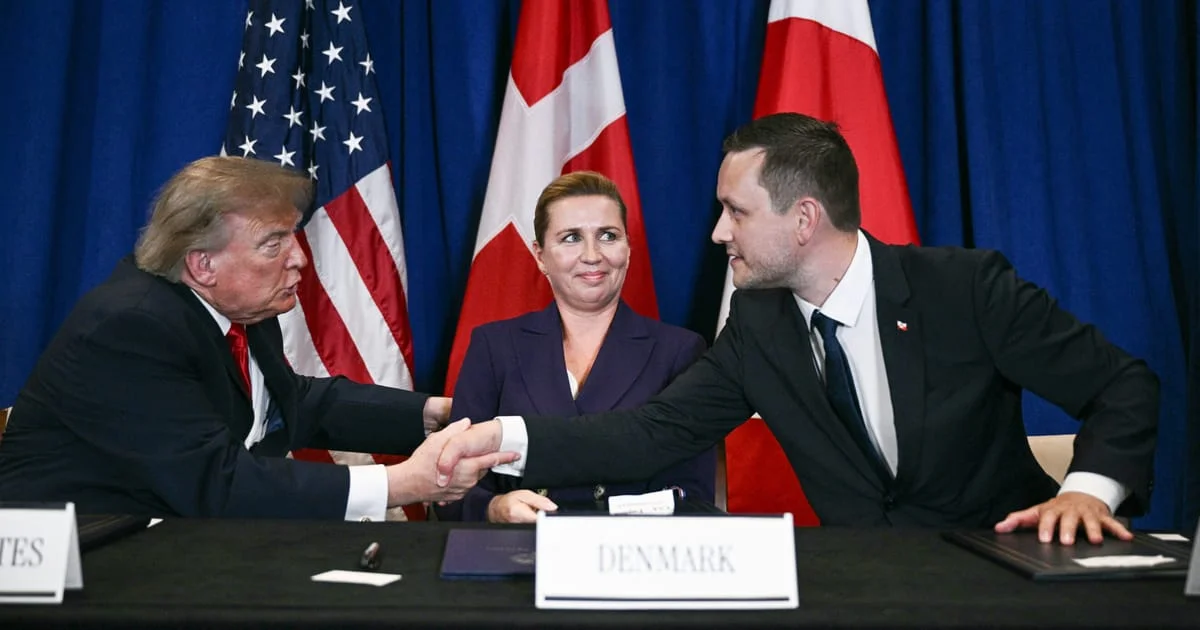
President Donald Trump signed a trilateral security agreement with Denmark and Greenland on September 22, 2026, at the United Nations. The deal amends a 1951 treaty to expand U.S. military access in the Arctic, including the construction of two new bases, while affirming Danish sovereignty and Greenland’s self-determination. It prohibits non-NATO nations from establishing a military or economic presence on the island.
Key points
- The agreement, signed by Trump, Danish Prime Minister Mette Frederiksen, and Greenlandic Prime Minister Jens-Frederik Nielsen, amends the 1951 U.S.-Denmark defense treaty.
- The U.S. will build two new military facilities at Narsarsuaq and Mestersvig, in addition to expanding the existing Pituffik Space Base.
- The pact explicitly bars non-NATO countries, such as China and Russia, from establishing military bases or mining for critical minerals in Greenland without consent.
- Trump claimed the deal would cost the U.S. nothing, though experts note significant infrastructure costs for the new Arctic facilities.
- The agreement requires ratification by Danish and Greenlandic lawmakers and includes provisions for U.S. access even if Greenland gains independence from Denmark.
Background
This deal follows months of intense diplomatic crisis in early 2026, during which Trump threatened to annex Greenland by force and imposed tariffs on European allies. The tension nearly fractured NATO and led European leaders to discuss a future without U.S. security guarantees. The September 22 signing at the UN General Assembly concludes this dispute, replacing threats of annexation with a formalized security framework.
How outlets are covering it
While all outlets confirm the deal’s signing, they differ on its significance. POLITICO and U.S. News & World Report emphasize that the agreement largely restores the status quo of the 1951 treaty, with experts noting that the new bases are not entirely new locations. CNN and CNBC highlight the strategic shift, noting that the deal expands U.S. military infrastructure in the Arctic for the first time since the Cold War. Critics, including Senator Jeanne Shaheen, argue the deal merely returns the relationship to its pre-crisis state, while NATO Secretary General Mark Rutte praised it as essential for collective security in the North Atlantic.
Why it matters
The agreement resolves a major transatlantic crisis that threatened to dismantle NATO. It secures U.S. strategic interests in the Arctic, including access to critical minerals and missile defense capabilities, while preserving Danish sovereignty. It also sets a precedent for how the U.S. will manage its military footprint in the Arctic as ice melts and new shipping lanes open.
What to watch
The deal must be ratified by Danish and Greenlandic lawmakers. The U.S. will begin planning for the construction of the two new bases and the 'Golden Dome' missile defense system. European allies will monitor whether the U.S. adheres to the agreement’s terms, given past concerns about Trump’s commitment to diplomatic deals.
- Trump’s Greenland deal, explained politico.eu
- Trump Once Vowed to ‘Own’ Greenland. He Settled for Something Much Less. The New York Times
- Trump’s Greenland deal brings small changes, experts say, after months of turmoil CNN
- Trump Demanded Greenland. Here’s What He Actually Got in the Security Deal U.S. News & World Report
- U.S. strikes Greenland deal at UN to expand military presence at Arctic outposts CNBC
Want the full story? Read the original reporting
Read on politico.eu