Facing waning support for the Ukraine war and mounting pressure on the Kremlin, Putin is leaning on the FSB and hardline security chiefs to tighten control, sidelining moderate advisors and signaling a rise in repression as Russia’s elite grow uneasy and NATO tensions loom.
US intelligence warns Vladimir Putin could order a strike on a NATO member within weeks to test the alliance’s resolve, signaling a potential escalation of the Ukraine war; the report also notes Russia could pursue limited incursions or cyber attacks, while Kyiv continues retaliatory actions and Russia maintains strikes elsewhere.
Drones were spotted in Bulgaria and Germany amid rising concerns that Russia's war in Ukraine is drawing NATO into conflict. In Bulgaria, a drone exploded near the Kardam border crossing by the Trans-Balkan gas pipeline; officials say it was likely a Maya decoy drone used by Ukraine and carrying explosives, though there were no casualties, and Bulgaria redeployed troops and tightened border surveillance. In Germany, two drones were detected near the Mechernich base in North Rhine-Westphalia and another found at Leipzig/Halle Airport near Ukrainian cargo aircraft; authorities are investigating. The incidents have rekindled debate about NATO readiness and Germany’s preparedness for new security threats, while European officials broadly blame Russia for drone sightings.
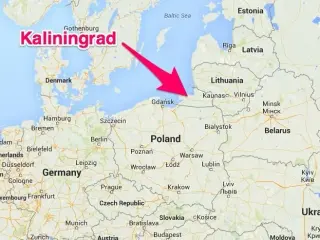
US intelligence assesses Vladimir Putin could launch a limited attack on a NATO member in the coming years to test the alliance’s unity under Article 5, with cyber or small incursions as likely options and the Baltics or Poland as possible targets; NATO says it remains prepared to deter and defend, with the assessment first reported by The Wall Street Journal amid a backdrop of related European security incidents and concerns over munitions stockpiles.
U.S. intelligence reportedly assesses that President Putin could launch a limited attack on a NATO member—ranging from a cyberstrike to a small land incursion—between this fall and 2029, aimed at fracturing the alliance and testing Article 5, with the Baltics or Poland as likely targets; the reports cite recent Russian actions such as a drone in Romania and missiles in Poland, though U.S. officials say they possess the means to respond and deter aggression.
U.S. intelligence says Putin could launch a limited attack on a NATO ally in the coming years to test NATO’s unity, with Baltic states or Poland highlighted as likely targets; potential actions range from cyberattacks to small incursions, and NATO officials stress they are prepared to deter and defend as security planning intensifies amid border incidents and munitions concerns.
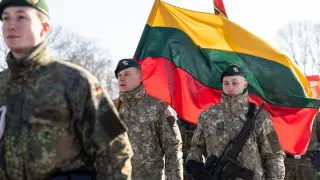
Lithuania’s defence minister warns Moscow could use recovered Ukrainian drone parts to stage a false-flag attack on Baltic infrastructure to undermine NATO support for Kyiv; while there’s no sign of imminence, Russia is weighing scenarios, prompting Lithuania to bolster security around key sites such as the Klaipėda LNG terminal and the LitPol Link interconnector; past drone incidents heighten concerns about escalation and Western unity, though officials say such an attack will not happen.
Poland’s foreign minister says intercepting Russian missiles while they’re in Ukrainian airspace should be discussed seriously as a national-security issue rather than a partisan topic, as Kyiv faces ongoing strikes; he also advocates a strong, private-defense sector in Poland and cites a July incident in which a Kh-101 missile briefly entered Polish airspace before crashing in the Lublin region, underscoring the need to bolster Ukraine’s air defenses.
Valerii Zaluzhny warned that Russia has developed countermeasures to nearly every major NATO weapon used in Ukraine, urging NATO to overhaul its military doctrine and standards as Ukraine’s battlefield experience exceeds current guidelines. He also advocated creating an entirely new European security bloc and reaffirmed Kyiv’s goal of NATO membership, though a previous remark about Ukraine never joining NATO was contextualized differently by Kyiv. The former Ukrainian commander is also floating potential presidential plans.
German counterterrorism authorities are investigating an explosive-laden drone found in a restricted cargo area at Leipzig airport near a Ukrainian Antonov aircraft; the detonator failed to detonate, a bomb disposal robot disarmed the device, and flights were suspended while investigators treat it as a serious security incident with no suspects yet detained.
A drone carrying an explosive device was found near a Ukrainian plane at Leipzig/Halle Airport, triggering runway shutdowns and flight diversions; a second unmanned object collided with a cargo aircraft, prompting German authorities to launch a broader investigation described as a hybrid threat, with ongoing questions about the explosives, drone origin, and possible Russia involvement as concerns rise over drone activity near European NATO sites.
NATO will urgently supply Ukraine with air defenses after Kyiv failed to shoot down a Russian strike, while Zelensky warns Moscow plans to massively boost ballistic missile production for winter. Russia fired 24 ballistic missiles, with Ukraine shooting down most drones but not the ballistic missiles, highlighting a Patriot interceptor shortage intensified by the broader Middle East conflict; Europe’s first Patriot production facility is due in Germany later this year, and talks continue on Ukraine producing Patriot components, though such production would take years.
Kyiv’s former top commander Valerii Zaluzhnyi privately argued that NATO’s WWII-era doctrines and slow modernization prevent Ukraine from joining, signaling a shift toward European security blocs as Kyiv’s increasingly advanced forces shape its security role and potential partnerships.
Ukraine’s former top commander Valerii Zaluzhnyi, now Ukraine’s ambassador to the UK, says Kyiv will never join NATO, arguing Ukraine cannot meet the alliance’s military standards. The piece notes July frontlines were largely static with minimal Russian gains, ongoing Ukrainian strikes deep into Russia and occupied territory, a leadership shake-up including the dismissal of Stefanishyna as ambassador to the US, and Kyiv’s push for more Patriot air defense missiles amid continued fighting and drone incidents in Crimea and elsewhere.
Ukraine’s ambassador to the UK, Valery Zaluzhny, told Kyiv diplomats that Ukraine will never join NATO, arguing the alliance’s doctrines are outdated and security guarantees should come from other frameworks. He warned that even with NATO alignment, Ukraine would only reach roughly half of Russia’s current strength and pressed for technologies like anti-ballistic systems and space capabilities available in NATO countries. Instead of NATO, he floated a European security bloc and highlighted Ukraine’s enhanced-partner role in the UK-led Joint Expeditionary Force, while noting that EU accession remains a separate path facing hurdles such as Hungary’s blocking moves and slower reform progress relative to Western Balkans peers.