
Vance’s mother threatens to punch El-Sayed after VP escalates Michigan race feud
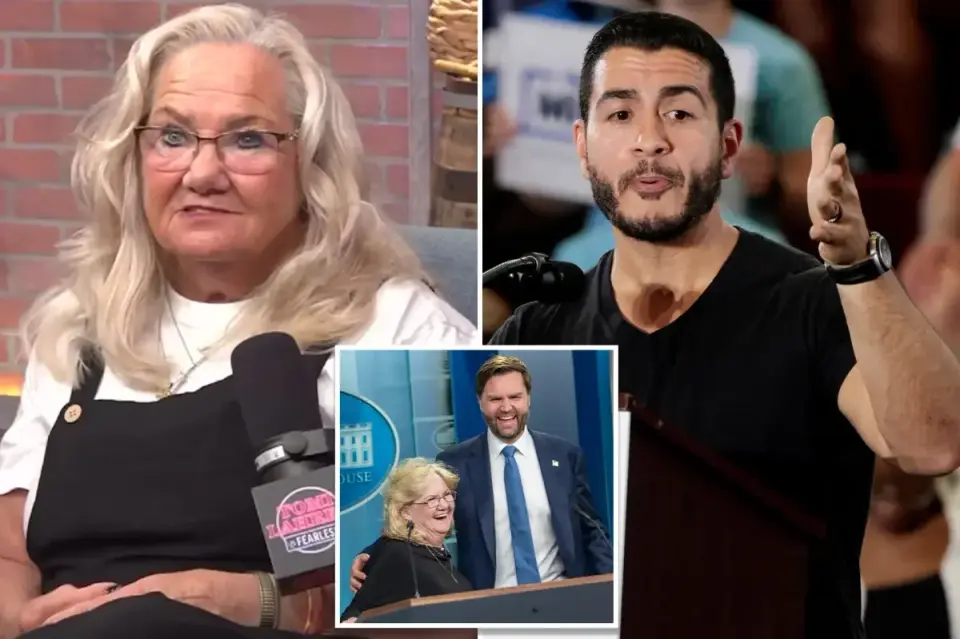
Vice President JD Vance’s mother, Beverly Vance Aikins, publicly threatened to punch Michigan Senate candidate Abdul El-Sayed after he made racially charged comments about the Second Family. The confrontation follows Vance’s own aggressive campaign speech in Michigan, where he labeled El-Sayed 'evil' and defended his wife against El-Sayed’s remarks regarding their interracial marriage and the vice president’s late grandfather.
Key points
- Beverly Vance Aikins called El-Sayed an 'idiot' and said she would 'probably punch' him if she encountered him, reacting to his comments about her grandchildren being 'brown kids' and the 'awkwardness' of her son’s marriage to Usha Vance.
- JD Vance called El-Sayed 'very, very evil' at a rally in Sterling Heights, Michigan, accusing him of heightening racial and religious divisions and telling him to 'keep my wife’s name the hell out of your mouth.'
- El-Sayed responded by accusing the Trump administration of pushing 'evil' policies and 'starting wars abroad,' while defending his record on healthcare and affordability.
- The Michigan Senate race between El-Sayed and Republican Mike Rogers remains highly contested, with El-Sayed holding a narrow lead in recent polling despite Vance’s aggressive campaigning.
Background
The feud stems from El-Sayed’s April comments on a podcast questioning the dynamics of the Vances’ marriage and suggesting JD Vance’s late grandfather might disapprove of Usha Vance, who is Indian-American. Vance later invoked his grandfather at an Ohio event, prompting El-Sayed to post on X about the potential 'awkward conversation' regarding the marriage. The conflict intensified after a March attack on Temple Israel in West Bloomfield, Michigan, where El-Sayed’s statement that 'hurt people hurt people' drew criticism from Jewish Democrats, including Attorney General Dana Nessel, whom El-Sayed later apologized to.
How outlets are covering it
The New York Post emphasizes the personal and emotional reaction of Beverly Vance Aikins, highlighting her threat of physical violence and her defense of Usha Vance as a 'genuine' person. The New York Times focuses on the political strategy, noting that Vance’s remarks appeared aimed at stoking tensions in Michigan’s Jewish community and framing El-Sayed as a divisive figure. Bridge Michigan provides a broader campaign context, detailing Vance’s fourth visit to the state, his focus on trucking fraud and immigration, and El-Sayed’s rebuttal that 'evil' refers to high costs of living and trade wars. The BBC highlights the religious dimension, noting El-Sayed’s Muslim faith and Vance’s accusations that he sympathizes with terrorists, while also mentioning El-Sayed’s primary campaign alongside controversial streamer Hasan Piker.
Why it matters
The escalating personal attacks between the vice president’s family and a major Senate candidate reflect the intense polarization in the 2026 midterm elections. The Michigan race is a key battleground, and the feud over race, religion, and family dynamics is likely to influence voter sentiment in a state where El-Sayed currently holds a narrow lead. The involvement of the vice president’s mother signals that the conflict has moved beyond standard political rhetoric into personal territory, potentially alienating moderate voters or energizing base supporters.
What to watch
The campaign is expected to continue with heightened rhetoric as the November 3 election approaches. El-Sayed is likely to continue defending his record on affordability and healthcare while pushing back against Vance’s accusations of divisiveness. Vance and other Republicans will likely maintain their focus on immigration, trucking fraud, and religious unity to counter El-Sayed’s narrative. Polling will be critical in determining whether these personal attacks are shifting the race or if voters remain focused on economic issues.
- JD Vance’s mom fires back at Abdul El-Sayed after his racially charged criticism of second family: ‘I’d punch the guy ‘ New York Post
- Vance Calls El-Sayed ‘Evil’ in No-Holds-Barred Michigan Speech The New York Times
- El-Sayed Accuses Vance Of ‘Hypocrisy’ In Defending Usha Vance Digs forbes.com
- JD Vance stumps for Michigan GOP; swipes at El-Sayed for wife comments Bridge Michigan
- As Michigan Senate race heats up, Vance calls Abdul El-Sayed 'evil' BBC
Want the full story? Read the original reporting
Read on New York Post