
White House invokes presidential communications privilege to block Beatty’s Kennedy Center discovery
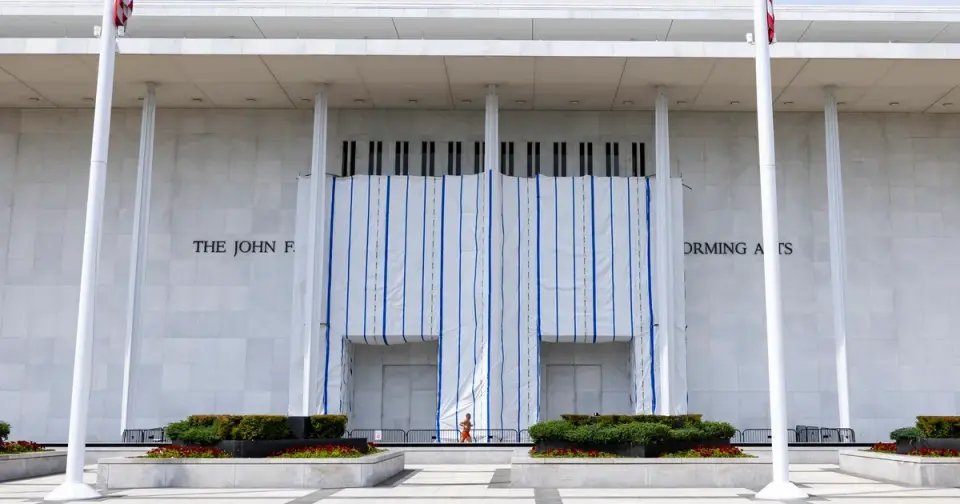
President Trump has formally asserted executive privilege to prevent Democratic Rep. Joyce Beatty from accessing records regarding the Kennedy Center’s closure and renovation plans. White House deputy counsel Joshua Hoyt filed a declaration on Wednesday, claiming that communications between the president, his advisers, and Kennedy Center staff are protected because the president serves as the institution’s chairman. This legal move aims to shield details about the center’s financial condition, potential demolition, and the addition of Trump’s name to the facade from Beatty’s ongoing lawsuit. The assertion creates a novel legal conflict, as it tests whether presidential privilege extends to the actions of a sitting president acting as a board chair for a congressionally created entity.
Key points
- White House deputy counsel Joshua Hoyt formally invoked the presidential communications privilege on behalf of President Trump on Wednesday.
- The privilege covers communications between the president, his advisers, and Kennedy Center employees regarding the institution’s management and operations.
- Hoyt argued that without this protection, presidential advisors would be 'chilled' from providing informed recommendations on the center’s functioning.
- Justice Department lawyers accused Rep. Joyce Beatty of conducting a 'fishing expedition' that raises separation-of-powers concerns.
- The privilege covers records related to the center’s closure for renovations, its financial status, the addition of Trump’s name, and potential demolition.
- Beatty’s lawyers argue the Justice Department is improperly using a 'blanket privilege' to block discovery in an unprecedented manner.
Background
This development follows a series of legal and operational crises at the Kennedy Center. In September, the Trump-appointed board voted to close the facility for two years for renovations, citing safety concerns, while critics pointed to collapsing ticket sales and donor support. Federal Judge Christopher Cooper previously blocked the closure and ordered the removal of Trump’s name from the building’s facade, which was stripped in June but remains covered by a tarp. The 49th Kennedy Center Honors were relocated to Capital One Arena in December due to the ongoing closure. The current privilege assertion escalates the conflict, as the administration previously invoked executive privilege in early October to shield testimony regarding the center’s structural safety and renovation plans.
Why it matters
The formal assertion of executive privilege over Kennedy Center records tests the boundaries of presidential power regarding non-executive roles. As the first sitting president to serve as chairman of the Kennedy Center, Trump’s use of this privilege to shield communications about a congressionally created institution raises untested legal questions. It could set a precedent for how executive privilege applies to presidential actions in private or quasi-private capacities, potentially limiting congressional oversight and judicial discovery in future disputes involving presidential board memberships.
What to watch
U.S. District Judge Christopher Cooper must rule on whether the presidential communications privilege applies to the Kennedy Center records sought by Rep. Beatty. Beatty’s lawyers have asked Cooper to order the Kennedy Center to turn over the material, arguing the privilege is being misused. The outcome will determine whether Beatty can access documents and testimony regarding the president’s instructions to Kennedy Center staff, potentially impacting the timeline for the center’s closure and renovation plans.
Want the full story? Read the original reporting
Read on CBS News