
Wisconsin Governor Debate: Tiffany Blames Zuckerberg for 2020 Election Objections
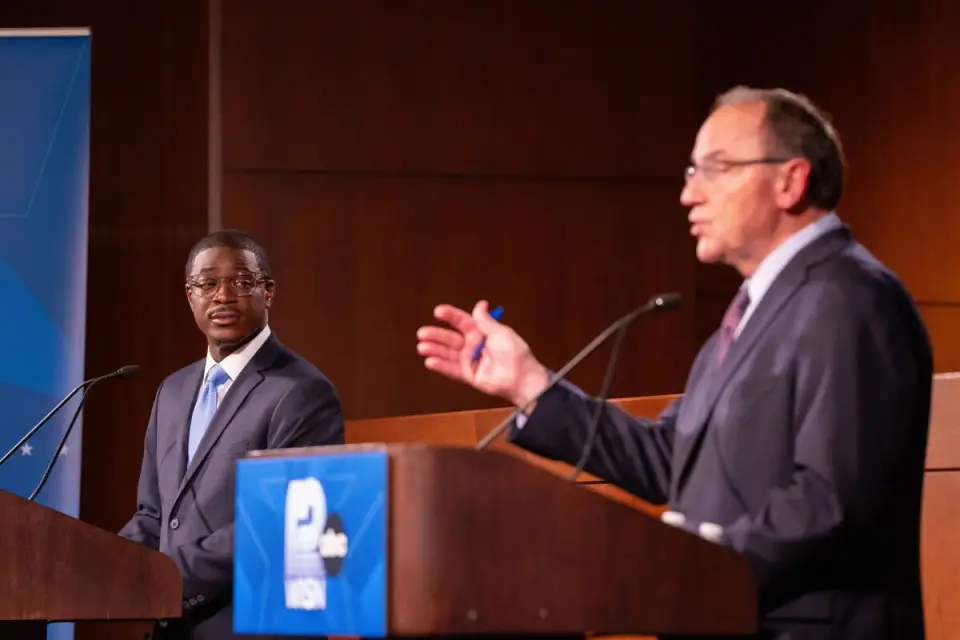
In the sole debate before the November 3 election, Wisconsin Republican gubernatorial candidate Tom Tiffany cited concerns over Mark Zuckerberg’s election funding as a primary reason for supporting efforts to overturn the 2020 presidential results. His Democratic opponent, David Crowley, criticized this explanation as inadequate and questioned Tiffany’s willingness to certify future elections.
Key points
- Tiffany stated that objections to 2020 results were driven by 'Zuckerbucks' and pandemic-era absentee ballot rules.
- Crowley argued that Tiffany’s focus on funding rather than fraud undermines trust in his ability to certify the 2028 election.
- The debate also featured clashes over tax policy, abortion access, and local law enforcement cooperation with ICE.
- Polls show a tight race, with Crowley leading Tiffany by 3 percentage points among likely voters.
Background
Wisconsin is a perennial battleground state, with five of the past seven presidential elections decided by less than one percentage point. In 2024, voters approved a constitutional amendment banning private grant money for election administration, a policy shift directly related to the 2020 controversy.
How outlets are covering it
AP News highlights Tiffany’s specific citation of Zuckerberg’s funding and his defense regarding 'indefinitely confined' voters. NBC News frames the exchange within broader economic and tariff debates, noting Crowley’s accusation that Tiffany serves the 'billionaire class.' The Milwaukee Journal Sentinel provides a detailed breakdown of the debate, emphasizing the contrast in their positions on ICE cooperation and tax policy, while noting that both candidates ultimately committed to certifying the 2028 election results regardless of the winner.
Why it matters
The debate underscores the lingering impact of 2020 election disputes on current political discourse. Tiffany’s justification for his past actions raises questions about the integrity of future election certifications in a state that often decides national elections by narrow margins.
What to watch
The race remains competitive ahead of the November 3 election, with voters weighing the candidates’ positions on economic affordability, social issues, and the reliability of election administration.
- Wisconsin Republican Tiffany says Zuckerberg money was the reason he tried to overturn 2020 election AP News
- Wisconsin governor candidates tangle over the economy, Trump and the 2020 election in tense debate NBC News
- Takeaways from the Tom Tiffany, David Crowley governor TV debate Milwaukee Journal Sentinel
- Crowley, Tiffany spar over taxes, data centers and abortion in only debate of governor’s race WPR
- Abortion, ICE and socialism spark fireworks in swing state governor debate: 5 top moments Fox News
Want the full story? Read the original reporting
Read on AP News