
Wisconsin gubernatorial candidates clash over taxes, abortion, and 2020 election in sole debate
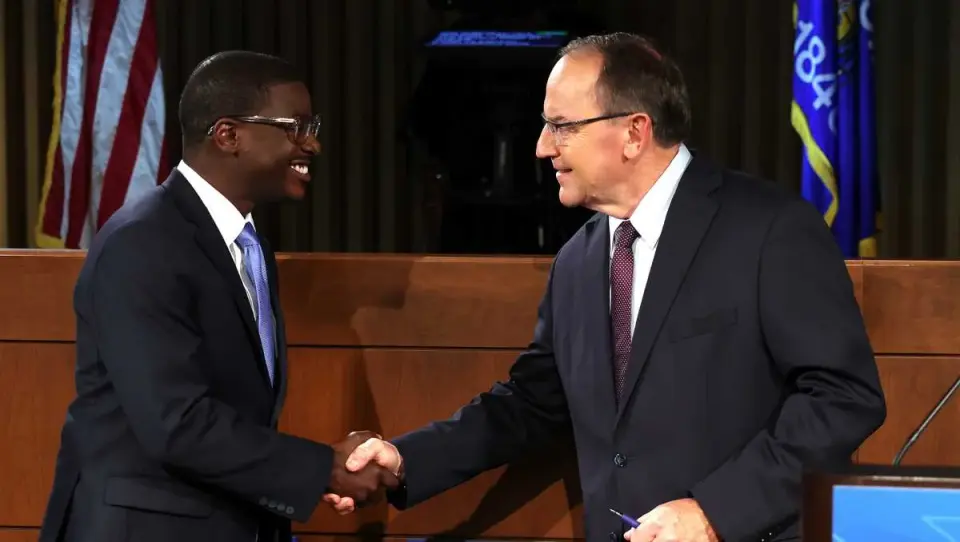
David Crowley and Tom Tiffany held their only debate before the Nov. 3 election, debating taxes, abortion, and immigration. Crowley advocated for using the state surplus for public services, while Tiffany proposed returning it via tax cuts. The race remains statistically tied, with Crowley leading by 3 percentage points.
Key points
- The debate was the only one held before the Nov. 3 election, moderated by WISN 12.
- Crowley supports using the $3 billion surplus for schools and property tax relief; Tiffany wants to return it via long-term tax cuts.
- Crowley opposes expanding school vouchers; Tiffany supports raising income limits for the program.
- Crowley supports full marijuana legalization; Tiffany supports a step-by-step approach starting with medical marijuana.
- Crowley opposes local ICE cooperation; Tiffany mandates honoring federal immigration detainers.
Background
This debate occurred one day after in-person absentee voting began and less than two weeks before Election Day. It was the first open Wisconsin gubernatorial race since 2010, following the retirement of Gov. Tony Evers. Tiffany recently survived an emergency water landing on Lake Wausau, which he referenced in his closing statement.
How outlets are covering it
WISN 12 and WBAY reported the debate as a direct clash on affordability and tax policy. The Milwaukee Journal Sentinel highlighted Crowley’s refusal to answer specific questions on new tax brackets, while NBC News emphasized Crowley’s attacks on Tiffany’s ties to President Trump and billionaire donors. All outlets noted the candidates’ stark differences on immigration enforcement and abortion, with Tiffany upholding the 20-week ban and Crowley pushing for a constitutional amendment.
Why it matters
The outcome will determine the next governor of a key battleground state and influence state policies on education, taxation, and immigration. The debate highlighted deep divisions on economic and social issues that could shape voter decisions in the Nov. 3 election.
What to watch
Voters will cast ballots on Nov. 3. The candidates will continue campaigning in the final days before the election, with polling showing a tight race.
- LIVE UPDATES: 2026 Wisconsin Gubernatorial Debate WISN
- Takeaways from the Tom Tiffany, David Crowley governor TV debate Milwaukee Journal Sentinel
- Four Takeaways From the Debate for Wisconsin Governor The New York Times
- Wisconsin governor candidates tangle over the economy, Trump and the 2020 election in tense debate NBC News
- Crowley, Tiffany meet in only Wisconsin governor’s debate tonight WBAY
Want the full story? Read the original reporting
Read on WISN