
Cornell Activists Vandalize Admin Building Amid Ongoing Fraternity Rape Probe
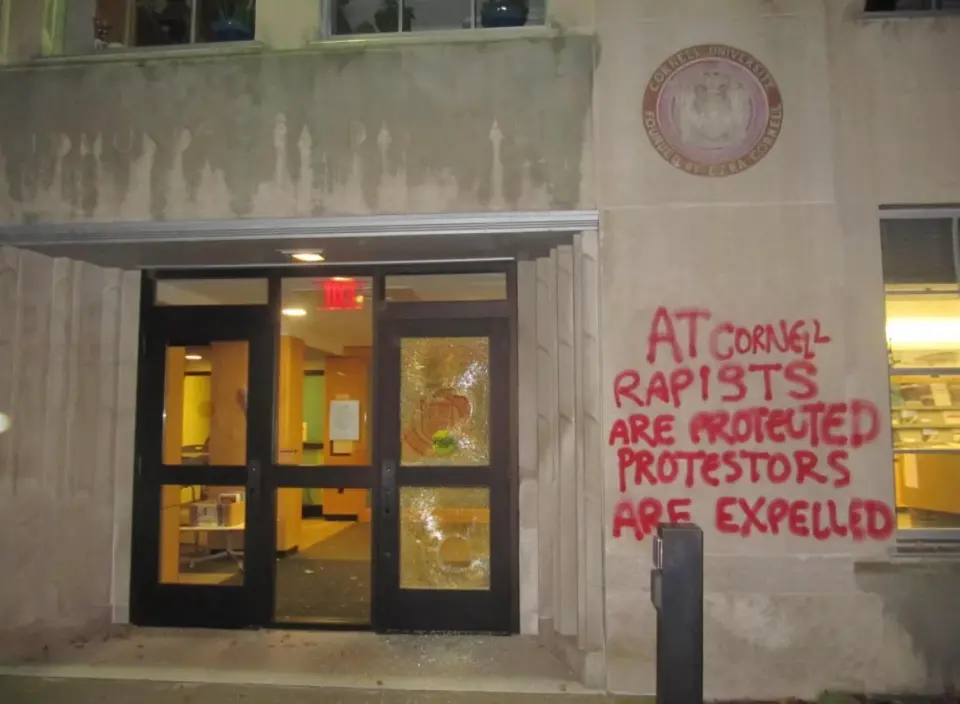
Student activists vandalized Cornell University’s Day Hall early Monday, smashing glass and spray-painting anti-patriarchy messages. The action followed a massive campus rally demanding the resignation of President Michael Kotlikoff and accountability for the university’s handling of a 2024 alleged gang rape at the Chi Phi fraternity house. While the university condemned the property damage, activists argued their actions were non-violent compared to the alleged assault. The incident coincides with New York Attorney General Letitia James taking over the criminal investigation as special prosecutor, following a civil lawsuit filed by the accuser, known as Jane Doe.
Key points
- At approximately 3 a.m. Monday, anonymous activists smashed the glass door of Day Hall and painted 'SMASH THE PATRIARCHY' and 'AT CORNELL RAPISTS ARE PROTECTED PROTESTORS ARE EXPELLED' on the walls.
- Thousands of students and faculty gathered for a 'Justice for Survivors' rally, chanting for President Michael Kotlikoff to resign and demanding the abolition of Greek life on campus.
- The unrest stems from a September 2026 civil lawsuit alleging a former student was drugged and gang-raped by seven Chi Phi members in October 2024, with critics accusing the university of lenient disciplinary measures.
- New York Attorney General Letitia James was appointed as special prosecutor to investigate the case, replacing Tompkins County District Attorney Matthew Van Houten, who had initially declined to file charges.
- Cornell spokesperson Kyle Kimball condemned the vandalism, stating that while frustration is understandable, damaging property is not the answer, and the university is investigating the incident.
Background
The current escalation follows months of growing tension regarding the 2024 Chi Phi incident. In September 2026, the accuser, identified as Jane Doe, filed a civil lawsuit alleging she was drugged with ketamine and raped by seven fraternity members. The university’s initial disciplinary actions, which included expulsions for two members and suspensions for others, drew intense criticism for being insufficient. This led to a reopened criminal investigation by the Tompkins County DA, which was subsequently taken over by the state Attorney General due to concerns over the thoroughness of the initial review. Prior to the Monday vandalism, the campus had already seen increased hostility, including threats against the accuser and her attorney, and a series of public statements from university leadership acknowledging the need for better handling of sexual assault cases.
How outlets are covering it
The Washington Post and The Cornell Daily Sun focused primarily on the physical vandalism of Day Hall, detailing the specific graffiti and broken glass. The Guardian and CNN emphasized the broader political and legal context, highlighting the massive rally and the appointment of Letitia James as special prosecutor. While The Washington Post and The Cornell Daily Sun reported the vandalism as a direct response to the lawsuit, The Guardian and CNN contextualized it within a wider national debate over campus sexual violence and fraternity culture. The Cornell Daily Sun provided the activists' manifesto, which explicitly named senior administrators as responsible for 'condoning rape,' a detail not emphasized by the national outlets. CNN highlighted new documents suggesting Cornell police requested phone records in 2024 that were not shared with the district attorney, adding a layer of procedural scrutiny to the narrative. The outlets generally agreed on the facts of the vandalism and the rally but differed in emphasis, with local and student publications focusing on the activists' demands for systemic change, while national outlets focused on the legal proceedings and the university's official response.
Why it matters
The vandalism and subsequent rally mark a significant escalation in the Cornell University sexual assault case, moving from legal proceedings to direct physical confrontation with university administration. This event highlights the deepening divide between the university's leadership and its student body over the handling of sexual violence. The involvement of the New York Attorney General as special prosecutor indicates that the case has moved beyond a local university matter to a state-level legal investigation. The activists' demands for the abolition of Greek life and the resignation of senior administrators suggest that the incident could lead to long-term structural changes in Cornell's governance and campus culture, potentially setting a precedent for how other universities handle similar allegations.
What to watch
The immediate next steps involve the ongoing investigation by New York Attorney General Letitia James, who is expected to review the evidence and determine whether criminal charges should be filed. Cornell University is expected to address the vandalism in accordance with its policies and applicable law, as stated by spokesperson Kyle Kimball. The university has also promised a 'serious look' at the role of fraternities and sororities in campus life, which may result in policy changes or the dissolution of Greek life. Additionally, the activists have called for the replacement of the Office of Student Conduct and Community Standards with a democratic disciplinary system, which could lead to further internal reforms or protests if not addressed. The case will likely continue to draw national attention, with potential implications for other universities facing similar allegations.
- Cornell University protests escalate with spray paint and broken glass The Washington Post
- How Cornell Punished Each of the 7 Men Accused of Sexual Assault nytimes.com
- Students vandalize Cornell building over handling of gang-rape allegations The Guardian
- Activists Smash Windows, Graffiti Day Hall ‘for Jane Doe’ The Cornell Daily Sun
- Cornell police tried to get phone records in Jane Doe’s sex assault investigation. Her lawyer says records never got to DA CNN
Want the full story? Read the original reporting
Read on The Washington Post